Twelve episodes of animated science fiction about castaways crossing an alien planet that is alive in every frame. Frightening and patient, it is among the best things of its kind we have seen; the human stories are thinner than the world around them.
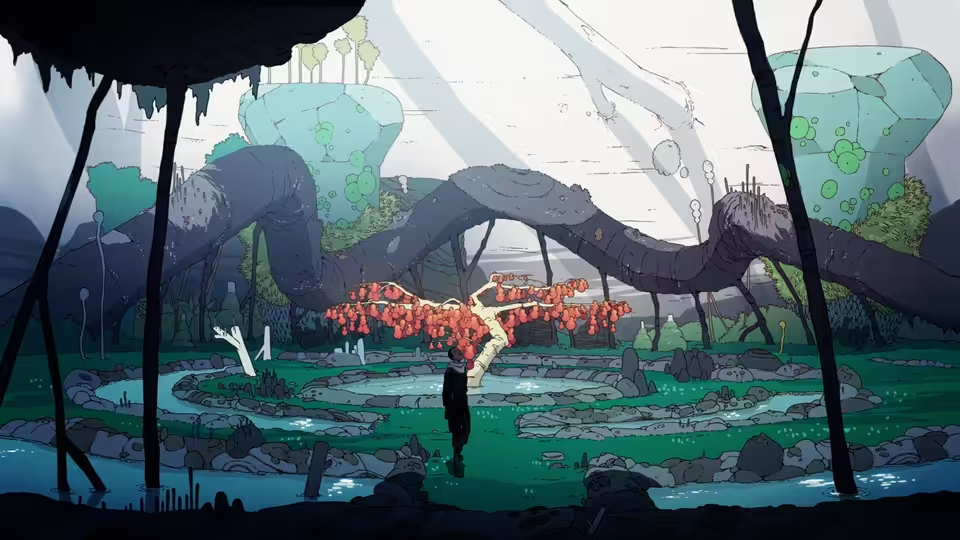
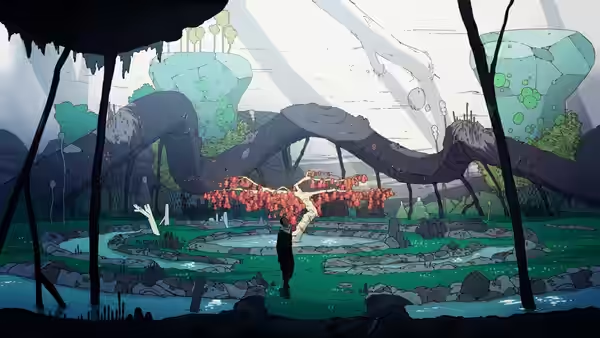
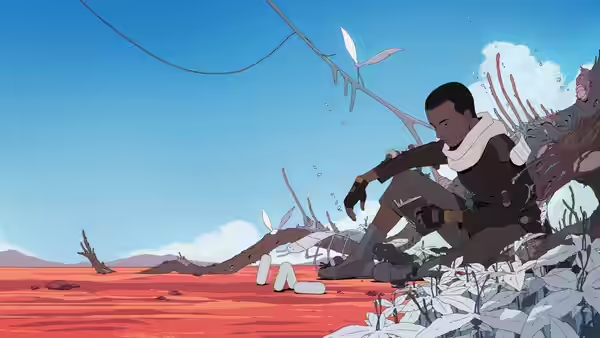
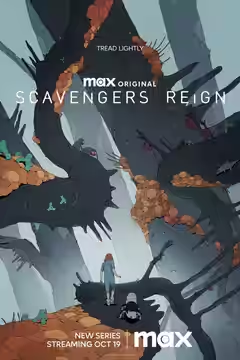
Scavengers Reign opens with a cargo ship broken apart above a planet called Vesta and its crew scattered across the surface, and then spends twelve episodes letting them walk. Joseph Bennett, Charles Huettner and James Merrill, who created it, are not much interested in the ship or in getting home. They are interested in the planet, which is drawn as a complete working ecology. Things graze, things lure, things lay eggs in other things, and the people are the newest animals in it.
Our verdict is that it is excellent, and the caveat is that the people never quite catch up with the place. The programme is at its best when nobody is speaking and the frame is holding on a creature doing something unpleasant and sensible. When the humans talk about guilt and whose fault the crash was, the dialogue is serviceable and the stories are thinner than the drawings around them.
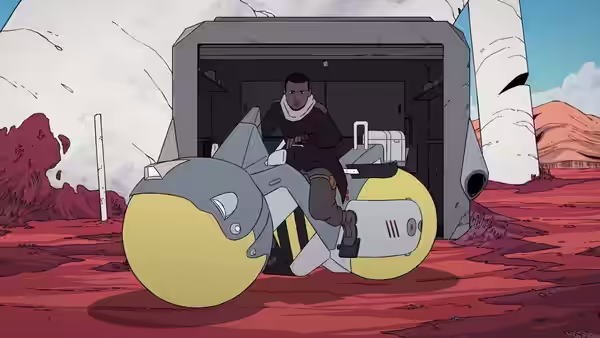
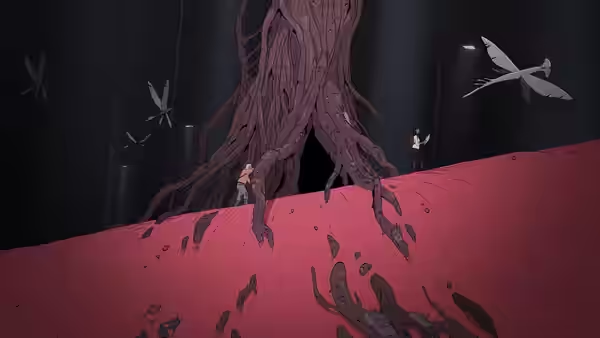
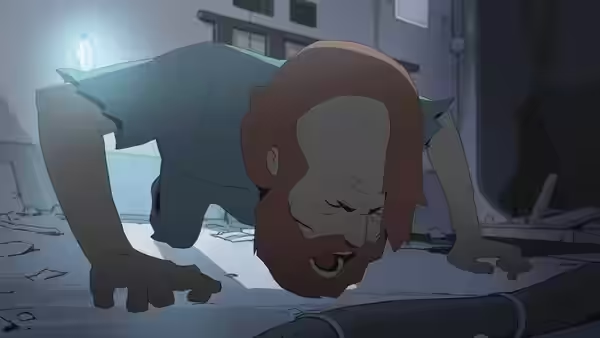
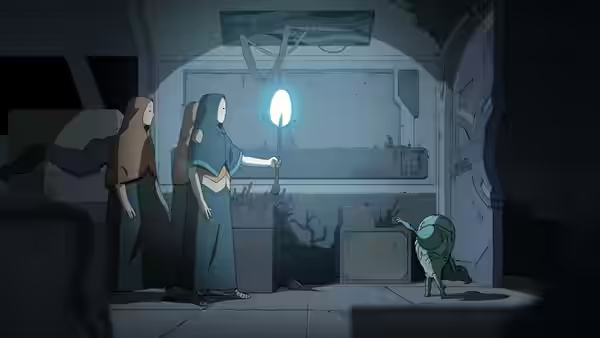
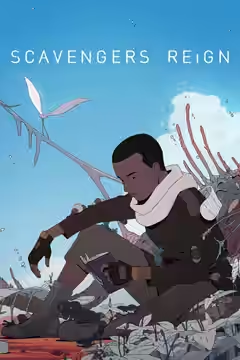
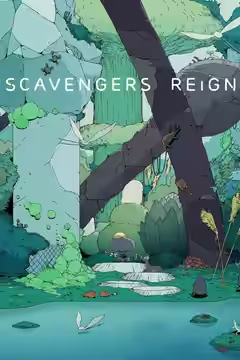
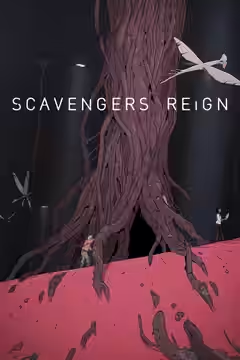
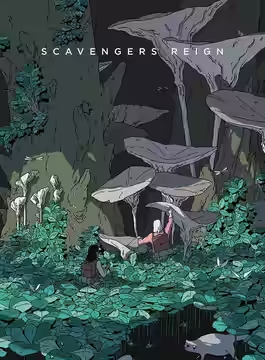
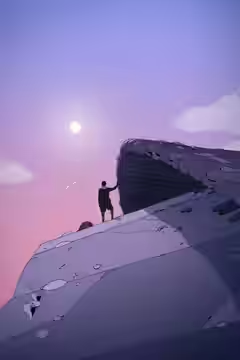
Seven directors share the episodes, among them Christine Jie-Eun Shin, Rachel Reid, Diego Porral, Jonathan Djob Nkondo and Vincent Tsui, with Bennett and Huettner directing as well, and the look holds across all of them: flat colour, thin dark lines, faces made with a few marks, backgrounds crowded with growth. Vincent M. Vu’s production design gives Vesta pinks and greens that look like a coral reef dragged on to land, and every creature has a visible logic; you can see what it eats and what eats it. Jason Klein cuts slowly. He lets a shot of a plant closing round a small animal run long after a nervier editor would have moved on, and the length is what makes it frightening.
We were horrified, more than once, and we want to be exact about why. Early on there is a sequence, which we will not describe, in which something gets inside a body and the body does not object. Nothing is sudden. Nicolas Snyder’s music does not swell to tell us to be frightened; it stays low, mostly synthesiser and breath, and the drawings do the work. We put a hand over our mouth and did not take it away. Later, when a creature we had watched kill looked after a person with something like care, we felt the reverse, a gentleness the series had earned by being unsentimental about everything else.
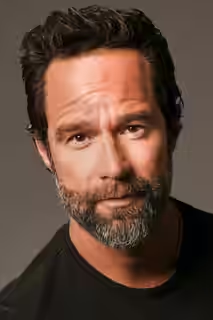
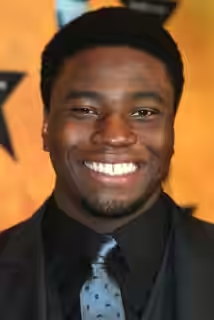
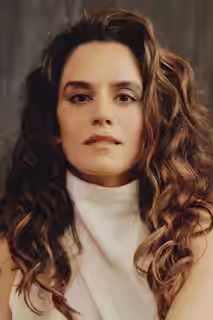
The voice cast is good without being showy. Sunita Mani gives Ursula a dry competence with tiredness underneath it. Wunmi Mosaku’s Azi sounds most like someone who has worked for a living, impatient and practical, and her scenes with Alia Shawkat’s Levi are the warmest in the programme. Shawkat plays Levi flat and then lets small, odd inflections in as Levi changes, which is the right choice. Ted Travelstead’s Kamen is harder to like, and meant to be; he is a man who has done something he will not look at, and Travelstead plays the self-pity without asking for sympathy. Bob Stephenson’s Sam is gruff in a way that is accurate and occasionally dull.
The faults are in the writing, which is shared among Bennett, Huettner, Merrill, Jenny Deiker Restivo, Sean Buckelew and Jillian Goldfluss. Kamen’s strand circles for several episodes in the middle: he is tempted, he gives in, he is tempted again, and his memories of home return so often that they lose their force. The series also has a habit of saying out loud its most interesting idea, that Vesta may be using the castaways rather than merely eating them, when the pictures had already made it clear. Ten episodes would have been tighter than twelve.
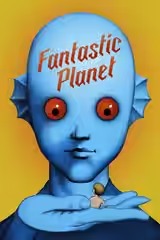
Set against its genre, it is closer to René Laloux’s Fantastic Planet than to anything television usually makes, and it is more frightening than its 15 certificate suggests, because the horror is biological rather than violent: things grow where they should not. Watch it at night, one or two episodes at a time, and not over dinner. If the long wordless stretches of the first episode bore you, stop, because there are eleven more and they do not speed up. If they hold you, this is one of the few animated series for adults we would urge on someone who thinks animation is not for them.