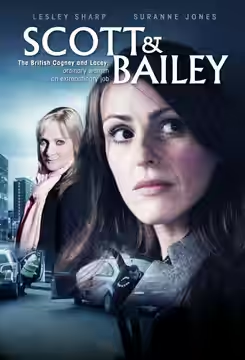
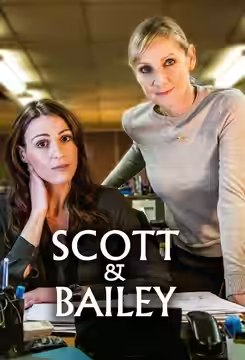
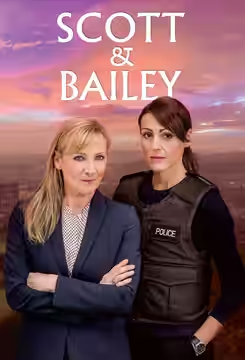
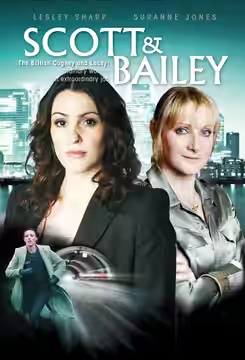
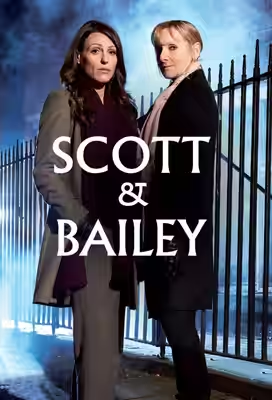
Sally Wainwright and Diane Taylor’s Manchester procedural opens with a boyfriend plot nobody should have signed off, then settles into a police series acted with unusual care, built on Lesley Sharp across an interview table and Amelia Bullmore running a briefing.
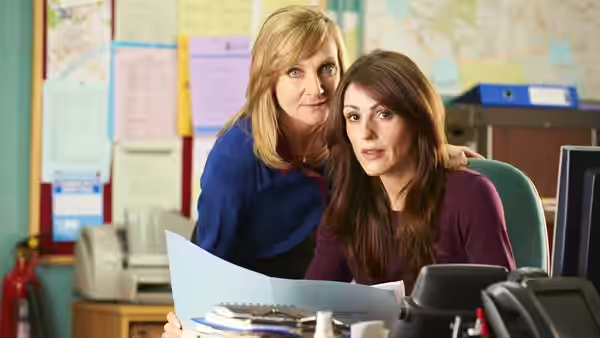
Scott & Bailey sets out to do an ordinary thing properly. Two detective constables in a Manchester murder squad, a boss who is good at her job, a case most weeks, and the kitchens and cars and bedrooms they go back to when the shift ends. Sally Wainwright and Diane Taylor created it, it ran for five series from 2011, and its episodes last 45 minutes. It starts badly and becomes one of the better police series British television has produced, and the gap between those two facts is the subject of this review.
The first episode is the problem, and we may as well deal with it. Rachel Bailey (Suranne Jones) is dumped by Nick Savage (Rupert Graves) and discovers he has a wife, and the script arranges for the week’s case to echo her humiliation so neatly that we winced. It is a soap plot wearing a lanyard. The Guardian’s review at the time found the whole thing clunky on the strength of that strand, and about the strand it was right. About the series it was wrong, and anyone who stopped there missed what the writers were building underneath.
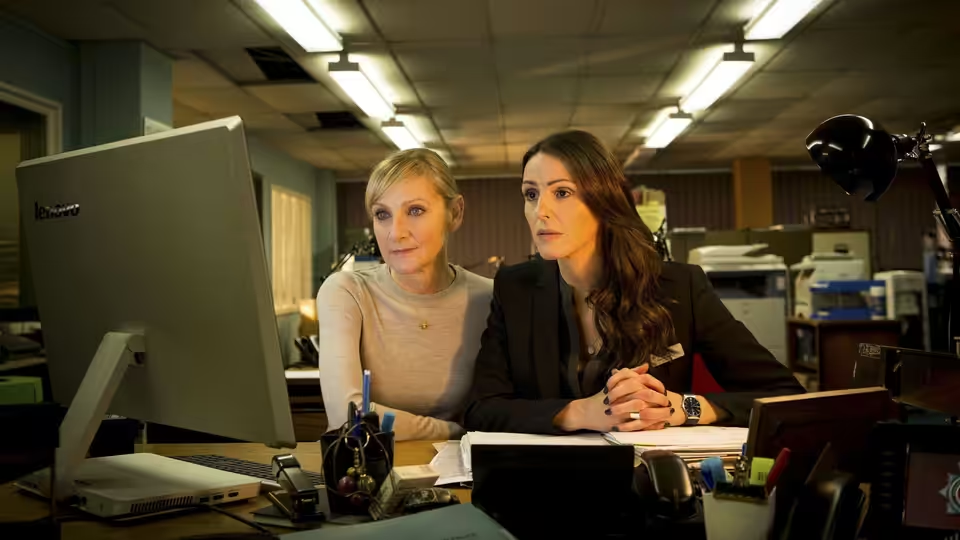
What they were building is Janet Scott. Lesley Sharp plays her as a woman who has learned that if she waits long enough, the other person will fill the silence, and the interview scenes are where the series earns its keep. The directors, Sarah Pia Anderson, Noreen Kershaw and Simon Delaney among them, keep the camera low and still across the table and let Sharp do the work with a pause and a glance at her notes. We found ourselves holding our breath in a room containing a table, two chairs and a man who did not want to talk, which is not a thing we expected from a weeknight procedural and is the moment we stopped taking notes.
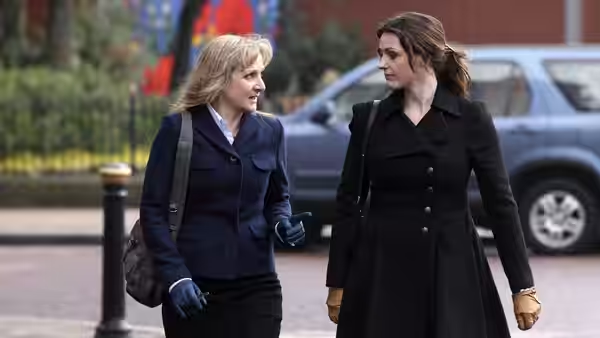
Amelia Bullmore’s Gill Murray is the other reason to stay. Bullmore also writes for the series, and you can feel a writer’s hand in how Gill is allowed to be brisk, rude and right, and how rarely she is punished for it. Television bosses are usually obstacles; Gill is a professional, and the show takes pleasure in watching her run a briefing. The scenes with the three women in a car or a corridor, trading information and insults at the same speed, are the sharpest writing in it.
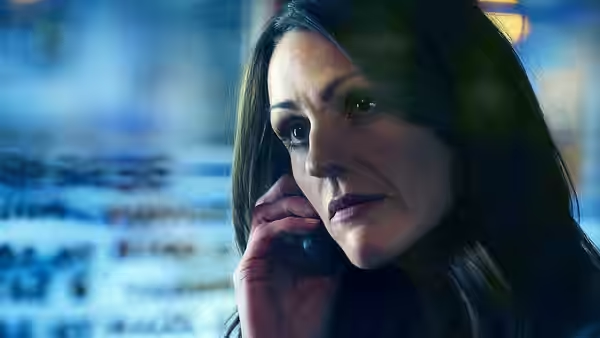
Jones has the harder part. Rachel is bright, reckless and incapable of leaving a bad idea alone, and Jones plays her without once asking us to forgive her. Her sister Alison (Sally Lindsay) carries the family weather, and Tony Pitts gives Janet’s husband Adrian a tired decency that makes their house feel lived in rather than written. Nicholas Gleaves’s Andy Roper watches from the next desk with an expression we will leave you to read.
Fabian Wagner shoots it plain: grey northern daylight through office blinds, strip light on the incident board, the inside of a pool car in the rain. Nothing is lit to be admired, and that is the correct decision for a series whose point is that the work is the point. The cases themselves are uneven. Some are tightly made; others reach for a twist the hour cannot carry, and the later series lean harder on the detectives’ private lives than the early ones did. The fifth series, at three episodes, is more a farewell than a run.
The reviews so far were cool, and one was hostile, and most of that judgement rests on the first hour. We think they were wrong because they reviewed the wrong strand: the boyfriend plot is a fault in a series that is otherwise about competence, and competence is what the next thirty-two episodes deliver. Against the genre’s usual options, the haunted loner or the quirky pair, this is a show about a team of adults doing a difficult job and then going home.
Give it two episodes. The first is the worst it ever gets. The 15 certificate is for language and for what the squad finds in people’s houses, not for anything shown with relish. If Sharp across an interview table does nothing for you by the end of episode two, it is not your series, and we would be surprised.