Mackenzie Crook’s suburban comedy finds feeling in folk magic and ordinary friendship. Pearce Quigley and Lauren Patel give it warmth without fuss, though the fondness for everyone’s peculiarities sometimes makes it a little too comfortable.
Small Prophets is a funny, affecting comedy whose affection for its people occasionally makes it too comfortable. Writer and director Mackenzie Crook brings folk magic into suburban life without treating the ordinary part as something to escape. Grief belongs here, alongside friendship and the business of getting on with other people. The strange elements do not make those concerns seem smaller. Across six episodes, the chief pleasure is spending time with people whom Crook thinks worth knowing.
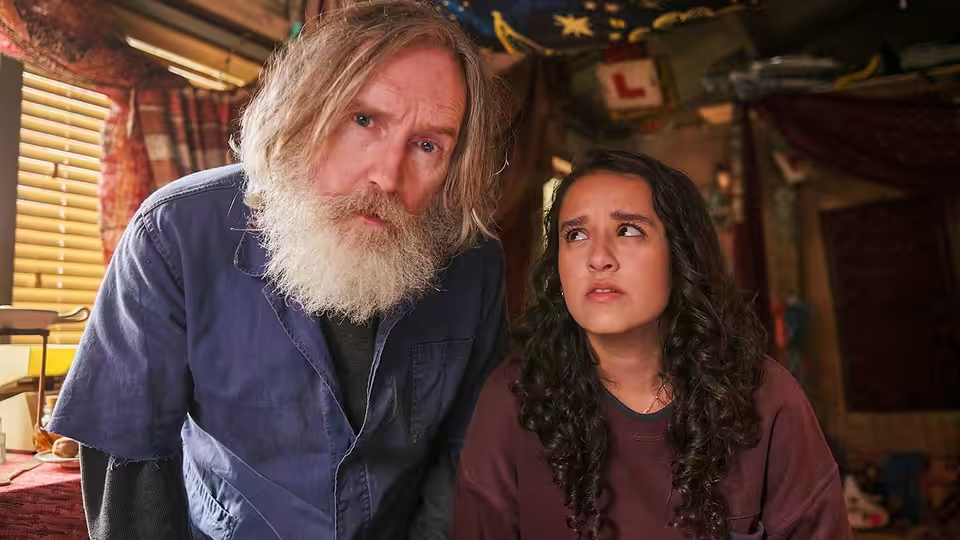
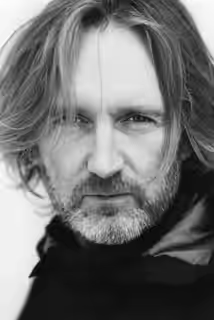
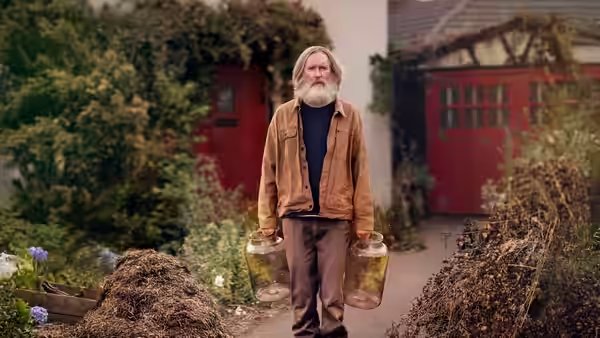
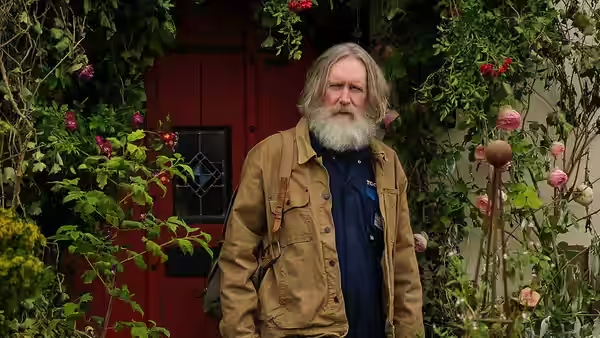
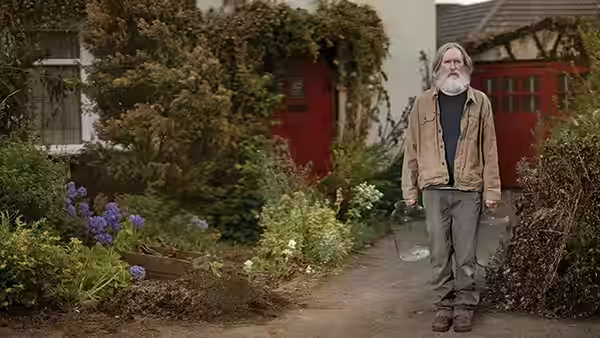
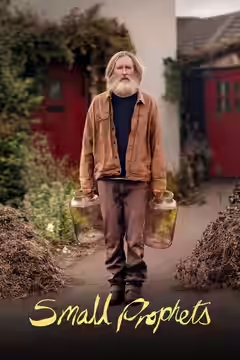
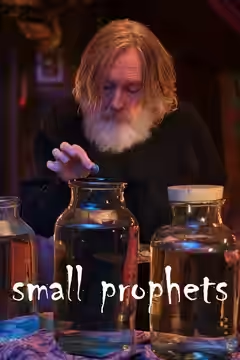
Pearce Quigley plays Michael Sleep with a gentleness that could easily have become an invitation to pity him. Quigley avoids that trap by giving Michael enough dignity to withstand being the object of a joke. His performance allows us to find the man peculiar without assuming we have understood everything about him. That restraint matters in a comedy centred on an eccentric character. We want to know Michael better, which gives the mystery something useful to work with.
Lauren Patel’s Kacey gives the series a relationship that is absorbing even without any magical assistance. Her friendship with her colleague Michael allows both actors to make something substantial out of ordinary affection. We were moved by these two simply liking one another. Quigley and Patel make the connection feel unforced, and Crook is right to give it such importance. The casting does much of the work: these are people whose company we enjoy together, without waiting for something peculiar to happen.
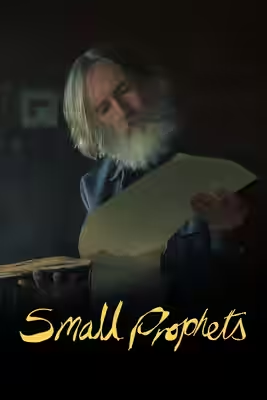
Michael Palin, as Brian Sleep, is equally good at allowing sadness to remain inside something funny. His performance does not insist that the comedy stop before a feeling can be taken seriously. That is especially valuable in a series which risks becoming precious about its own kindness. Palin is touching without demanding a special hush, and the humour benefits from being allowed to continue alongside the sadness. Crook also appears as Gordon, though his judgement as writer and director is the larger contribution.
The weakness is Crook’s fondness for nearly everybody. His writing makes room for faults, but the eccentricity sometimes feels a little too carefully approved, as though being odd were already enough to make someone interesting. We occasionally wanted a sharper exchange, or a less forgiving look at the behaviour being indulged. The direction sustains the warmth so consistently that it can make the comedy feel sheltered. A little less protection would have helped.
Its treatment of grief is more assured. Crook lets sadness occupy these lives without making it the only interesting thing about the people living them. In comedy with magical elements, suffering can too easily become an excuse for a picturesque bit of make-believe. Here, the relationships give the stranger material a reason to matter, and the characters retain their dignity even when their lives are disappointing. The programme is generous about the possibility of hope without pretending that hope is easy.
Go to it for the people, then, rather than expecting the mystery to provide every pleasure. Six episodes is a manageable commitment, and Quigley and Patel make it an inviting one. The taste for whimsy will be a dividing line: Crook is sincere about the magic, and anyone allergic to that sincerity is unlikely to be won round by the jokes alone. Choose it for an evening when kindness would be welcome, provided a little oddness is welcome too.