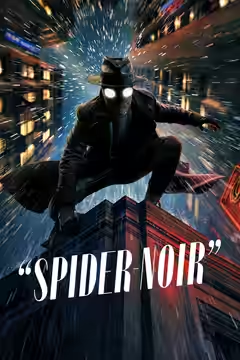
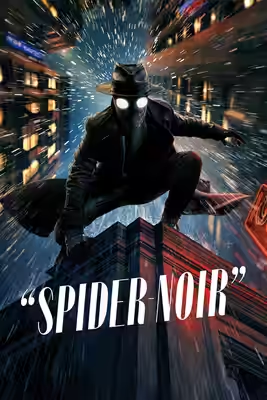
Around Cage as a down-at-heel 1930s private eye is the whole case for this handsome, faithful, slightly hollow noir pastiche. He is a good case. The eight episodes around him are two too many.
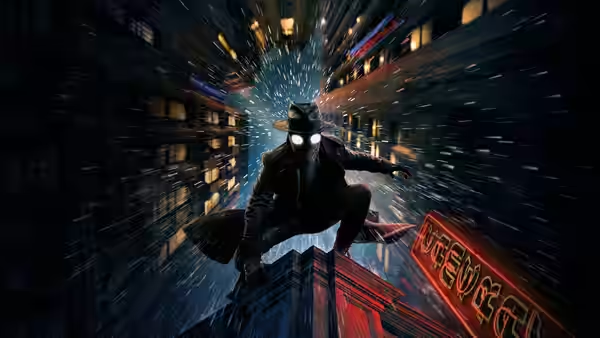
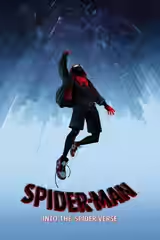
Around Cage voiced this character in Spider-Man: Into the Spider-Verse (2018), a few minutes of black-and-white grumbling that stole its scenes. Someone has now built him eight hours of it. Spider-Noir is a superhero spin-off with the superhero mostly removed: Ben Reilly is a private investigator in the 1930s, once known as The Spider, now known to hardly anyone. The tagline is “With no power comes no responsibility”, and the series means it. It wants to be a gumshoe picture first and a comic-book property a distant second, and for long stretches it manages both.
Cage is the reason to watch, and he knows it. He plays Reilly as a man doing an impression of a detective he once saw in a picture, and the distance between the impression and the man is where the comedy lives. The hard-boiled lines are delivered with a straight face and a slight, private amusement, as if he has heard them before and is checking whether we have. We laughed out loud, more than once, at readings that any other actor would have thrown away, and by the later episodes, when the writing lets him off the lead and he becomes properly odd, we were laughing with the series rather than at it.
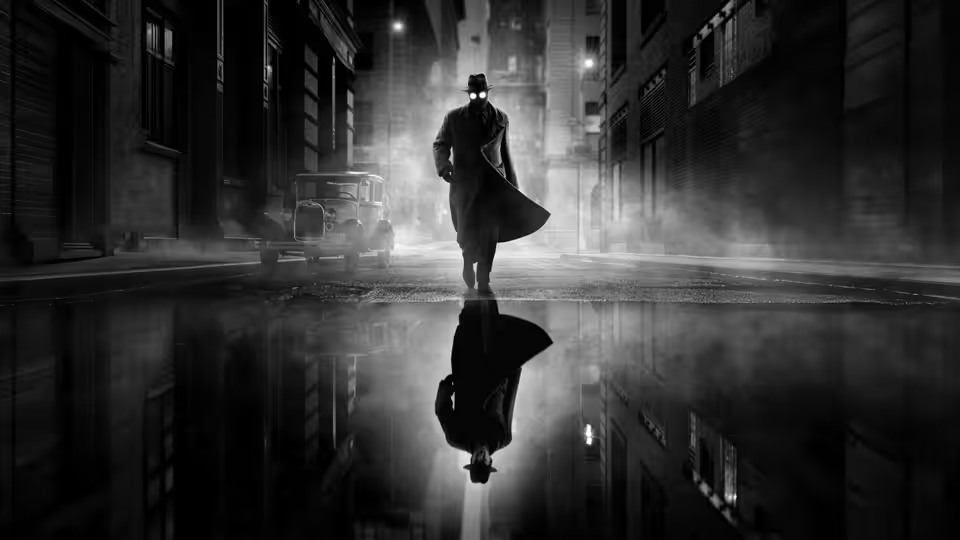
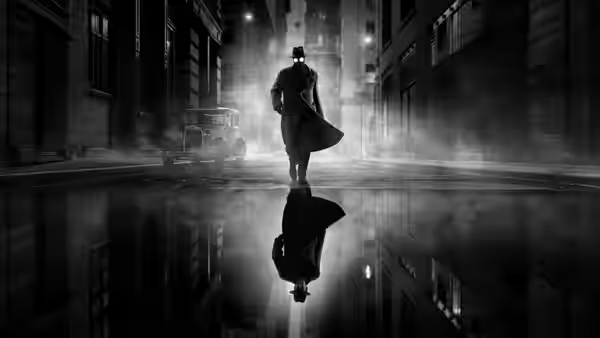
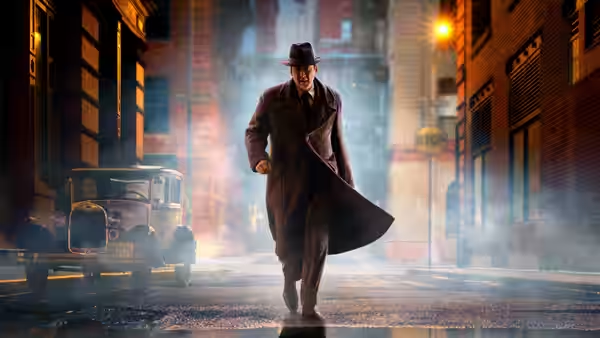
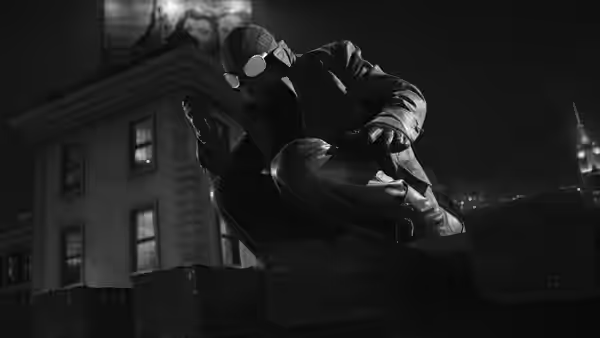
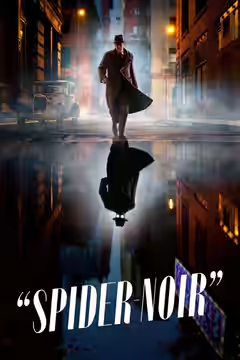
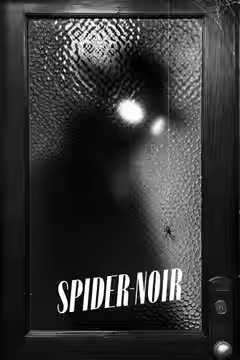
The series comes in two versions, colour and black and white, and Peter Deming and Darran Tiernan have lit it so that either will pass. Choose the black and white. In monochrome the shadows fall where they should and the cigarette smoke has somewhere to go; in colour the same frames are pleasant and a little too clean, like a period drama that has wandered into the wrong genre. Warren Alan Young’s sets do the art-deco offices and back rooms without fuss, Trayce Gigi Field puts everyone in a hat, and the score by Kris Bowers and Michael Dean Parsons does the brass-and-shadows work so steadily that we stopped noticing it, which is the right result.
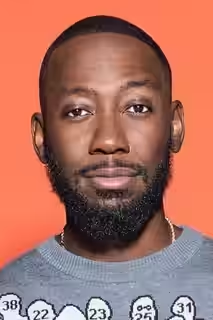
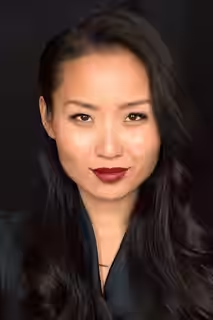
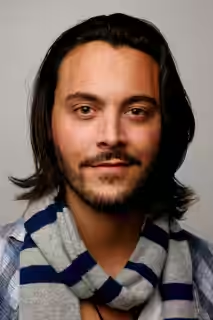
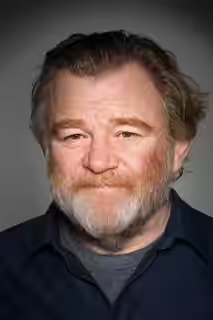
Around Cage the cast is better than the material. Lamorne Morris gives Joe Robertson a decency the series keeps underusing. Li Jun Li’s Cat Hardy and Karen Rodriguez’s Janet Ruiz each get scenes that suggest a sharper show, and are then shuffled aside for the next name on the poster. Brendan Gleeson does what Gleeson does, which is to lend a small part the weight of a large one; his Silvermane is the only villain who seems to want something. Jack Huston’s Flint Marko and Abraham Popoola’s Tombstone arrive looking like trouble and spend most of their time looking like it.
Here is where it goes wrong. Eight writers are credited, along with four directors and four editors, and it shows in the seams. The middle episodes circle: a lead, a beating, a bar, a lead. Somewhere in the fifth hour we noticed we had stopped following who had done what to whom and were simply waiting for Cage to come back on screen, and that the series had not noticed we had gone. There is also a stretch, involving a scientist, that belongs to a different and sillier programme, and the series takes a while to steady itself afterwards. None of this is disgraceful. It is padding, and eight episodes is a lot of coat to pad.
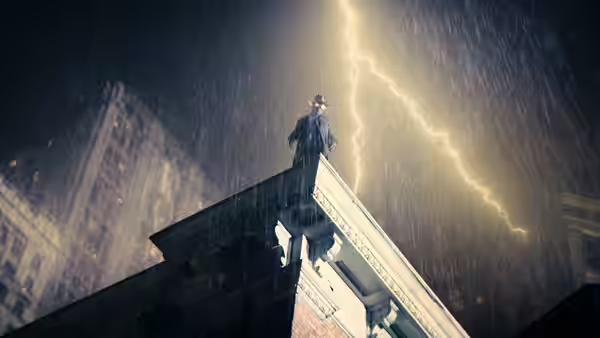
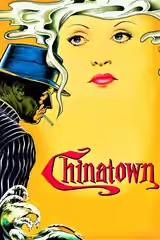
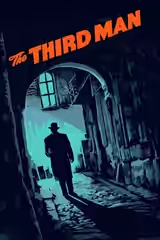
The films it borrows from were cheap, fast and mean, and their detectives lost something in every reel. Spider-Noir is expensive, fond and safe. It has the hats and the voiceover and the rain, and it has little appetite for the despair underneath them, which is the part of noir that mattered. Nobody here looks likely to end up worse off than they started, and you can feel that from the first episode.
Watch it in black and white, an episode at a time, and feel free to wander off whenever Cage is not on screen. Eight episodes, a 15 certificate, and one performance worth the whole of it.