Film review

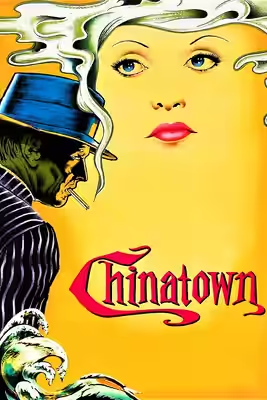
Chinatown

1974 · Directed by Roman Polanski · 2h 10m · 15

In a sentenceA private detective so persuasive we nearly forget he might be wrong

CrimeMysteryThriller

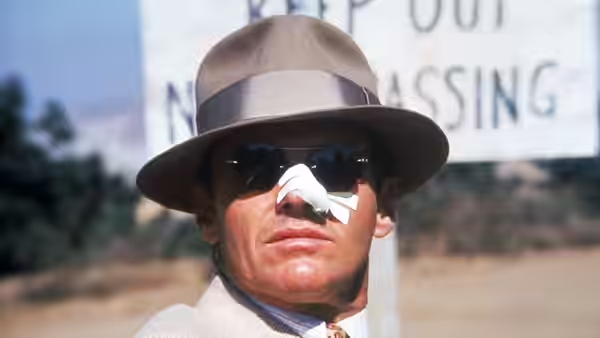
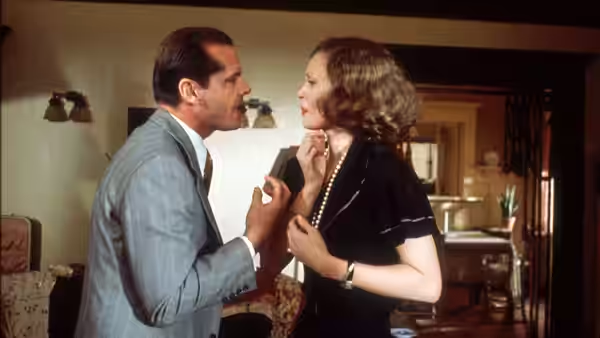
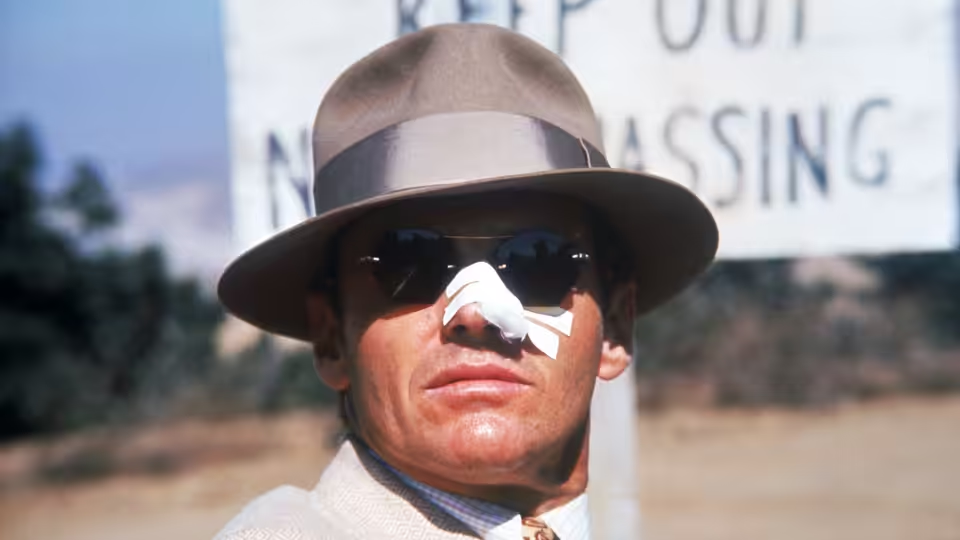
Private investigator J.J. ‘Jake’ Gittes (Jack Nicholson) works in 1930s Los Angeles, where an enquiry draws him towards an irrigation scandal. Following the case brings him into contact with Evelyn Cross Mulwray (Faye Dunaway) and Noah Cross (John Huston), as questions about the city’s resources become entangled with family secrets. Gittes tries to establish who is telling him the truth and what the people involved stand to gain. The story stays close to his perspective as he works through a case involving private lives and public corruption.

Plays from YouTube when you press play; nothing loads from them until then.

Fi1m review

Roman Polanski’s detective story is funny, unsettling and finely acted, with Jack Nicholson making confidence dangerously persuasive. The crowded plotting occasionally demands patience, but we would recommend it even to people who usually avoid detective films.

Roman Polanski’s Chinatown is a patient, disturbing detective film that deserves the full attention it asks for. Set in 1930s Los Angeles, it follows private investigator Jake Gittes into an irrigation scandal, keeping the investigation close to what he can understand. The case matters because the people involved remain interesting even when they are withholding information. We would recommend it even to people who usually find private-eye stories a little pleased with themselves.

Robert Towne and Polanski’s screenplay makes corruption interesting before asking us to find it appalling. The irrigation business could have become an interruption while we waited for the next suspicious person to arrive, but questions of ownership and control belong to the mystery. Some of the plotting is crowded, and there are stretches when keeping track of the enquiry becomes work. Sam O’Steen’s editing generally gives each new piece of information enough space to register, though it cannot entirely remove that congestion.

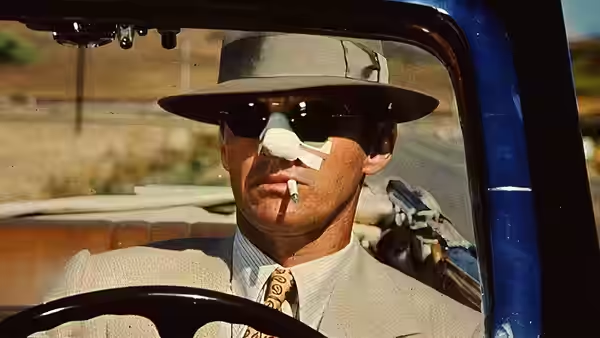
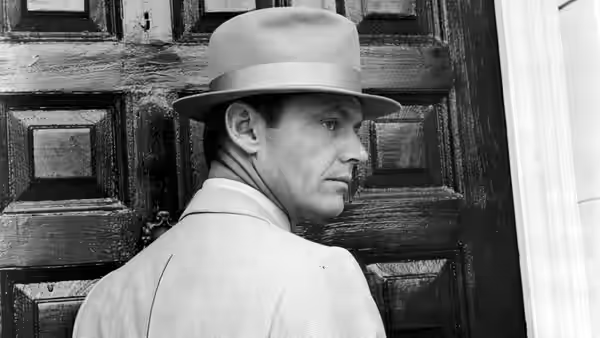
Jack Nicholson plays J.J. ‘Jake’ Gittes with intelligence and vanity in proportions that keep shifting. His charm makes the film funny without turning the investigation into an excuse for jokes. We laughed at his self-assurance, then became uneasy about how readily we had accepted it as evidence that he knew what he was doing. Nicholson makes that response possible by keeping Gittes recognisably fallible, even when he is enjoyable company.

Faye Dunaway’s Evelyn Cross Mulwray is harder company, and her guarded performance gives Gittes something his manner cannot easily settle. She makes us pay attention to the effort Evelyn puts into remaining composed, without announcing how we should read her. The writing sometimes keeps her at such a distance that she risks becoming another question for Gittes to answer, and Dunaway has to supply the person herself. John Huston’s Noah Cross is disquieting without much apparent effort; Huston understands how little he needs to do to hold our attention.

John A. Alonzo’s cinematography gives the crime story daylight, and the exposure makes it more troubling. Detective films often use shadows to warn us that something is being concealed. Here the city looks available for inspection, yet Gittes still has to struggle to understand it. Richard Sylbert’s production design establishes the period with enough assurance that we can stop checking it and follow the people. Anthea Sylbert’s costumes work similarly, helping the actors inhabit the period without making every appearance feel like a display.

Jerry Goldsmith’s score works because it does not keep telling us how much trouble everyone is in. Its restraint lets the unease persist without wearing out our nerves. Within the private-eye tradition, Polanski preserves the satisfaction of following clues while making the detective’s authority less reassuring than we expect. That choice keeps a complicated story involving corruption and family secrets from becoming merely a puzzle to be solved.

There is humour here, but we would not choose Chinatown for a soothing evening. Its 130 minutes ask for concentration and leave enough discomfort to make conversation afterwards preferable to immediately putting something else on. Give it an uninterrupted sitting, and allow a little time before deciding what to say.

Critical consensus AI synthesised

90
Positive
7
Mixed
0
Negative
0

Most critics are strongly enthusiastic about Chinatown, praising its detective story as a disturbing account of corruption and power. Robert Towne’s screenplay draws repeated praise for its organisation and political implications, while Jack Nicholson’s performance is a particular point of agreement, with Faye Dunaway and John Huston also receiving strong notices. The reviews admire Roman Polanski’s controlled direction, especially the way he makes the Los Angeles setting inviting without softening the cruelty beneath it.

There is little shared complaint; the differences mostly concern how highly to rank the film’s achievements. The New York Times offers a clear dissent, finding it stylish and well acted but short of the wit and entertainment of earlier detective films such as The Maltese Falcon. Elsewhere, critics treat the intricate plotting and pervasive disillusionment as strengths, stressing how the film unsettles the familiar pleasures of a private-eye mystery.

The Telegraph
★★★★★ · Tim Robey
100

The review calls Chinatown a five-star film whose aura is intentionally fatigued and deflated, importing 1970s paranoia into its 1930s Los Angeles setting. It praises how Polanski makes disillusionment seductive as Nicholson's private eye uncovers rot in an irrigation scandal.

Read the full review →
Empire
1 January 2012 · Rob Fraser
90*

The best private eye movie ever made, with all the gumshoe staples elevated by Towne's sophisticated script that updates Greek tragedy and offers a subtle political allegory from the Watergate/Vietnam era. A timeless classic and never-bettered noir masterpiece boasting top 1970s Hollywood talent.

Read the full review →
Slant Magazine
· Jeremiah Kipp
90*

The reviewer calls Chinatown a classic American film from the 1970s that works on multiple levels as both a detective story and a disturbing parable about human pressure and moral emptiness. Polanski handles the heavy material with a light cinematic touch, bringing the crime elements into sunlight without stylistic affectations while grounding the labyrinthine narrative in Jake's perspective.

Read the full review →
Total Film
13 December 2012 · Neil Smith
90*

A peerless gumshoe mystery with Robert Towne's magnificent script dissecting corruption and career-best performances from Nicholson, Dunaway and Huston. A 1974 masterpiece that is unforgettable.

Read the full review →
Time Out
5 January 2015 · JWin
85*

The film subverts the hard-boiled detective genre by having its protagonist get everything wrong before a tragic, Greek-tragedy-style climax. It singles out Jack Nicholson's charismatic, pre-Schtickolson performance and the film's bleak ending for particular note.

Read the full review →
Radio Times
8.1/10 · Adrian Turner
81

It is a masterpiece whose brilliantly organised script (the best original work since Citizen Kane) and strong performances, especially Nicholson's, repay repeated viewings. The ending was altered by Polanski from Towne's original plan, resulting in acrimony but genius on screen.

Read the full review →

Cast

Stills

Awards

Academy Awards, 1975

Nominated
Best Actor
Nominated
Best Actress
Nominated
Best Cinematography
Nominated
Best Costume Design
Nominated
Best Director
Nominated
Best Film Editing
Nominated
Best Original Dramatic Score
Nominated
Best Picture
Nominated
Best Production Design
Nominated
Best Sound
Won
Best Writing, Original Screenplay

BAFTA Film Awards, 1975

Nominated
Best Costume Design
Nominated
Best Production Design
Won
Best Actor in a Leading Role
Won
Best Direction
Won
Best Screenplay

Golden Globes, 1975

Won
Best Actor – Motion Picture Drama
Won
Best Director
Won
Best Motion Picture – Drama
Won
Best Screenplay

If you liked this, try…

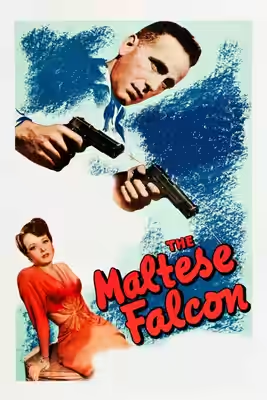
The Maltese Falcon poster

The Maltese Falcon

1941 · For another persuasive detective and a case crowded with competing interests.

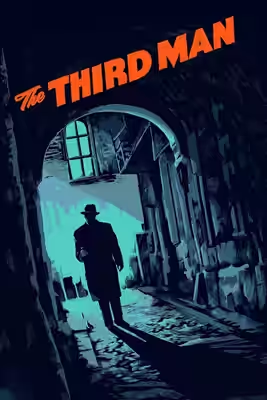
The Third Man poster92

The Third Man

1949 · Another investigation in a city where corruption feels comfortably at home.

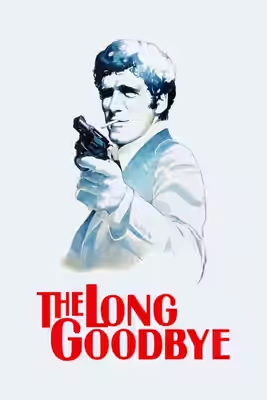
The Long Goodbye poster

The Long Goodbye

1973 · A shambling detective finds Los Angeles less amenable than he expects.

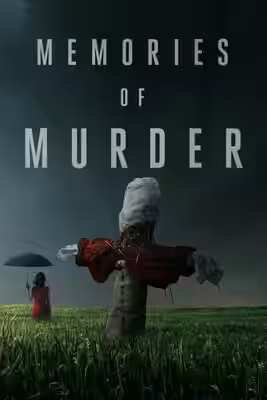
Memories of Murder poster

Memories of Murder

2003 · Police confidence proves unreliable in a Korean mystery with an unsettling comic streak.

The Secret in Their Eyes poster

The Secret in Their Eyes

2009 · An Argentine investigation gives private longing and public corruption equal weight.