Paul Abbott’s six-part conspiracy thriller makes its newsroom convincing and its complicated story worth following. The ensemble is a particular pleasure, though the density sometimes leaves us keeping track when we would rather stay with a character.
Paul Abbott’s State of Play is a sharply written political thriller that earns the attention its complicated story demands. Across six episodes, director David Yates gives the investigation room to develop without treating explanation as a regrettable interruption. We recommend it, with a warning that casual viewing will cost some of the pleasure. Following the story requires concentration, and Abbott usually makes that effort satisfying. It is also unusually good company for a drama with so much information to get through.
The newsroom gives the conspiracy a convincing place to begin. Abbott makes the work of pursuing a story interesting, and Donal Woods’s production design helps us believe that these people belong in the same workplace. We grew unexpectedly fond of this newsroom. The ensemble makes the shared business of reporting feel sufficiently credible that we care about the people doing it, even when there is plenty else to keep track of.
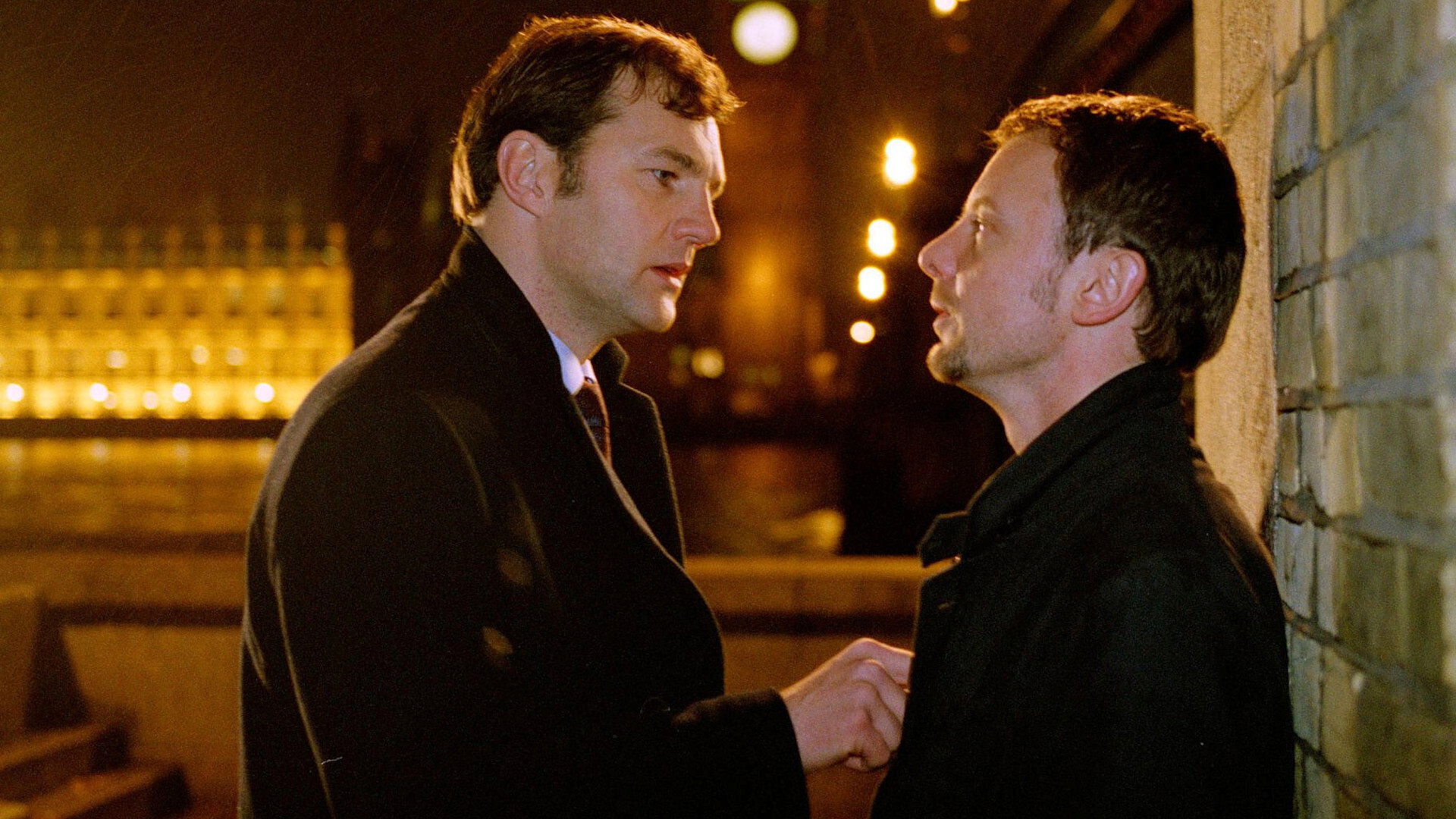
John Simm gives Cal McAffrey an urgency that helps us stay with the accumulating detail. David Morrissey’s Stephen Collins is harder to read, and the performance rewards the attention Yates allows it. Kelly Macdonald brings a welcome directness to Della Smith, while Bill Nighy, as Cameron Foster, supplies much of the dry pleasure. Nighy can make a line sound impatient without making the person delivering it tiresome, a useful skill when there is this much to discuss.
Yates is especially good at letting complicated material become clear without stopping the drama dead. Chris Seager’s cinematography keeps the ensemble scenes readable, so the people carrying the information retain our attention. Nicholas Hooper’s music supports the suspense without overwhelming the conversations, which are where much of the pleasure lies. The pacing gives the cast room to make those exchanges matter; a revelation has more force when we have been allowed to follow the reasoning that leads to it.
There is a cost to all this plotting. At times we are more conscious of keeping the connections straight than of what the characters are feeling, and the density can make a conversation feel like another task to complete. We occasionally want Abbott to let a conversation continue without adding something else to remember. These are brief frustrations, but an ensemble this good makes us notice when the story hurries it along.
The conspiracy thriller often asks us to accept confusion as evidence that something important is happening. Here we can follow the reasoning, which makes it harder to excuse ourselves from paying attention. That may be a barrier if tonight calls for a crime programme that can carry on in the background. A missed conversation is liable to matter here. Save this one for evenings when everyone on the sofa is prepared to listen.