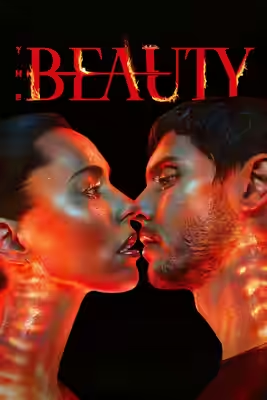
Ryan Murphy’s body-horror series delivers enough gruesome invention and committed acting to reward a strong stomach. Its beauty-industry satire is blunt, though, and an eleven-episode season gives the scattered storytelling too much space.
The Beauty is worth considering for the grotesque transformations and the actors willing to take them seriously; its satire gives us much less to work with. Writers Matthew Hodgson and Ryan Murphy start with a useful horror premise: physical perfection can be acquired, and the treatment can do terrible damage. That should be enough to support both disgust and uncomfortable recognition. Across eleven episodes, however, the series keeps finding more things to include without looking much harder at why people want to be beautiful.
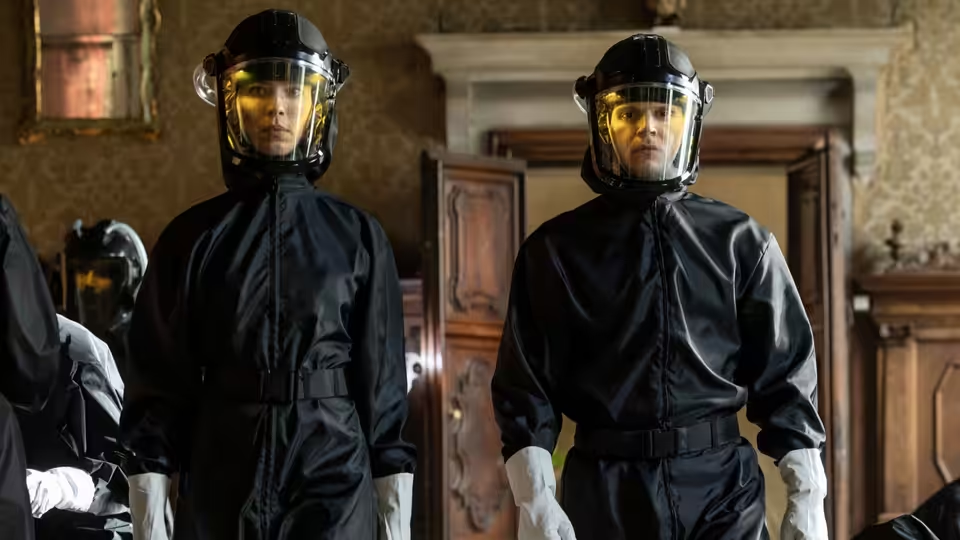
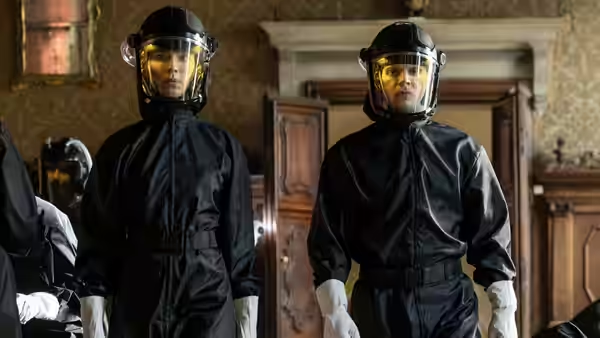
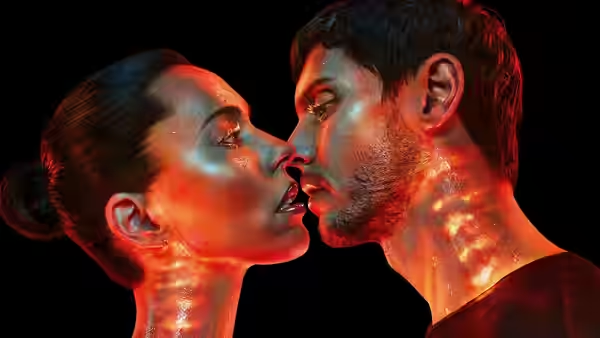
The transformations work. We were disgusted by the prolonged bodily damage, because the effects make becoming beautiful look physically unbearable. There is enough time to register the process rather than simply wait for a splash of blood, and that patience matters: the treatment begins to seem like something a person must endure. The practical effects do more to question the promise of a better body than the dialogue, which too often spells out what the gore has already made clear.
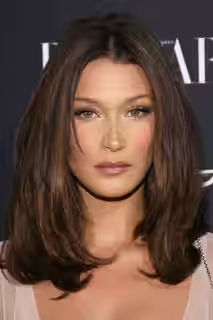
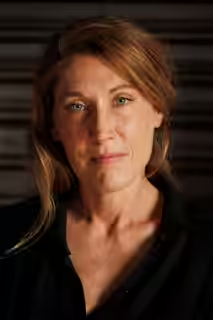
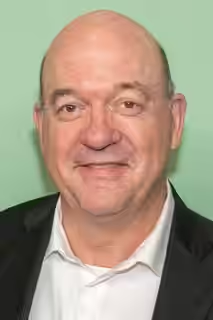
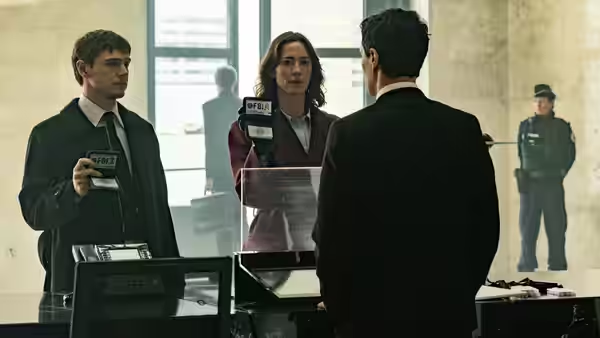
Evan Peters, as Cooper Madsen, supplies the seriousness this material needs to make its horrors matter. Jeremy Pope’s Jeremy gives us another reason to stay interested in the people, even when the writing is impatient to introduce another idea. Ashton Kutcher’s Byron Forst and Anthony Ramos’s Antonio are game for the series’ excesses. The cast’s willingness to commit is a considerable virtue, particularly when the tone cannot settle between black comedy and horror.
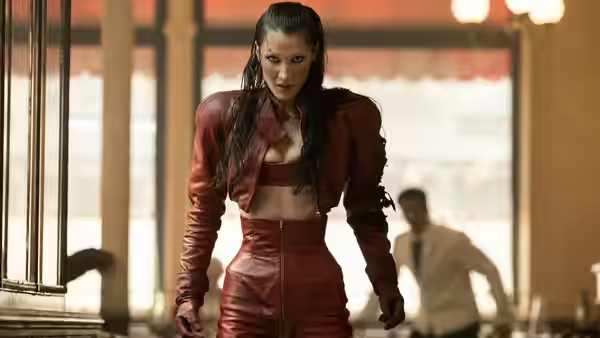
Jason McCormick and Stanley Fernandez Jr.’s cinematography gives the promised perfection a glossy appeal, making the ugliness harder to shrug off. Production designers Ioannis Papadopoulos, Marci Mudd and Kim Jennings help sustain that expensive-looking fantasy. The trouble is that the polished surroundings remain seductive even when the writing wants us to distrust the whole business of selling beauty. That contradiction could have been uncomfortable in a useful way, but the series rarely seems curious enough about its own pleasure in attractive people and their surroundings.
Editors Caroline Wang, Travis Weaver, Shannon Baker Davis, Philip Welch, Peggy Tachdjian and Julia Franklin cannot keep the growing number of storylines equally engaging. The early pace slackens, and movement between strands becomes something to sit through before the next sustained piece of horror. Mac Quayle’s music adds to the general overstatement, though it is more effective when the horror dominates than when the performances need space. We wanted a quieter stretch in which someone could hold our attention without another outrage being prepared.
Body horror becomes more disturbing when we understand why someone would risk such damage in the first place. Here, the writing repeatedly tells us that appearance has become a commodity, then treats that observation as sufficient. The uneven shifts into camp can be enjoyable, and we would not ask this programme to become a lecture. We would ask it to trust an ugly image, or a committed performance, without explaining the lesson quite so firmly.
There is enough gruesome invention here to interest anyone curious about what a beauty treatment might do to human flesh. The performances and effects make the scattered storytelling frustrating, because this could have been a much tighter programme. We would reserve it for committed body-horror viewers with patience for digression; anyone arriving for a searching account of beauty and power should make other plans.