Ryan Murphy makes glossy, grotesque television with a serious interest in outsiders. We value his willingness to risk bad taste, but his crowded storytelling too often leaves characters and the questions they raise waiting for attention.
Fi1m perspective
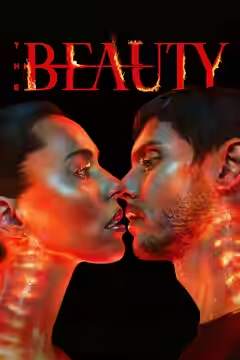
In The Beauty (2026), physical perfection can be acquired through a treatment that can also do terrible damage. The premise suits a director repeatedly drawn to beauty culture, extremes and people who feel excluded. The series is worth considering for its grotesque invention, but its beauty-industry satire is blunt. That is a familiar hazard in work so eager to include another shock: the spectacle gets more attention than the people submitting to it.
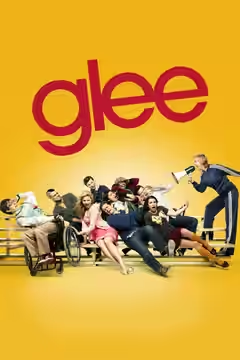
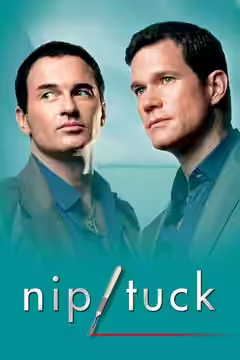
The fascination with appearance was already there in Nip/Tuck (2003), his breakthrough blend of glossy drama and beauty-culture satire. Glee (2009) brought musical storytelling and teenage outsiders to a broad audience. With Brad Falchuk, he then launched American Horror Story (2011), allowing a new story with each season. The format suits his appetite for mixing genres, because each new season gives him somewhere else to take them. We understand the appeal of being able to begin again, though a new premise is no guarantee of a better-told story.
Large ensembles, recurring actors such as Evan Peters and theatrical production design are consistent features of Murphy's work. Those choices need performers who will take the material seriously, however extravagant it becomes. In The Beauty, the cast supplies that conviction rather than standing back from the grotesque premise. We recoiled at the transformations because the acting makes the bodily damage feel like suffering, not just an opportunity for gruesome invention. This is where the series earns its shocks, and where Murphy's taste for extremes works.
Writing with Matthew Hodgson on The Beauty, he starts with a question that ought to sustain horror and satire: what makes physical perfection so desirable? Across eleven episodes, the series keeps finding more to include without looking much harder at that desire. We do not need Murphy to become restrained for the sake of good manners. We would like him to stay with that question long enough to give the actors more to work with. Try The Beauty if body horror is your territory; eleven episodes is a long commitment to a satire this blunt.
Biography
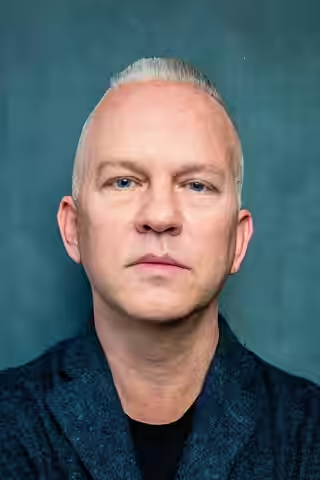
Ryan Patrick Murphy (born 9 November 1965) is an American television writer, director and producer. He was born in Indianapolis, Indiana.
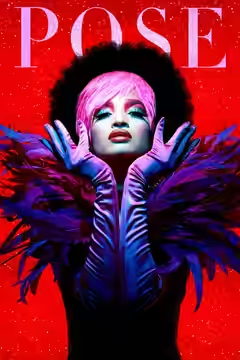
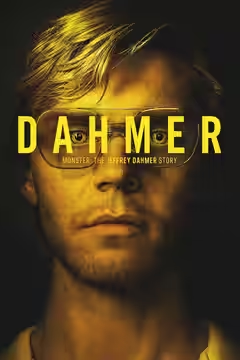
Murphy created and produced series including Popular (1999–2001), Nip/Tuck (2003–2010), Glee (2009–2015), American Horror Story (2011–present), Scream Queens (2015–2016), American Crime Story (2016–present), Pose (2018–2021), 9-1-1 (2018–present), The Politician (2019–2020), 9-1-1: Lone Star (2020–present), Ratched (2020), American Horror Stories (2021–present) and DAHMER – Monster: The Jeffrey Dahmer Story (2022). He directed the films Running with Scissors (2006), Eat Pray Love (2010), The Normal Heart (2014) and The Prom (2020). He is credited as creator, writer and director on the 2026 series The Beauty.
Murphy has received six Primetime Emmy Awards from 36 nominations, a Tony Award from two nominations, and two Grammy Award nominations.