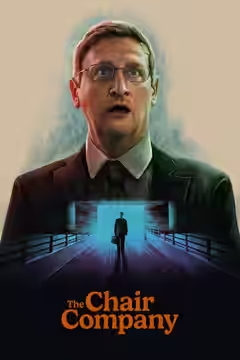
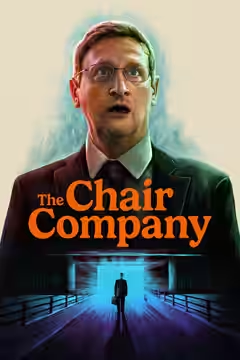
Tim Robinson takes a broken office chair personally in this funny, unsettling comedy. Some scenes prolong the embarrassment beyond the joke, but his performance and a strong supporting cast make the investigation worth following.
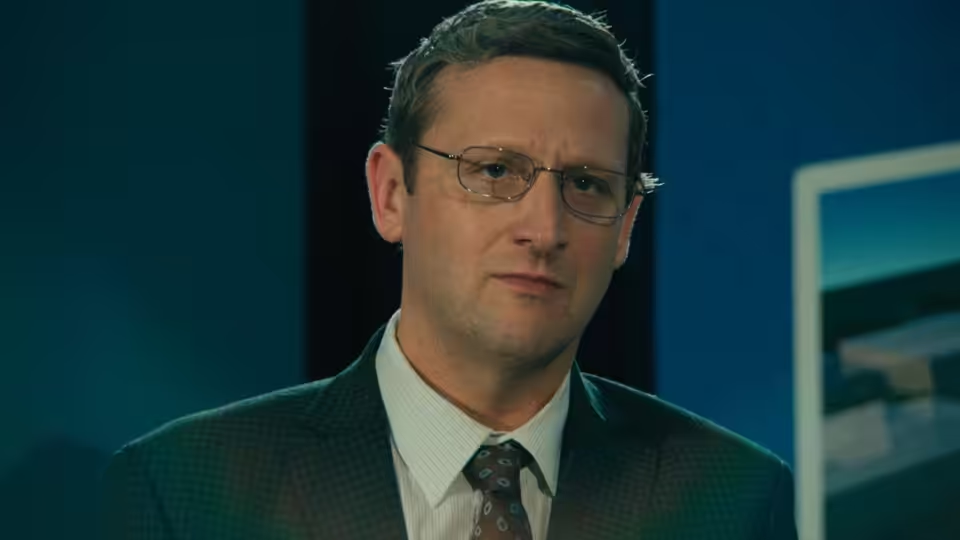
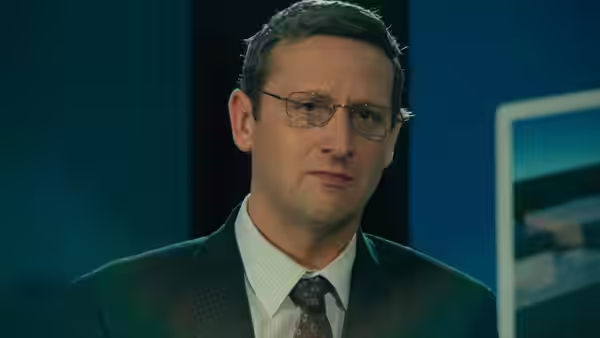
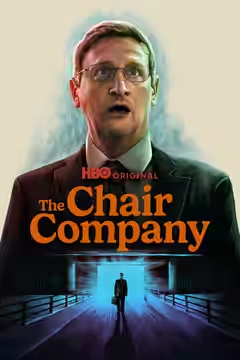
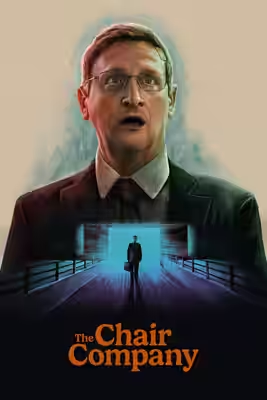
Tim Robinson’s Ron Trosper responds to a humiliating office incident by pursuing the company that made the chair involved. The Chair Company follows him from workplace comedy into a conspiracy thriller, and the change suits his refusal to let the matter drop. We recommend it for Robinson’s relentless performance and the unease of its ordinary surroundings, with a warning about how long some of the embarrassment lasts. This is an eight-episode series built around a complaint that most people would prefer to forget.
Robinson makes Ron’s insecurity funny without making his persistence easy to sit through. We laughed at the broken-chair humiliation, then felt uncomfortable as he pursued it with such determination. His eagerness to find something wrong outside himself makes each new encounter harder to shrug off, and Robinson never lets the original embarrassment feel safely behind him. An awkward man trying to recover a little dignity is familiar comedy, but Robinson gives him enough force to make a longer investigation seem plausible.
The writing team, which includes Robinson and Zach Kanin, gives him odd people to collide with and dialogue precise enough to make their encounters more than repeated complaints. Lake Bell, as Barb Trosper, helps keep the supporting cast from feeling like a queue of people waiting to be overwhelmed by the lead. Her performance gives us someone else worth attending to when Ron’s behaviour dominates the series. That matters in a programme so dependent on the same man’s discomfort.
Directors Andrew DeYoung and Aaron Schimberg understand that the conspiracy needs to be unsettling if Ron’s search is going to hold our attention. Ashley Connor’s cinematography helps make everyday surroundings feel sinister, without requiring us to believe that Ron has understood them correctly. The production design by Jason Singleton and Rocio Gimenez gives that unease an appropriately ordinary setting, keeping the odd characters close to recognisable surroundings. Those settings make the increasingly strange encounters harder to dismiss, and help the series sustain its darker tone.
Keegan DeWitt’s music supports that darker tone, although the series needs little help making Robinson’s encounters uncomfortable. The editing by Stacy Moon and Andrew Fitzgerald lets the awkwardness linger, which can make an exchange funny well beyond the point of good manners. It can also leave a scene still insisting on its awkwardness after the joke has landed. Across the season, that habit becomes the main drawback: stretches of the investigation seem to prolong Ron’s agitation rather than give him something substantially different to do.
The conspiracy thriller proves a useful choice of genre for a man like Ron: it makes his refusal to stop seem briefly reasonable. The comedy is strongest when his insecurity remains recognisable, even as the people around him become harder to account for. Those expecting a tidy succession of clues may find his repeated discomfort an obstruction, and the series will not persuade everyone to enjoy it. For anyone who likes social embarrassment played with this much conviction, though, it earns the longer form. Try it in company, preferably with someone who knows when to stop pursuing a complaint.