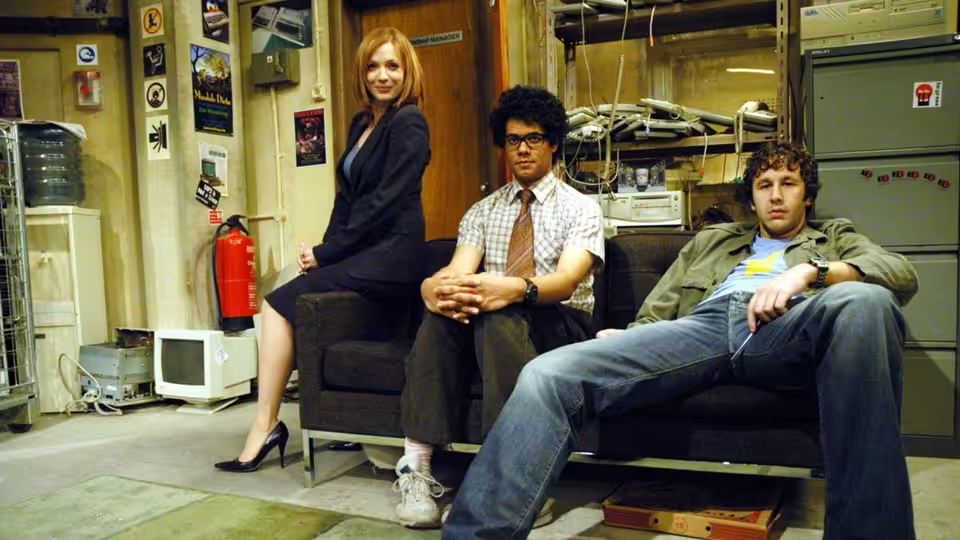
A scene from The IT Crowd
Series review

The IT Crowd

2006 · Created by Graham Linehan · Series · MPA TV-14

In a sentenceTwo men who could fix your computer, one woman who cannot, and a phone that nobody wants to answer

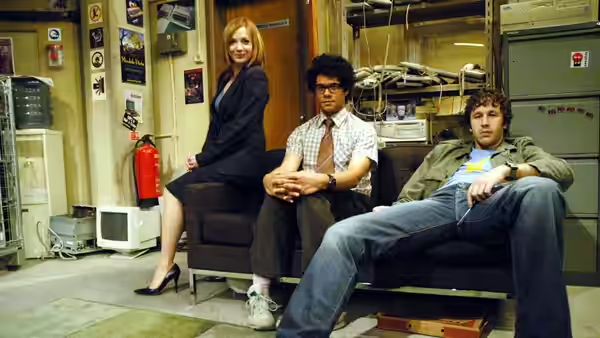
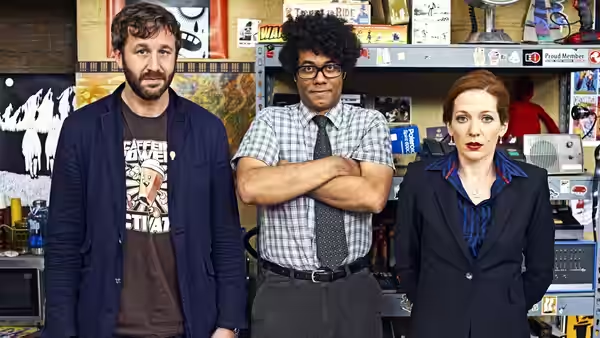
Reynholm Industries is a glass tower with a basement, and in the basement sits the IT department: Roy Trenneman (Chris O’Dowd), who answers every support call by asking whether they have tried turning it off and on again, and Maurice Moss (Richard Ayoade), who knows everything about machines and nothing about people. Upstairs, the chief executive, Denholm Reynholm (Chris Morris), runs the company on slogans and sudden rages. He sends down a new manager, Jen Barber (Katherine Parkinson), who has told him she has extensive experience with computers and cannot switch one on. The first series follows Jen Barber’s efforts to hide it, Roy Trenneman and Maurice Moss’s efforts to be left alone, and Denholm Reynholm’s team-building exercises that nobody asked for.

Fi1m review

Graham Linehan’s basement sitcom is old-fashioned in shape, three walls and a live audience, and at its best it is the finest farce British television has managed this century. The first series is thin and the last stretches its ideas.

Graham Linehan, who wrote Father Ted, puts two computer technicians in a basement under a large company and gives them a manager who cannot turn a computer on. That is the whole idea, and The IT Crowd runs it for twenty-four episodes across four series, from 3 February 2006 to the summer of 2010. It is a studio-audience sitcom of the traditional kind: a set with three walls, doors people run through, laughter you can hear. About a third of it is very funny indeed, most of the rest is funny, and a handful of episodes are lazy. That is a better ratio than most sitcoms manage and we recommend it without much hesitation.

The cast is the reason. Chris O’Dowd plays Roy Trenneman as a man whose one ambition is to be left alone, slouched in his chair, aggrieved by every phone call, capable of enormous effort in the service of avoiding effort. Richard Ayoade’s Maurice Moss has a side parting, thick glasses and a way of saying every line as if reading it off a card he has just been handed; he never understands why the studio audience laughs, and the audience laughs harder because of it. Katherine Parkinson’s Jen Barber has bluffed her way into managing them and keeps bluffing, and Parkinson plays the panic just under the confidence. The three of them have the timing of an act that has been together for years.

Above them, Chris Morris plays Denholm Reynholm, a chief executive who runs the company on slogans, sudden rages and team-building exercises nobody asked for. Every scene he is in is a short sketch and nearly all of them land. Matt Berry, as Douglas Reynholm, joins later and brings a voice too large for the building and appetites to match. Berry can make the word “Jen” sound like a threat and a proposition at once.

Dennis De Groot’s basement is the show’s fifth character: strip lights, stacked monitors, a whiteboard nobody wipes, cables hanging from the ceiling, everything in grey and beige. Upstairs is glass and white and empty of anything useful. Linehan directs his own scripts and knows when to hold the shot after a line rather than cut away from the laugh. The live audience will strike some viewers as dated. It did not strike us that way, because the laughter is earned; nobody is being told when to laugh, they are simply laughing.

The show is at its best when it stops being a workplace comedy and becomes a farce. The best-known example, an evening at the theatre for the three of them, sets up four small lies in its first five minutes and then lets them meet. We laughed until it hurt, and then we went back and watched it again to see how it was built, and it is built like a clock. Every misunderstanding pays off, nothing is wasted, and the last minute is the funniest.

It is not always that good. The first series leans on the oldest joke about computer people, the one about not having girlfriends, and some episodes settle for it. Jen is written as stupid one week and sharp the next, depending on what the plot needs. The fourth series takes single ideas that would have made a fine ten minutes and stretches them to thirty. Most critics have landed somewhere around the middle on this show; we are a little warmer than the consensus because the good episodes are so good and there are only twenty-four to sort through.

Against Father Ted it comes off second, and that is no disgrace. Both use the same machine: a small trapped group, one idiot, one schemer, one who wants a quiet life. Father Ted did it on an island and its world was stranger; this does it in a basement and its lines are more quotable. Two decades on, people still say the tagline to each other in offices, which is more than most sitcoms leave behind.

Watch two at a time, in order, and forgive the first three episodes their nerves. It carries a 15 for language and one or two things we will not describe.

Critical consensus AI synthesised

67
Positive
6
Mixed
1
Negative
1

Most critics take to it. The praise clusters on Graham Linehan’s writing, which several reviewers say lifts a standard workplace sitcom into full-blown farce, with the ‘Work Outing’ episode named as the peak. The three leads are singled out repeatedly, Moss in particular, and more than one review approves of the show for leaning into the studio-audience format rather than apologising for it. The comparison with Father Ted comes up: geeks get the treatment the clergy once did. The final special is judged a well-balanced send-off.

The spread is wide. Empire, reviewing in 2006, finds the comedy limp and lazy, with few proper laughs and characters that never feel real. Variety, two years later, likes the concept but finds the loopy execution only occasionally delivers. Radio Times notes, more gently, that the series did not set the world alight at first and is best understood as a grower.

The Telegraph
· Michael Hogan
90*

The final special is a confident, well-judged blend of humour, callbacks and poignancy that lets the series bow out on a high. It balances mawkishness and mirth perfectly while delivering great gags and a fittingly silly, excellent conclusion to this cult hit.

Read the full review →
The AV Club
8 April 2009 · B+ · Nathan Rabin
83

The critic praises the show for transcending its standard workplace sitcom tropes through snappy writing and great performances, noting it builds to hilarious farce. They single out the strong cast and the way it embraces its studio audience format.

Read the full review →
The i Paper
24 August 2017 · Alex Nelson
80*

The critic praises the series as a classic sitcom thanks to Graham Linehan’s sharp writing blending surreal elements with relatable situations and a cast of funny, interesting characters. They single out the ‘Work Outing’ episode as the finest farce in British sitcom history for its masterful interweaving plots, ridiculous scenarios and escalating absurdity.

Read the full review →
Radio Times
· Alison Graham
70*

The critic notes that the series was an oddity when first broadcast in 2006 and did not set the world alight. It is described as a classic grower that audiences come to appreciate over time.

Read the full review →
The Guardian
16 May 2013
70*

The series turns technical support into fresh, funny comedy by tackling geek stereotypes head-on in silly situations, much like Linehan's Father Ted did for the clergy. It succeeds as a traditional studio-audience sitcom through its embrace of tech language and geek culture, with standout characters like the memorable Moss holding it together across the seasons.

Read the full review →
The Hollywood Reporter
28 September 2008
70*

The critic notes that Graham Linehan captures some of the geek mystique in a series that proved popular in the UK, with surprise comic twists often the best parts. The three leads are terrific as employees who want only to keep their jobs but not let them interfere with their personal lives.

Read the full review →

Straight answers AI written, from our review

Is The IT Crowd worth watching?
The IT Crowd is worth watching for anyone who likes a studio sitcom built like a farce, and we scored it 76. About a third of its twenty-four episodes are very funny, most of the rest are funny, and a few are lazy, with the first series thin and the fourth stretching its ideas. Watch two at a time, in order.
How long is The IT Crowd, and what is it rated?
The IT Crowd is rated TV-14 by the MPA in the US. It is a comedy series.
Where can I watch The IT Crowd in the US?
The IT Crowd is streaming on Amazon Prime Video, BritBox, Tubi and The Roku Channel in the US. Availability is checked daily; the links above go straight to each service.
How violent or frightening is The IT Crowd, and is it suitable for children?
The IT Crowd carries a UK 15 certificate, for language and one or two things we will not describe, so it is not for young children. There is nothing violent or frightening in it; the comedy is misunderstanding, panic and shouting in a basement. Older teenagers who can take the swearing will be fine.
How does The IT Crowd compare to Father Ted?
The IT Crowd comes off second to Father Ted, and that is no disgrace. Both use the same machine, a small trapped group of an idiot, a schemer and one who wants a quiet life, but the earlier show built a stranger and better world around its priests. The basement sitcom has the more quotable lines and the tighter farce episodes.

Cast

If you liked this, try…