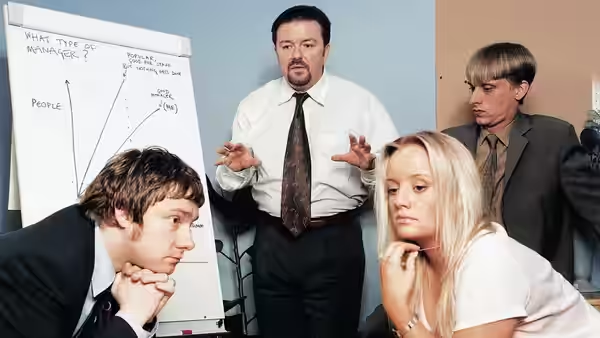
Ricky Gervais and Stephen Merchant make office embarrassment painfully funny, helped by an ensemble alert to every uncomfortable pause. Brent’s persistence can become wearing, but the affection for the people around him makes the discomfort worthwhile.
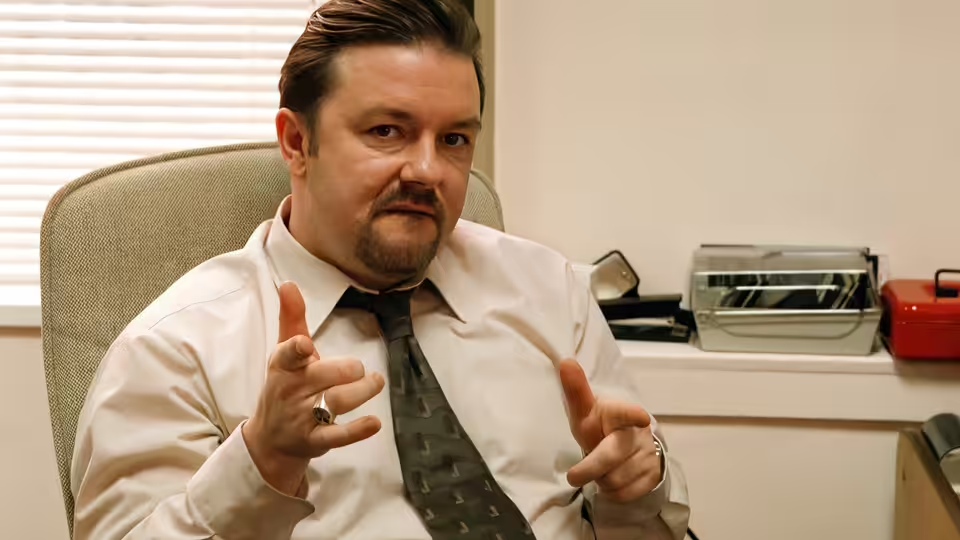
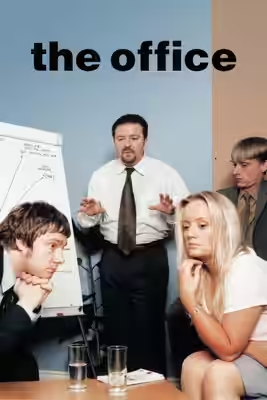
The Office is an excellent comedy about the effort of being liked, and how unpleasant that effort can become for everyone nearby. Ricky Gervais and Stephen Merchant give David Brent an audience he can neither win over nor leave alone. Their mockumentary lets him keep trying while the people around him register what it costs to listen. The discomfort occasionally becomes repetitive, but the ensemble gives us good reason to stay.
Brent’s joke-telling is central to his opinion of himself, and Gervais plays that self-satisfaction without protecting him from looking foolish. The writing by Gervais and Merchant is alert to how long a person can carry on believing an encounter is going well. The others do not have to deliver a better line to undermine him; their glances towards the camera are enough. We found ourselves laughing at Brent and then feeling mean about it, because those looks make us accomplices in watching him fail.
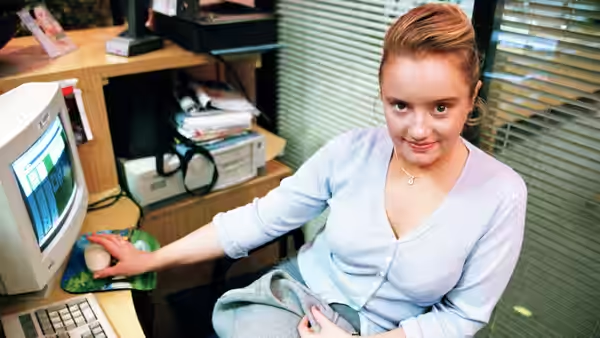
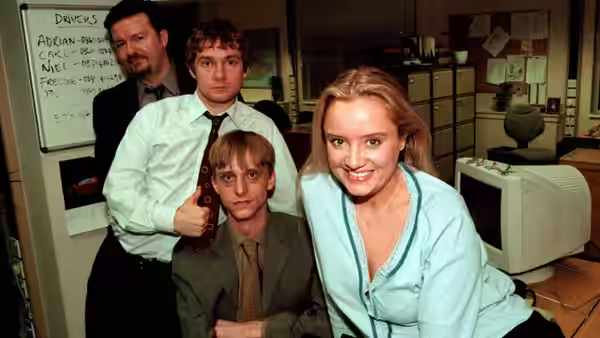
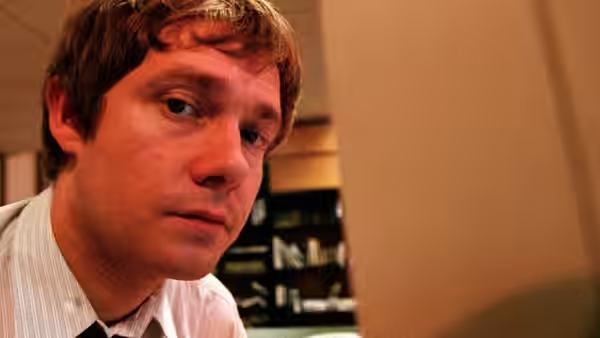
Martin Freeman’s Tim Canterbury and Lucy Davis’s Dawn Tinsley are essential to keeping that embarrassment bearable. Their romance gives us something to hope for beyond the next humiliation, and both actors make that hope seem reasonable without demanding a sudden change of tone. Freeman is particularly good at letting amusement become a small retreat from the people around him. Davis keeps Dawn sufficiently distinct that she never seems to exist simply to give Tim somebody to care about.
Mackenzie Crook’s Gareth Keenan makes the ensemble less comfortable to sort into sensible people and David Brent. Crook brings enough awkwardness of his own to prevent the comedy becoming a simple exercise in everyone else being right. That matters in a programme so dependent on reactions, where agreement between the viewer and the characters could become rather cosy. The company remains prickly enough that escaping Brent does not necessarily promise an agreeable conversation.
Gervais and Merchant’s direction makes the camera feel like another person whose opinion counts. Those fourth-wall glances offer an escape from the office conversation, but they also expose the people using them: somebody is watching their behaviour too. The documentary pretence gives the performances room to look unprepared, and the directors resist making every reaction equally conspicuous. A glance held too long would announce a joke; the cast generally finds the point at which a look still passes for an involuntary response.
The weakness is that Brent’s appetite for attention can become wearing even after we have accepted that this is part of the pleasure. Gervais sometimes presses an awkward passage beyond the point at which it tells us anything new about him, and Merchant’s shared writing and direction do not always check that impulse. We start waiting for the next person to speak. Deliberately prolonging our discomfort does not make each extra beat equally funny, particularly when the quieter relationships have become more interesting.
A workplace comedy has a useful advantage: nobody needs an elaborate reason to remain in the same room. The Office makes good use of that arrangement, allowing people to be bored, irritated or embarrassed while still having to listen. A shared look or a tentative romance matters more when the working day offers so little else to look forward to. Watch it with someone who knows when a joke is finished.