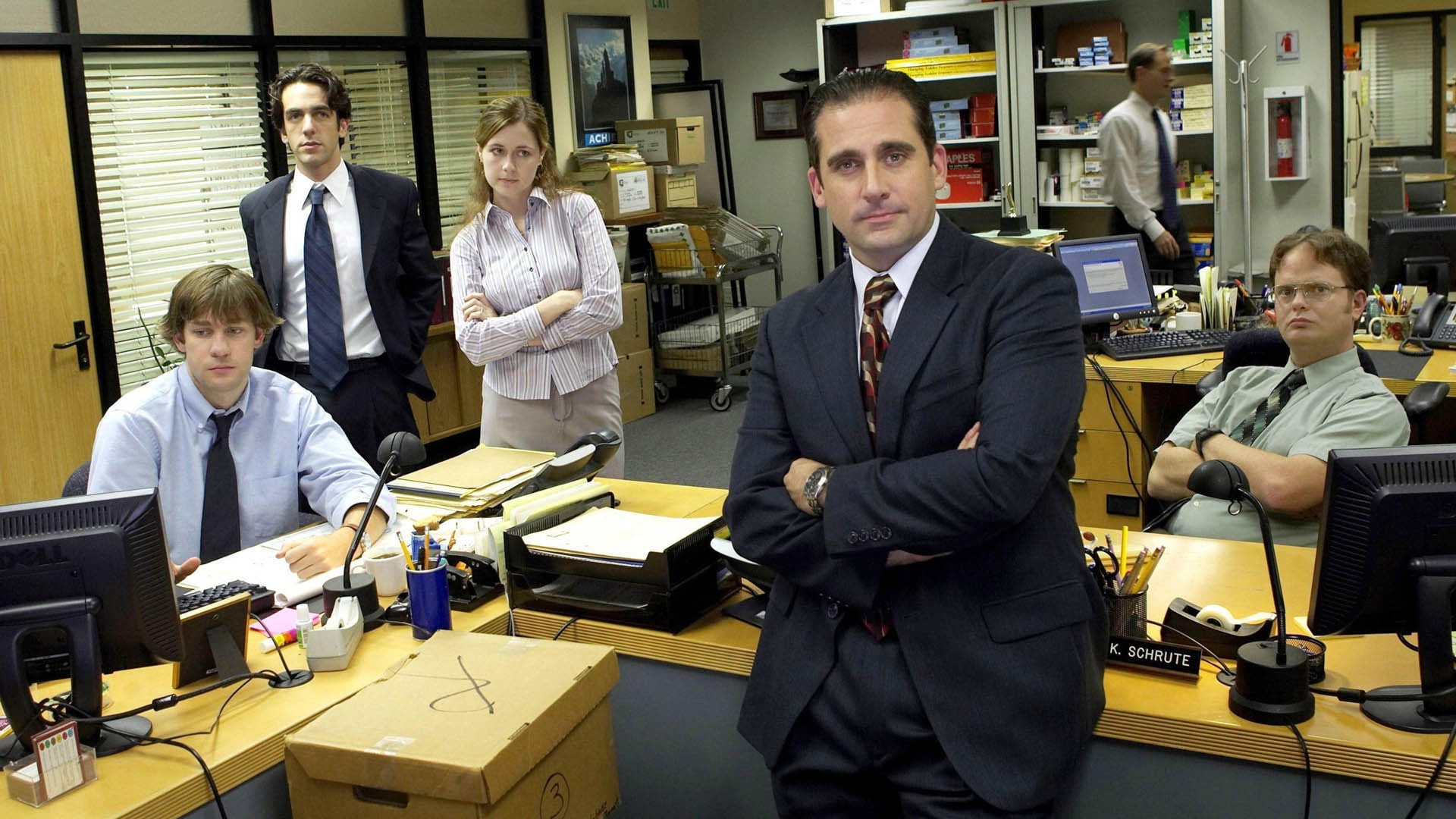
Steve Carell gives The Office enough painful neediness to make an exhausting boss worth our time. The borrowed beginnings and occasional overplaying matter, but this is a funny workplace comedy with a cast worth knowing.
An office comedy has to make repetition bearable: the same faces, the same small irritations, the same person who mistakes authority for charm. Greg Daniels’s The Office does that well enough to make its borrowed beginnings worth getting through. This American adaptation is funny and often touching, although it can push a promising embarrassment beyond the point at which anyone still seems believable. Its strongest reason to stay is Steve Carell, whose Michael Scott makes being liked look like exhausting work.
The early resemblance to the British The Office is a real problem, not merely something for loyalists to complain about. Familiar situations encourage comparison before the new cast has had much chance to establish itself, and Carell’s eagerness can initially look like an actor labouring to sell a joke. Daniels is more persuasive when the characters seem free to be foolish in their own ways. The broadening helps, provided the series remembers how little a workplace slight needs to hurt.
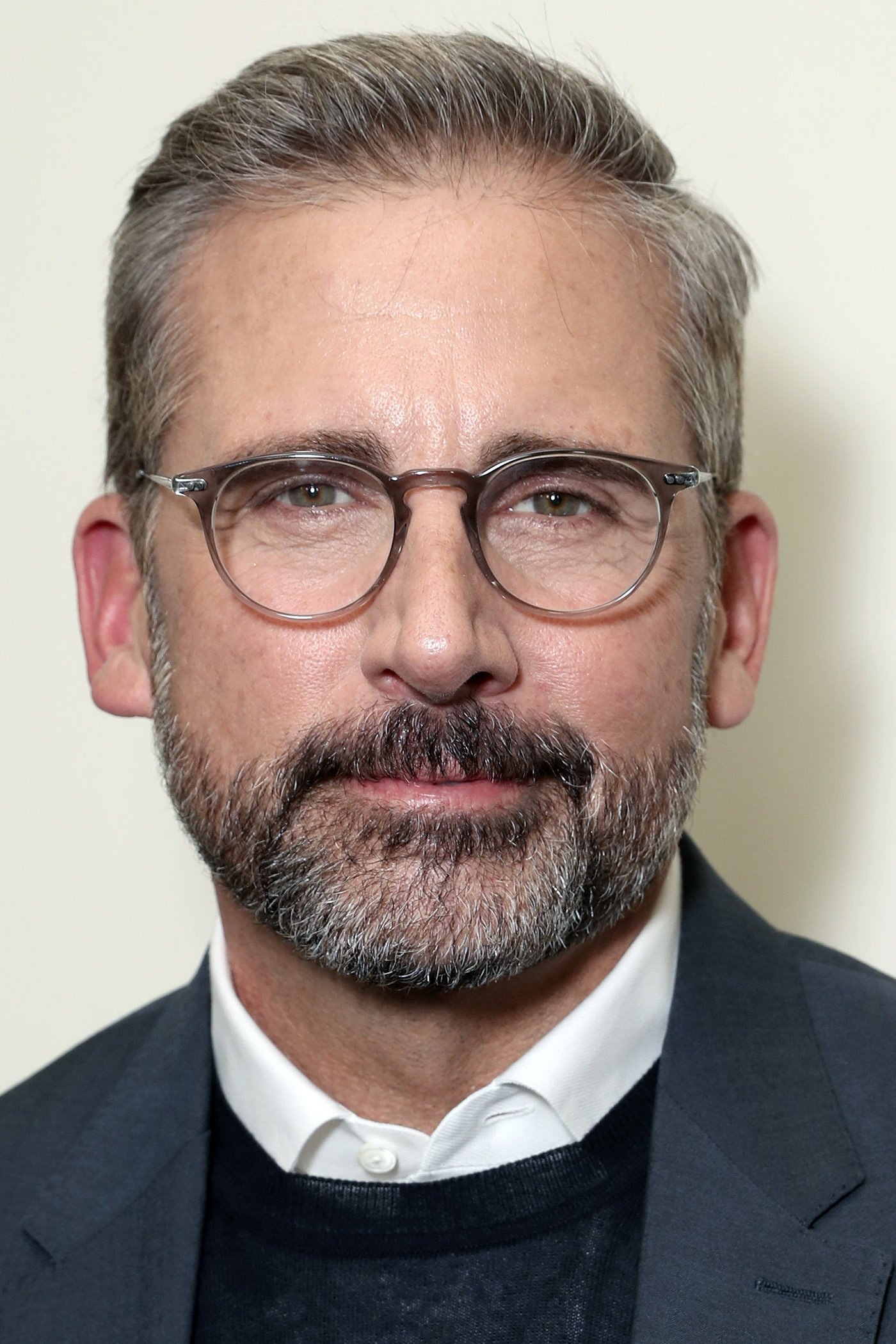
Carell makes Michael’s cluelessness specific: the certainty that he is entertaining company sits beside an anxious need for confirmation. We laughed, then felt sorry for him, because Carell lets the effort to seem funny show on Michael’s face. That does not excuse the boss, and the performance would be much less interesting if it did. Carell keeps enough selfishness in the part to make sympathy uncomfortable; we can understand why this man wants an audience without wanting to spend a working day giving him one.
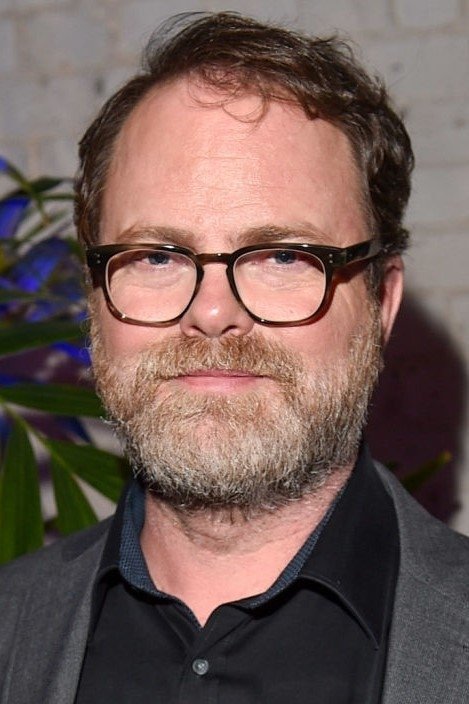
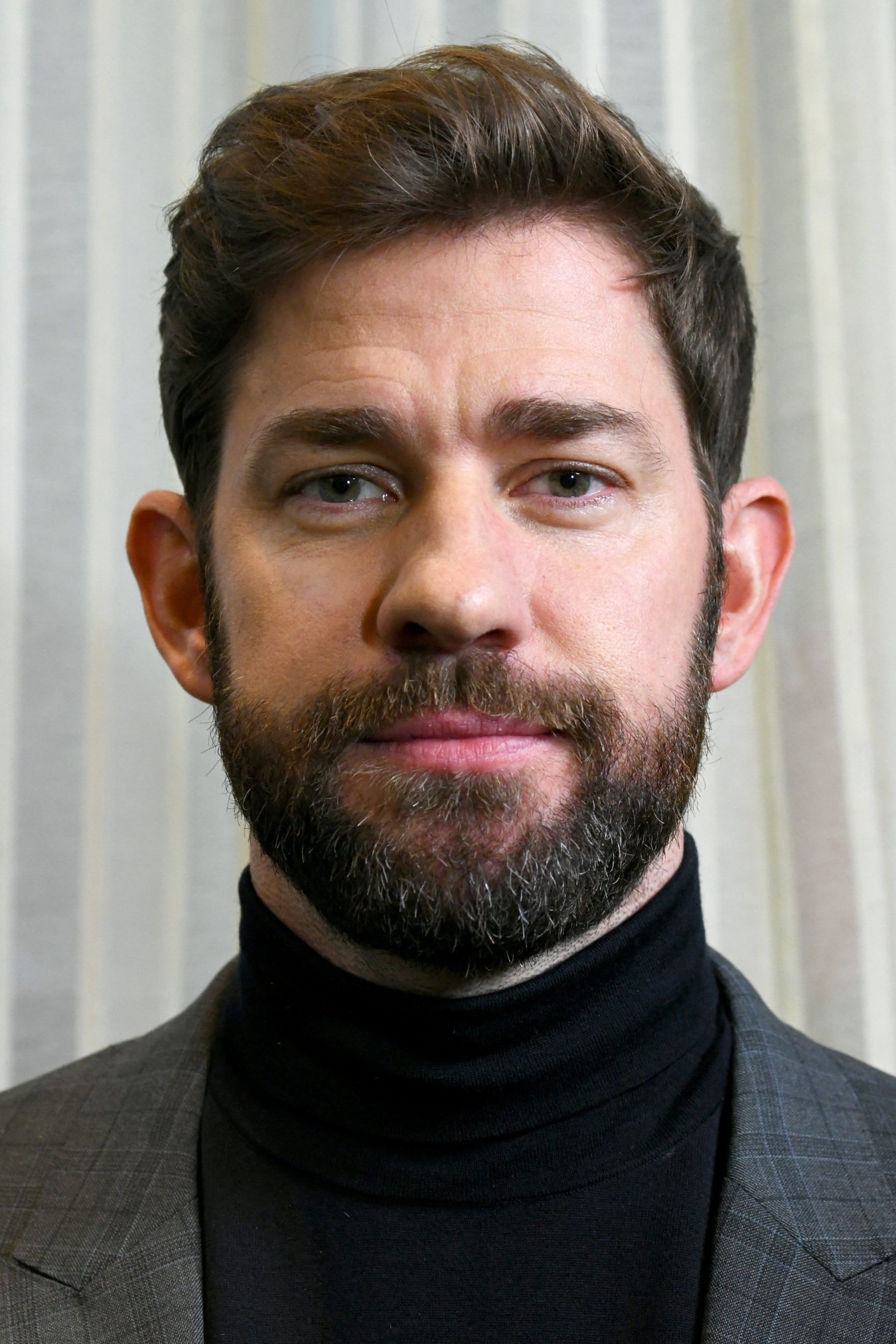
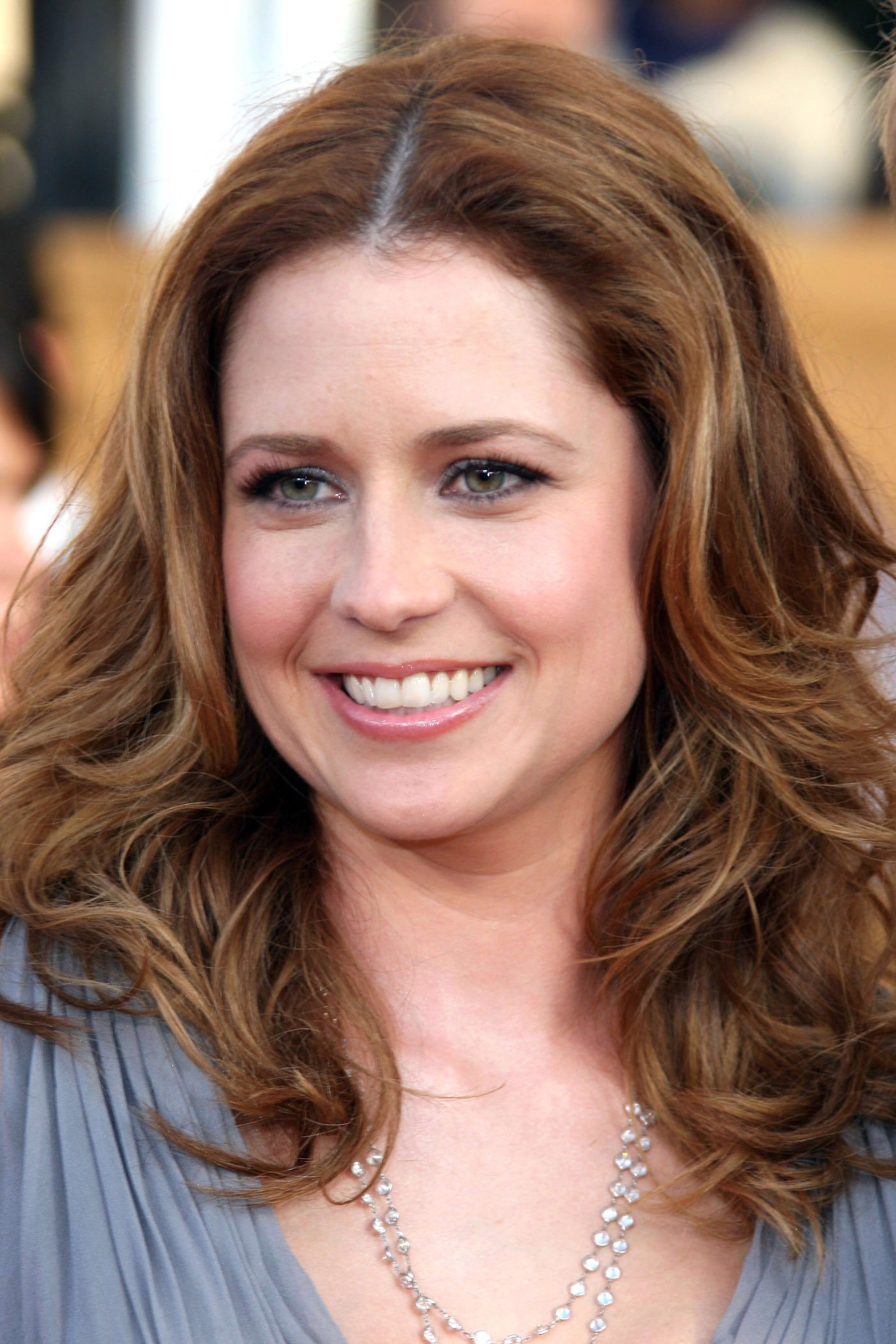
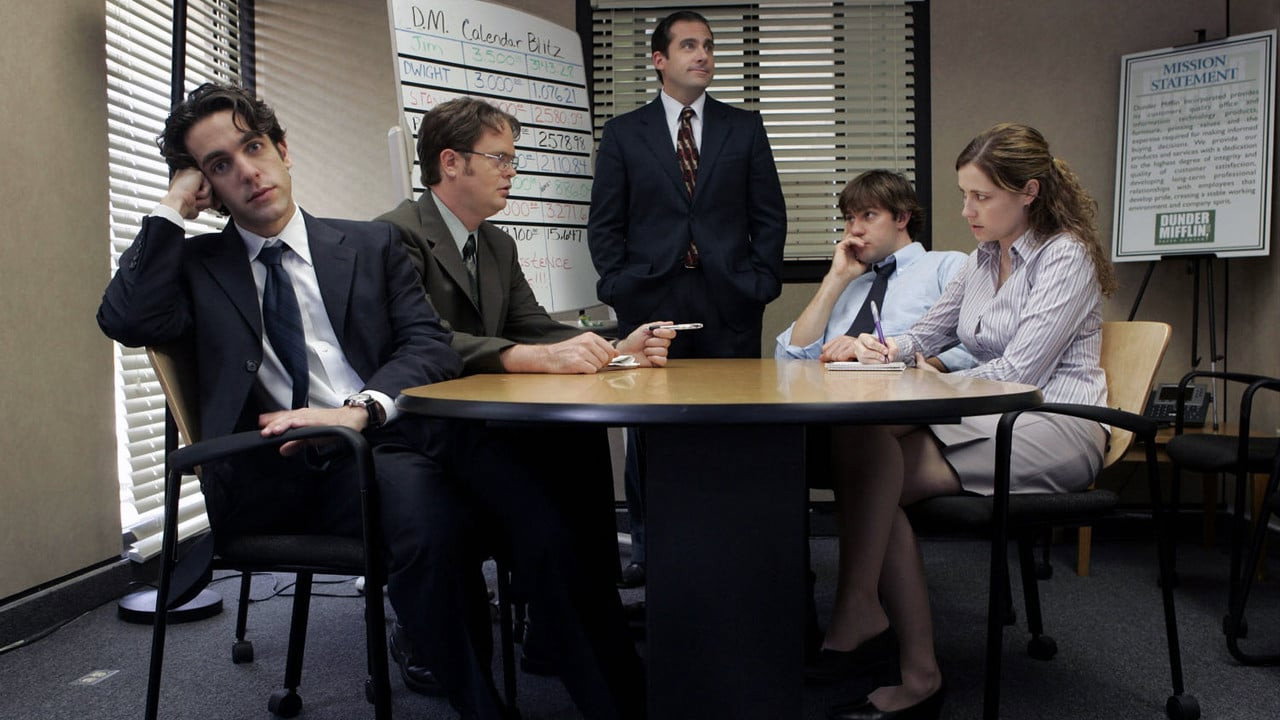
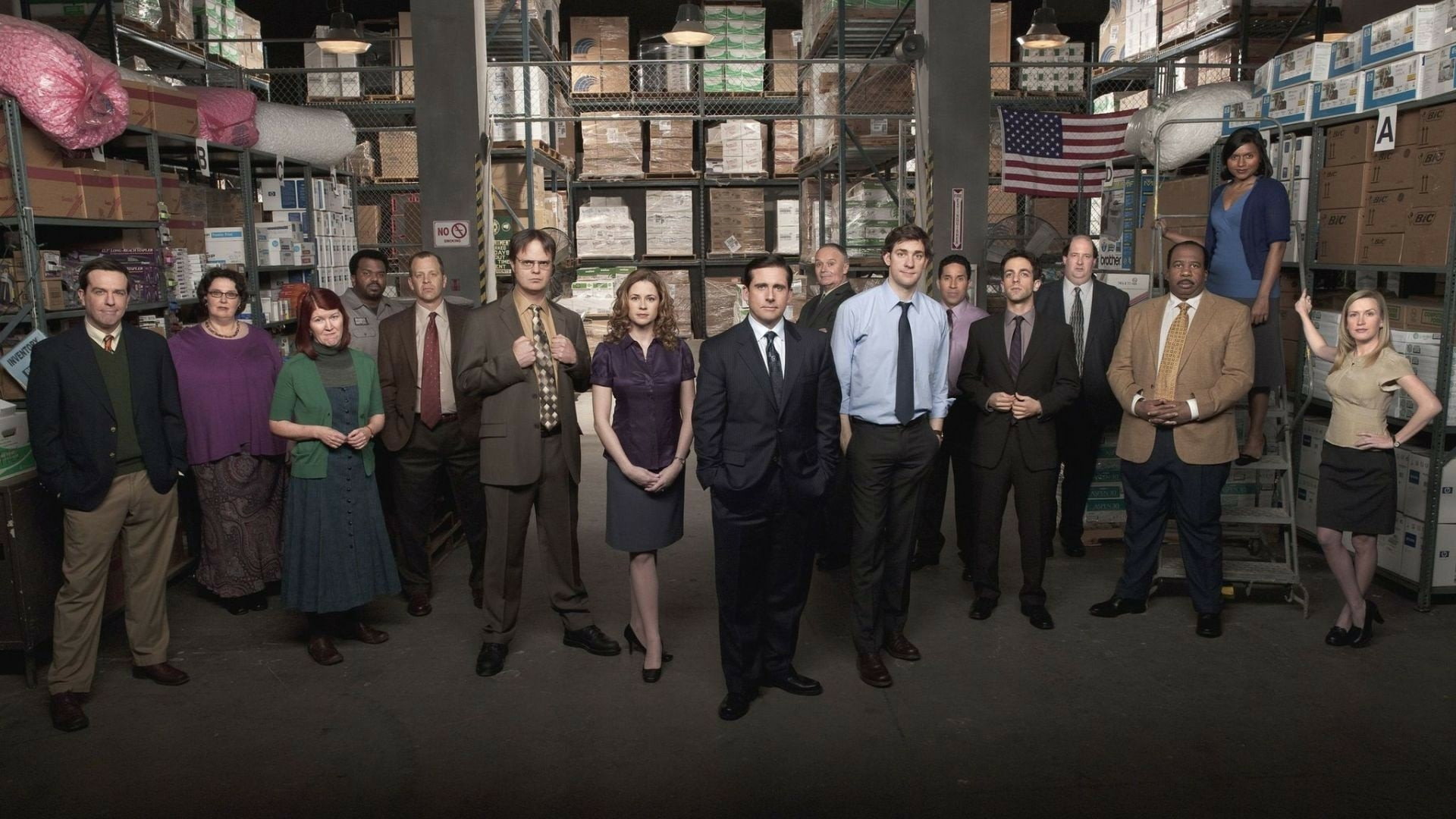
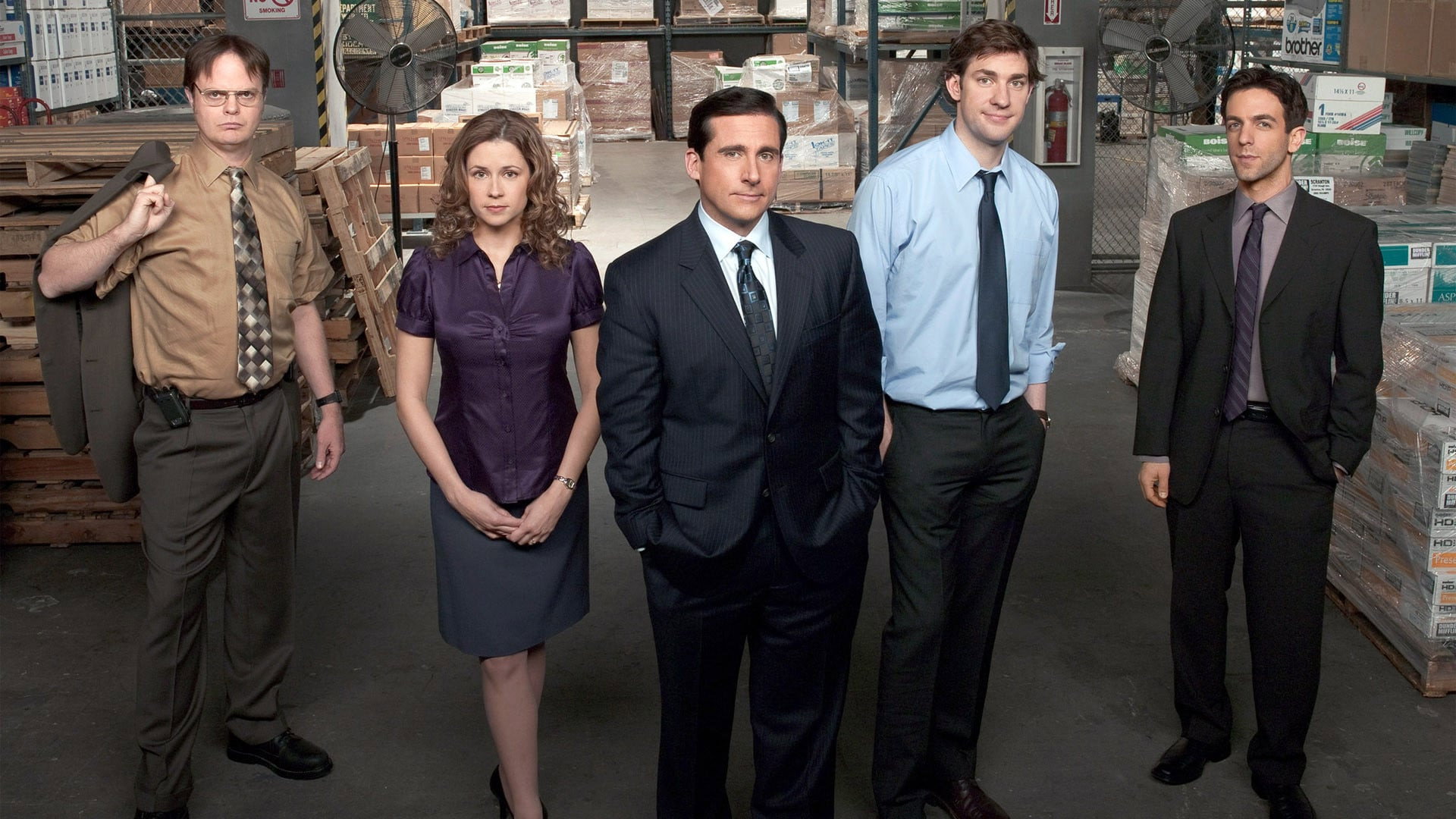
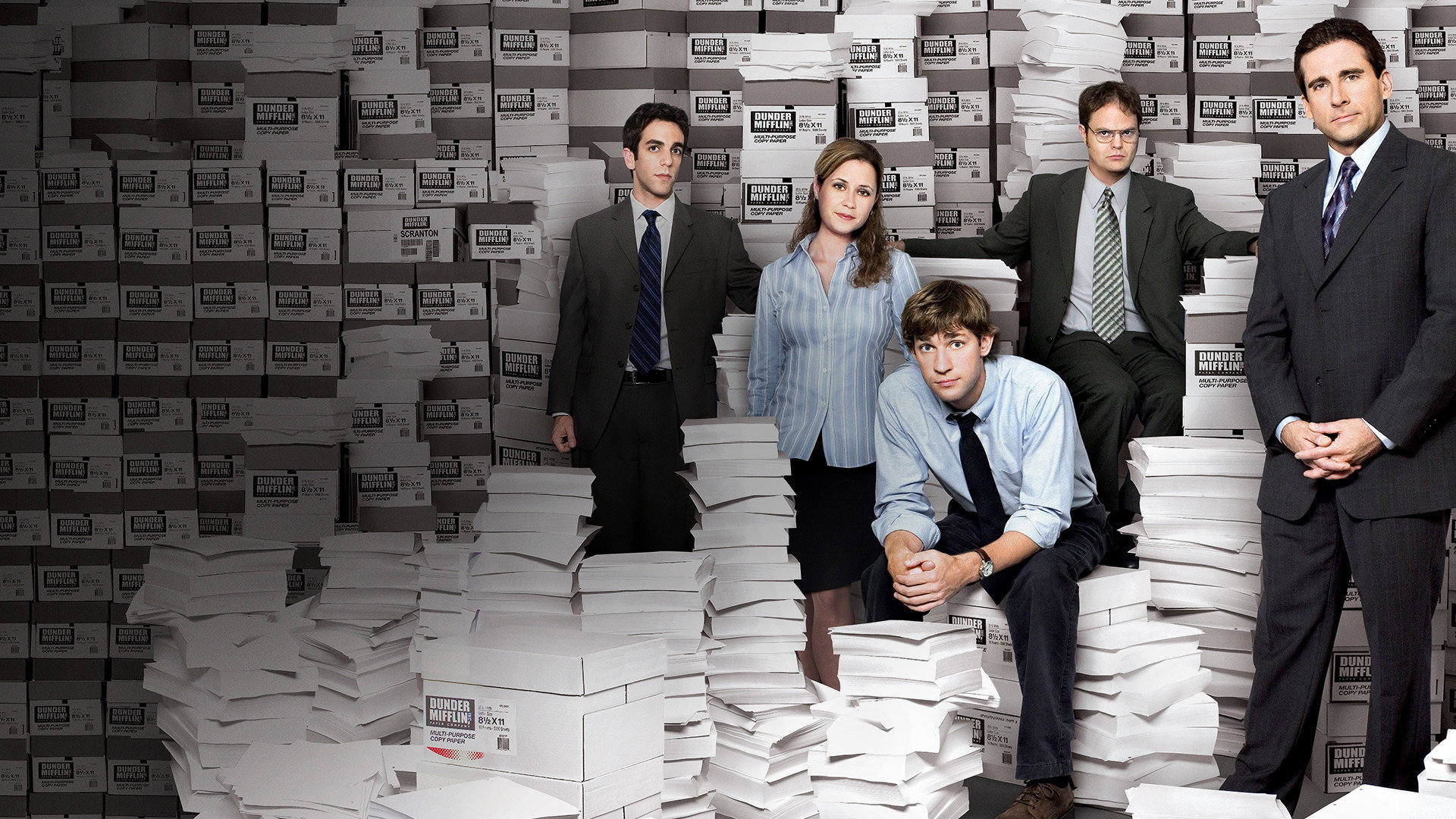
Rainn Wilson’s Dwight Schrute supplies a firmer, more insistent comic presence, which gives Carell something useful to push against. John Krasinski’s Jim Halpert and Jenna Fischer’s Pam Beesly are more restrained, letting a look register before pressing for a laugh. Their relative quiet makes the office feel inhabited by people with different tolerances for nonsense. The ensemble matters because constant exposure to Michael alone would turn embarrassment into an endurance test.
The documentary style does useful work, too. Cinematographers Randall Einhorn and Matt Sohn favour the sense of a camera noticing behaviour rather than presenting a polished comedy routine, and the awkwardness depends on that apparent informality. Editors David Rogers and Dean Holland make the reaction as important as the remark, allowing disapproval to register without someone having to spell it out. We are left to judge the boss alongside the other faces in the office, with no canned laughter making the decision for us.
Donald Lee Harris’s production design makes the workplace plausibly unremarkable, an important restraint when the people are working so hard to be noticed. Carey Bennett’s costumes help the cast look like colleagues rather than performers assembled for a publicity photograph. Neither contribution needs to announce itself, and the plainness is part of the pleasure. The series is less convincing when the acting grows broader than these surroundings can accommodate and eccentricity becomes a sufficient reason for a joke.
Across nine series, that imbalance is enough to keep us from recommending every stretch with equal enthusiasm. The comic method can become predictable: once we are waiting for embarrassment, simply making it louder does not make it sharper. But there is enough affection in the performances to reward returning, and enough irritation to stop the company becoming cosy. Try it for Carell and the ensemble; allow the opening run some patience, but not an unlimited supply.