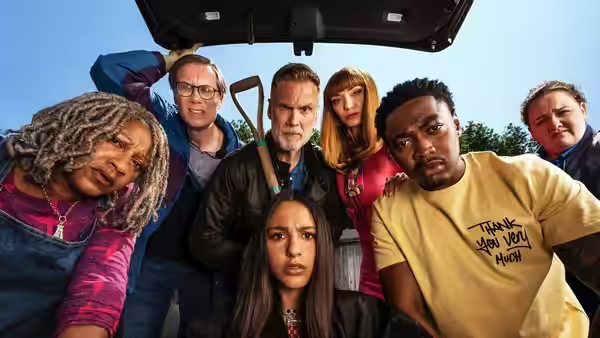
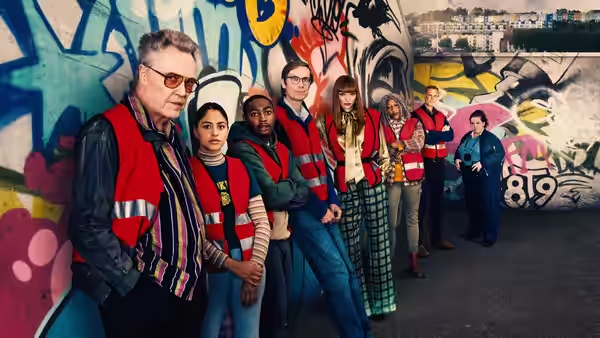
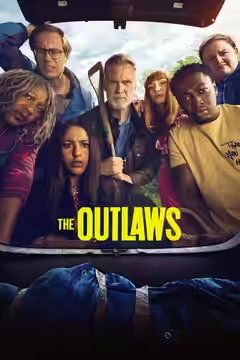
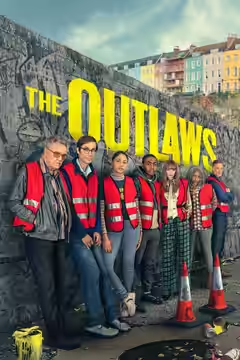
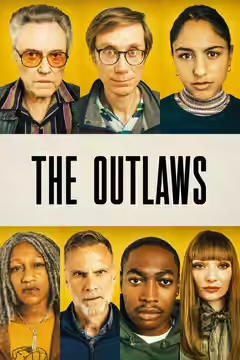
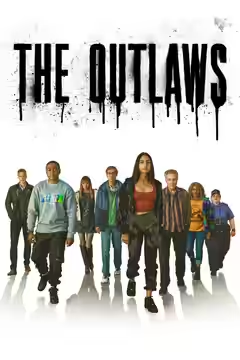
Stephen Merchant’s comedy about strangers thrown together on community payback is warm, well cast and funny in bursts, with a Christopher Walken performance that is worth the evening on its own. It is far less sure of itself when the guns come out.
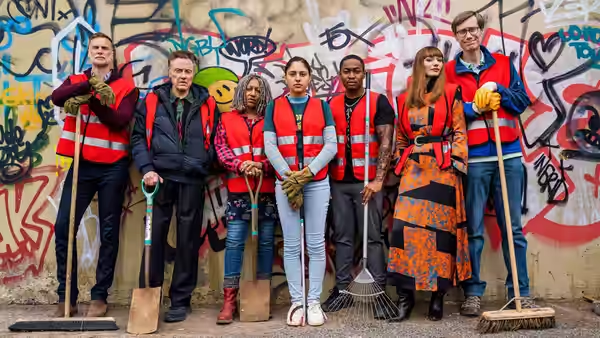
Stephen Merchant and Elgin James have taken a sentence of community payback, the hi-vis vest and the half-painted wall, and asked what would happen if the people serving it became a family and then, by accident, a gang. The Outlaws runs to three series, the first two of six episodes and the third of five, each nearly an hour long. It is a comedy with a crime plot bolted on, and the comedy is the better half. We liked it, laughed at it often, and spent a fair amount of its running time waiting for it to get back to the paint table.
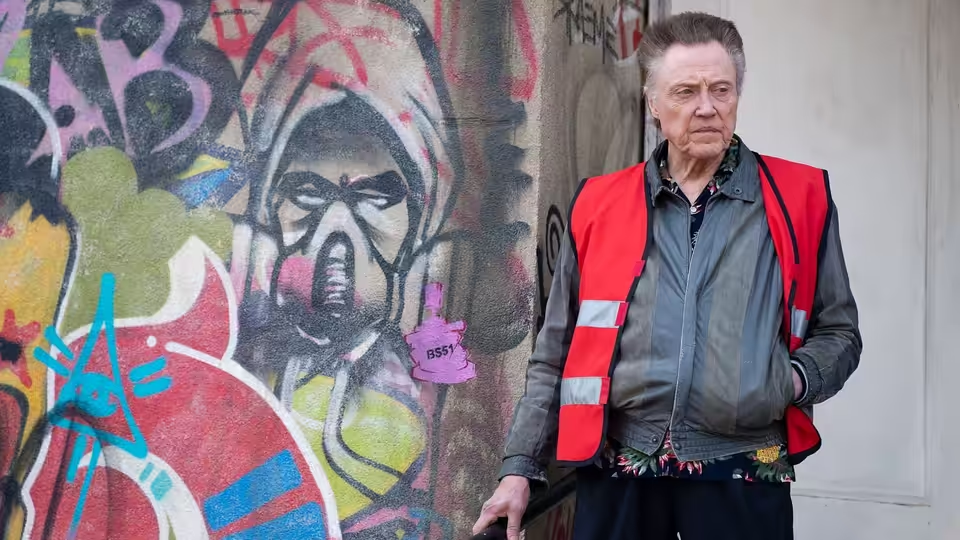
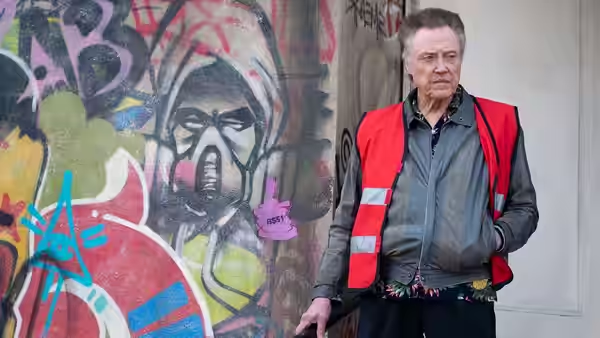
Christopher Walken is the reason to start. He plays Frank as a man who has been charming people out of their savings for sixty years and sees no reason to stop because he is now holding a roller. The drawl is slower than ever, the pauses longer, and he appears to be acting in a different, stranger programme that the others are too polite to interrupt. We laughed every time he opened his mouth, and the laugh was partly disbelief: here is one of the great American screen presences being told off about a tea break in the West Country, and he is plainly having the time of his life.
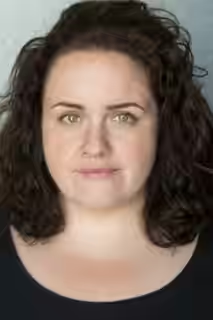
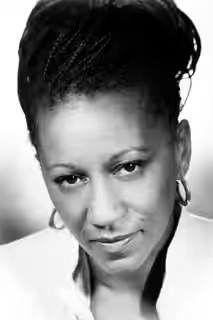
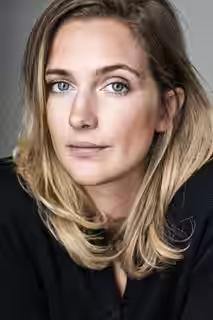
The rest of the cast earns its place. Rhianne Barreto gives Rani a brightness that keeps curdling into something angrier, and Gamba Cole’s Christian is quiet and watchful and carries most of what the show has in the way of real danger. Jessica Gunning, who also writes for the series, makes Diane a woman who has read the health and safety guidance twice and would like you to know it, and she is funnier for never once winking at us. Darren Boyd and Clare Perkins, as John and Myrna, are handed the political argument, right against left, and play it with more patience than the writing always gives them. Eleanor Tomlinson’s Gabby starts as the joke the others tell about her and ends as the person we worried about most.
Nick Martin shoots the city in flat, overcast daylight and the community centre in dusty light through boarded windows, so the renovation always looks like a job nobody will finish. The gang scenes are lit at night, in car parks and stairwells, and they look like a different programme because they are one. Stew Jackson and Dan Jones score the comedy lightly and the threat heavily, and when the two meet in the same episode the music is the first thing to give the join away.
That join is the problem. Merchant, James and a large writing room want the stakes of a thriller, and so Malaki and his people turn up to menace Christian and the money has to be hidden and moved and lied about. The threats are real enough to stop the jokes but not built enough to replace them. We felt it most in the middle of each series, when an episode would spend half an hour on a plan we did not believe and then hand us one good scene of the seven bickering, as if apologising. Fifty-eight minutes is a long time for a sitcom and a short time for a crime drama, and the show is often both and neither at once.
The second series is the weakest, as most critics have said, and we agree; the gang plot swallows it. The third, with one episode fewer, is tighter and gives Rani a proper reckoning, and the show finds its footing again by remembering that the point was always the people and never the bag.
Merchant’s best work, in The Office (2001) and Extras (2005), lived in the small humiliation, the wrong word in the wrong room. He still does that better than almost anyone, and whenever The Outlaws trusts it the show is a pleasure. Watch the first series, and decide about the rest by how much you missed Walken when it ended.