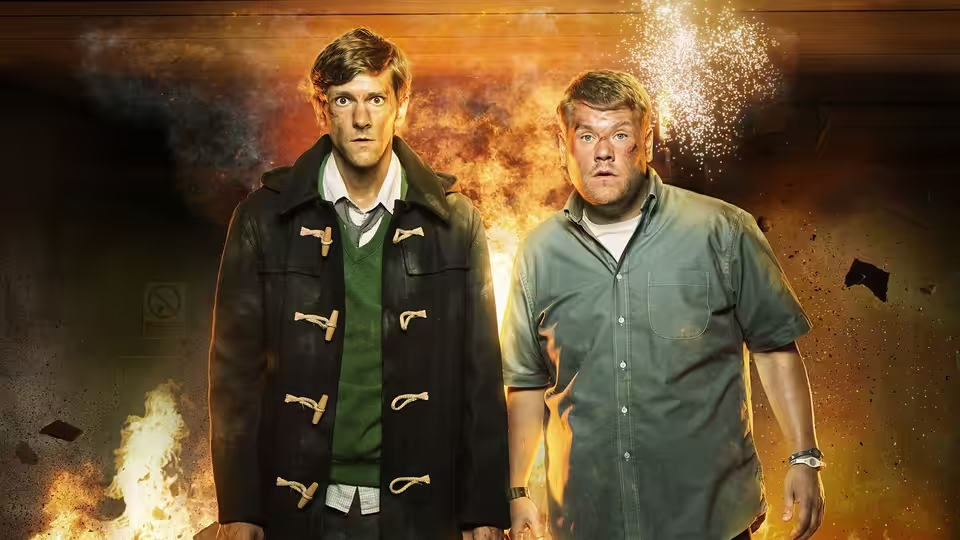
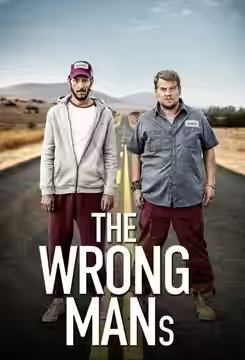
Mathew Baynton and James Corden make appealing company in a comedy thriller whose cliffhangers often work better than its accumulating villains. We recommend it for their rapport, with some patience for the increasingly busy plot.
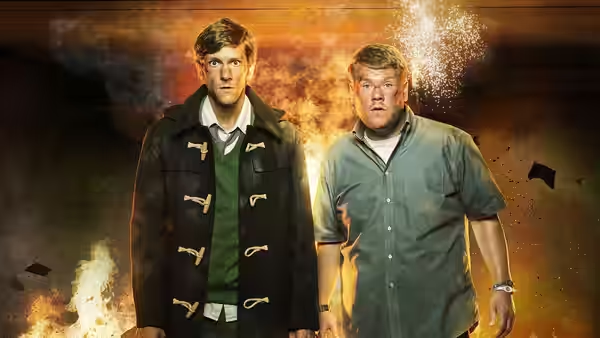
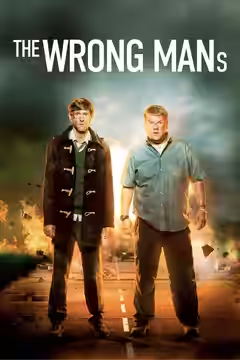
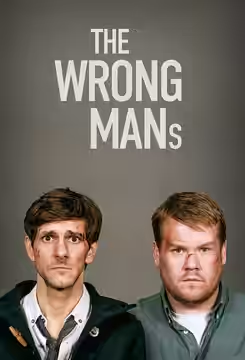
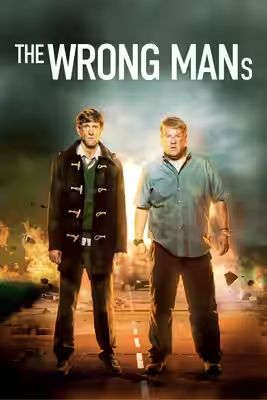
The Wrong Mans is a good comedy thriller with a habit of making its plot busier than its jokes require. Created and written by Mathew Baynton and James Corden, it gets most of its pleasure from two people struggling to cope with an expanding conspiracy. We would recommend it for their partnership, with some patience for the multiplying villains. The workplace comedy gives the danger somewhere useful to begin: these people have concerns we recognise before the thriller takes charge.
Baynton, as Sam Pinkett, gives the programme its most reliable sense of proportion. His expressive reactions keep reminding us how unreasonable all this trouble would seem to someone who had not volunteered for it. We laughed at Sam’s dismay as the conspiracy grew more elaborate. Baynton makes the bewilderment particular enough to remain funny, rather than settling for a general air of panic whenever the plot needs to get moving again.
Corden’s Phil Bourne works well alongside him, and their rapport does much of the work that another programme might assign to explanations of their friendship. We accept them as a pair worth following. Their exchanges give the comedy a steadiness that the increasingly crowded story sometimes lacks. The writing is at its most enjoyable when it allows them to respond to each other instead of simply processing the next complication.
Director Jim Field Smith gives the thriller enough conviction for its cliffhangers to work. The cinematography credited to Rob Kitzmann, David Rom and Duncan Telford helps the danger feel substantial, without making the workplace material seem to belong to another programme. Jonathan Paul Green’s production design is useful in keeping that everyday setting credible. There is a recognisable ordinariness for the conspiracy to disturb. That matters in a comedy whose central pleasure depends on Sam being so poorly equipped to take any of this in his stride.
David Webb’s editing keeps the half-hour episodes moving, and the cliffhangers make a persuasive case for another one. Kevin Sargent’s music supports the thriller side, giving the danger the emphasis it needs to survive the comedy. The first series has six episodes, a sensible amount of space for escalating trouble. Even at that length, however, the complications begin to compete with the central pair for our attention.
The weakness is the growing procession of villains, which can make a new complication feel like another person to remember. There are passages where Baynton and Corden seem content to supply another obstacle and leave the joke for later. We became impatient when keeping track of the conspiracy displaced the pleasure of watching Sam and Phil react to it. Some of the film-reference humour has a similar problem: the programme occasionally spends too much effort demonstrating its affection for thrillers when it could be finding a better joke.
Comedy thrillers need credible danger and room for people to behave absurdly, and this usually finds enough of both. Its strongest moments suggest that Baynton and Corden understand how much an ordinary response can do when everything surrounding it has become unreasonable. Give it a try if comic panic is your sort of evening, with fair warning that there will be more plot than necessary.