Shane Meadows and Jack Thorne’s four-part drama makes friendship funny, difficult and worth the trouble. The performances carry it through some overextended comedy into painful territory; we recommend it, but not for an undemanding evening.
The move from film to television gives these friends more time in each other’s company, and This Is England ‘86 makes that time count. Written by Shane Meadows and Jack Thorne, it is a warm, painful drama that earns our recommendation despite some overworked comedy. Across four episodes, the pleasures of belonging to this group become persuasive enough to make its troubles matter. The extra space also allows a few jokes to continue after they have stopped being funny.
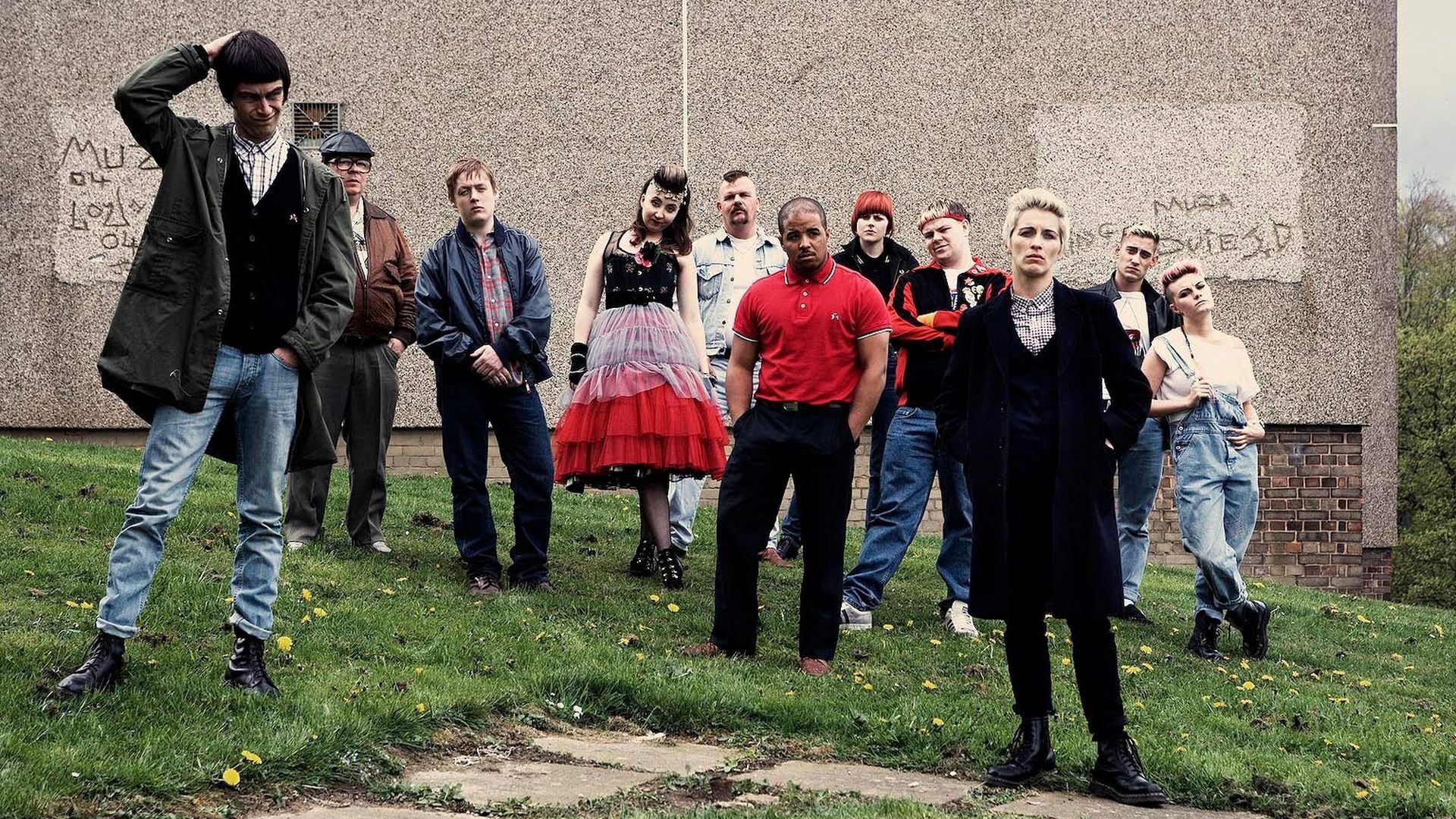
The wedding that does not happen is the right place to begin: a public occasion at which private uncertainty is difficult to conceal. Joe Gilgun, as Richard ‘Woody’ Woodford, and Vicky McClure, as Lol, make the embarrassment worth attending to. Neither treats the couple’s difficulty as an excuse to ask for sympathy, and the scene benefits from that restraint. With the friends gathered around them, their difficulty becomes everybody else’s business, which is uncomfortable in a thoroughly recognisable way.
Andrew Ellis’s Gadget supplies a less defensible contribution to the social arrangements by stealing flowers from a mourner. We laughed before we had properly considered the mourner, and felt mean a moment later. The series trusts us to remain fond of him after seeing exactly how little consideration he can muster. Thomas Turgoose gives Shaun an unaffected presence within the ensemble, helping the group feel familiar even when the behaviour becomes outlandish and the comedy risks making everyone seem too foolish to care about.
Directors Tom Harper and Shane Meadows give the ensemble room to establish its familiarity, and the drama benefits from that time together. Danny Cohen’s cinematography is most effective at the non-wedding, giving the surrounding faces weight alongside the couple. Mark Eckersley’s editing lets the embarrassment last long enough to become uncomfortable. The scene keeps the friends involved, so that the failure of the occasion matters beyond the two people who were supposed to be getting married.
The broadness is the chief weakness. The writing occasionally seems too pleased to be back among these characters, giving their antics more attention than their consequences warrant. That makes the movement towards bleaker drama feel abrupt in places, even though comedy and distress plainly belong in the same lives. Tighter cutting would have helped where the behaviour is already sufficiently unlikely without the scene asking us to enjoy it for longer.
What makes the darker passages work is the continuing importance of friendship. Affection for these people survives their failures, and the writing does not pretend that loyalty can repair every kind of damage. Vicky McClure is central to that seriousness, giving Lol sufficient weight for the drama to hold when the joking stops. The series takes suffering seriously without making its characters speak as though they have been appointed to explain it.
A reunion drama can get a long way on the pleasure of recognising people, and the weaker comedy here sometimes relies on that allowance. The stronger scenes give us reasons to care about what happens to them beyond being glad they are back. We would not put this on for an evening of uncomplicated nostalgia. Leave room afterwards for something gentler.