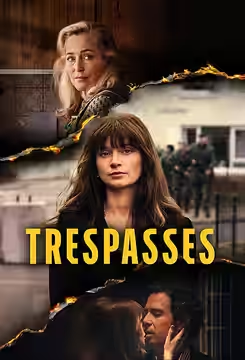
Lola Petticrew and Gillian Anderson are excellent in this sharp Belfast drama. The central affair is occasionally unpersuasive, but its family troubles and the pressures of sectarian division make four episodes well worth the time.
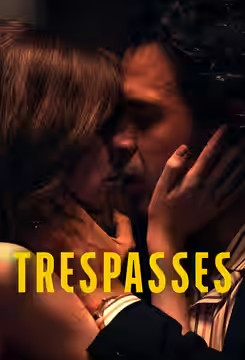
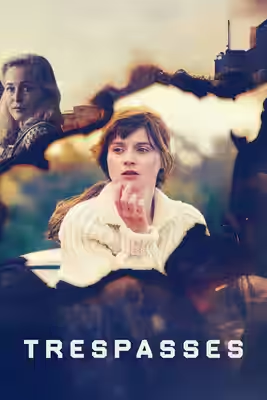
Trespasses is a sharp, affecting drama with an occasionally unpersuasive affair at its centre. A Catholic teacher falls for a married Protestant barrister in 1970s Belfast, which gives the relationship several problems before either person has spoken. Dawn Shadforth directs Ailbhe Keogan’s adaptation of Louise Kennedy’s novel. Both take the life around that affair seriously. Cushla has a family to contend with, and living through the Troubles does not stop being difficult because she has fallen in love.
Lola Petticrew is the chief reason to stay with Cushla Lavery, even when her choices threaten to frustrate us. The performance gives her enough complexity to resist the role of the young woman whose forbidden love explains everything about her. Keogan’s writing allows the religious division to matter without reducing Cushla to her Catholicism, and Shadforth keeps her experience central. There is something welcome about a romance that takes the woman’s ordinary difficulties seriously, rather than treating them as delays before the next encounter.
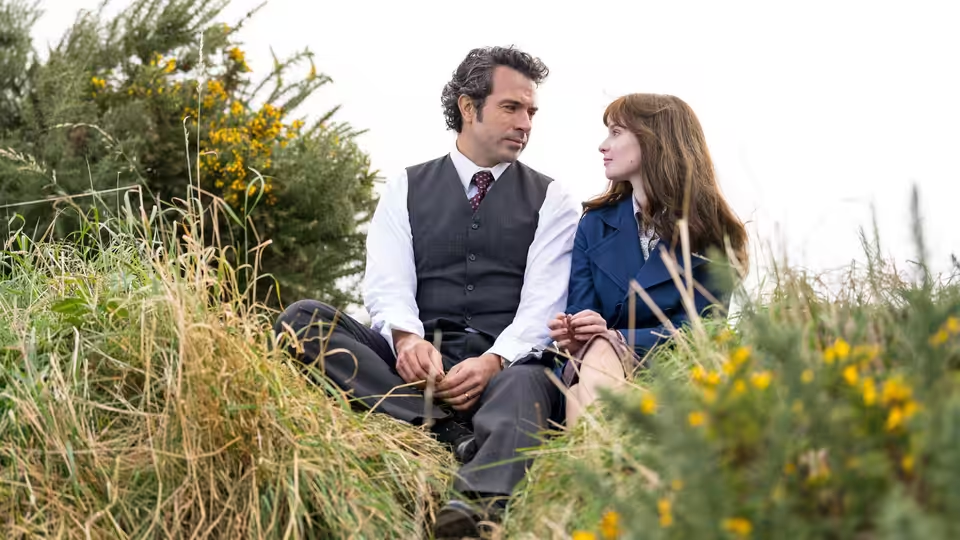
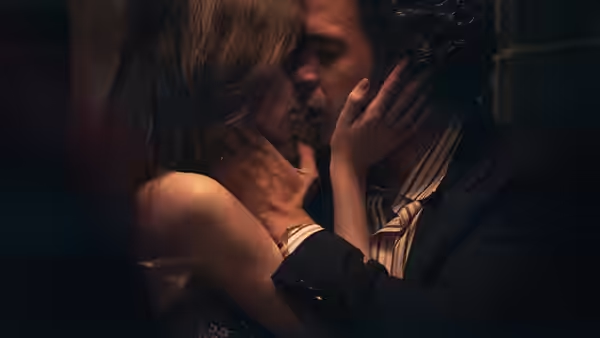
Tom Cullen, playing Michael Agnew, has chemistry with Petticrew, and the attraction between them is credible. Yet the lovers do not always convince us that their feelings run as deep as the story requires. In the weaker stretches, Keogan gives us too little reason to believe that this particular man has become indispensable to Cushla. We understand the risks, but we occasionally find ourselves waiting for the couple to make us care as much about their attachment.
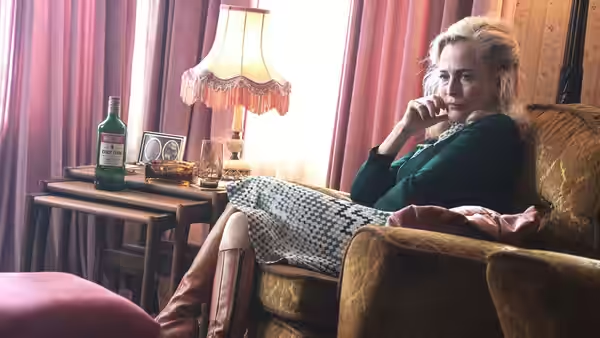
Gillian Anderson gives the drama a more immediate source of pain as Gina Lavery, Cushla’s alcoholic mother. We were upset by Gina’s drinking. Anderson makes the unhappiness feel like something the family has to live with, and never lets the alcoholism explain everything about this woman. The part matters beyond its usefulness in explaining why Cushla might want to be elsewhere. The family troubles have their own claim on our attention, and the scenes around Gina are among the reasons to recommend the series.
Shadforth also handles the period setting well: the 1970s detail helps make Belfast feel inhabited, with sectarian divisions shaping the lovers’ choices. A drama of this kind can use political violence as a convenient way of making an affair seem important, but the writing gives daily life sufficient attention to avoid that. Brian Irvine and David Holmes provide the music, and the production is atmospheric without distracting us from the actors. The persistent sense of danger comes from understanding the circumstances these people inhabit.
The reservation is worth spelling out for anyone choosing this chiefly as a romance. There is warmth and attraction, but some of the deepest feeling belongs to the troubled family around Cushla. Across four episodes, Shadforth and Keogan give those lives enough attention to make the series rewarding even when the affair falters. Within the familiar genre of love under social pressure, that is a welcome priority. Set aside the time for Petticrew and Anderson, and do not expect the lovers to monopolise your sympathy.