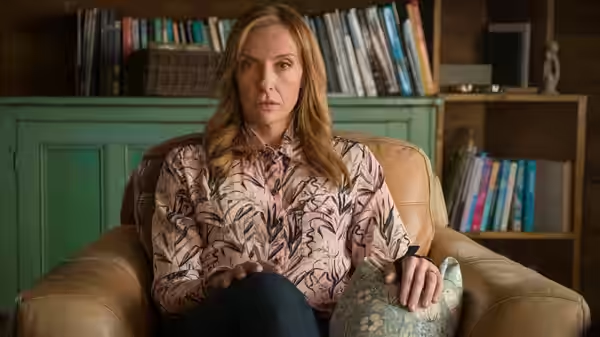
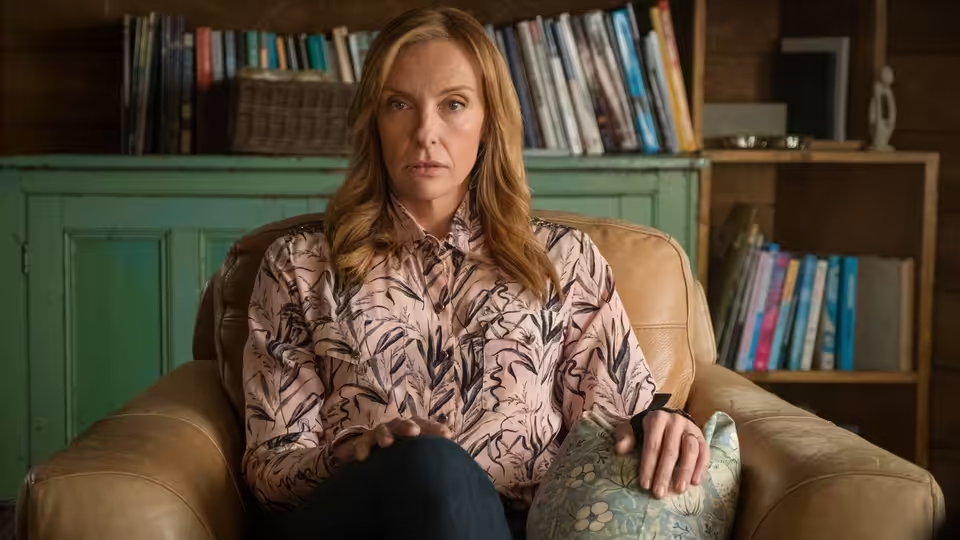
Joy Richards (Toni Collette) sits in an armchair before bookshelves
Series review

Wanderlust

2018 · Created by Nick Payne · Series · 57m

In a sentenceToni Collette makes another long conversation about the marriage seem like a good idea

Joy Richards (Toni Collette) and Alan Richards (Steven Mackintosh) are struggling with their marriage and begin to question the terms on which they stay together. Opening the relationship raises the possibility of intimacy with other people, along with difficult conversations about what each partner wants and what the other can accept. Tom Richards (Joe Hurst) and Naomi Richards (Emma D’Arcy) are part of the wider ensemble as the series follows romantic troubles beyond the central couple. Sex, affection and dissatisfaction become matters for discussion in a relationship that no longer feels straightforward to either of them.

Plays from YouTube when you press play; nothing loads from them until then.

Fi1m review

Toni Collette and Steven Mackintosh make Wanderlust worth the time it takes. This frank, humane marriage drama is often funny and affecting, though its slower conversations and predictable subplots test that patience.

Nick Payne’s Wanderlust makes an unusually frank subject for domestic comedy out of a marriage whose partners are considering other people. We recommend it for Toni Collette and Steven Mackintosh, who give the awkward conversations enough affection to keep the programme from becoming a seminar on how couples ought to behave. Across six episodes, it takes their dissatisfaction seriously and finds room for humour without treating desire as a symptom of stupidity. Its patience sometimes becomes a problem.

As Joy Richards, Toni Collette makes frankness engaging without making it evidence that Joy understands everything she feels. Her performance grows more vulnerable, and the change matters because the sexual comedy has already encouraged us to enjoy this woman’s company. We were moved by the therapy session, where Toni Collette makes the pain beneath Joy’s frankness difficult to shrug off. Even when the writing becomes self-conscious, she keeps the hurt recognisable.

Steven Mackintosh gives Alan Richards enough humour and emotional uncertainty to make him a partner worth listening to. That is important in a programme whose strongest performance could easily reduce everyone else to an audience. Nick Payne writes conversations about sex that sound sufficiently natural for the hesitations and awkwardness to be funny, rather than merely demonstrations of how frank television can be. The humour is kind enough to let both actors remain vulnerable.

Directors Lucy Tcherniak and Luke Snellin give these conversations a degree of visual restlessness, and Ben Wheeler’s camera angles can feel overconsidered for such intimate material. Editors Gary Dollner and Johnny Rayner use intercutting to keep the talk moving, though it cannot always disguise how long the series spends over a point. Melanie Allen’s production design wisely avoids competing with the performers for attention. Some scenes would benefit from less fuss around them.

The weaker material is easier to anticipate. The children’s romantic subplots bring more people and more desires into view, but too often their direction is evident before the scenes have earned their length. Some developments also ask for more belief than the writing has prepared us to give. Good acting keeps these passages watchable, though they remain distractions from the marriage.

As relationship drama, this is most persuasive when people are allowed to be funny and wounded in the same conversation. The frankness about sex helps because it makes embarrassment available for comedy without making embarrassment the whole subject. There is also enough uncertainty in the performances to stop the discussion becoming a set of instructions for living. The slower passages can feel affected, especially once a conversation has made its point and keeps going.

Anyone looking for a brisk comedy about sexual freedom will need to adjust their expectations. There are laughs, but the series is prepared to remain with discomfort for longer than is always useful, and its interest in people explaining themselves can be tiring. Give Wanderlust time if troubled marriages and unfinished conversations are your sort of drama; Toni Collette makes a persuasive case for staying.

Critical consensus AI synthesised

73
Positive
7
Mixed
2
Negative
0

Most critics respond warmly to Wanderlust’s frank, intimate treatment of sex, marriage and emotional connection. Praise centres on Toni Collette, whose nuanced performance gives the relationship drama much of its force, with Steven Mackintosh also recognised for his humour and emotional range. The reviews favour the programme’s mature approach to open marriage and its willingness to let awkward, painful conversations be funny. Several find the writing humane and refreshingly natural about subjects that invite contrivance.

The reservations concern pace and credibility rather than the central performances. Vulture finds some plotlines hard to believe and the children’s romantic subplots predictable. Paste admires the conversations but finds that the pacing and closing emotions sometimes falter. The Guardian is more reserved, finding the drama affected and too slow despite its strong leads. The spread runs from enthusiastic approval to qualified interest, with no outright negative assessment among these nine reviews.

The AV Club
19 October 2018 · A- · Gwen Ihnat
90

The review calls the series a must-watch and praises its emotionally rich exploration of love and connection. It singles out Toni Collette’s nuanced performance, especially her devastating work in the therapy-session episode.

Read the full review →
IndieWire
19 October 2018 · B+ · Ben Travers
83

The critic gives the series a positive review, praising its emotionally mature treatment of open marriage and relationships. Toni Collette’s assured, nuanced performance is singled out as the show’s defining strength.

Read the full review →
The Hollywood Reporter
17 October 2018 · Tim Goodman
75*

The critic finds the series a fresh and rewarding take on a marriage under strain. They praise Toni Collette and Steven Mackintosh for bringing humor and emotional nuance to their characters.

Read the full review →
Radio Times
4 September 2018 · Eleanor Bley Griffiths
70*

Bley Griffiths presents the drama as a refreshing, intimate take on sex and relationships. She singles out its approach to intimacy as the central strength.

Read the full review →
Vulture
18 October 2018 · Jen Chaney
70*

Chaney finds the series worth watching, though some plotlines strain believability and the children’s romantic subplots feel predictable. She singles out Toni Collette’s luminous, increasingly vulnerable performance as the show’s central strength.

Read the full review →
The Independent
11 September 2018 · ★★★ · Sean O'Grady
60

O'Grady finds this episode less self-indulgent and more ethically engaging than the previous one. He praises its direction and production, especially the unusual camera angles and intercutting.

Read the full review →

Straight answers AI written, from our review

Is Wanderlust worth watching?
Wanderlust is worth watching for its funny, affecting portrait of a troubled marriage, and we score it 76 out of 100. We recommend it chiefly for Toni Collette and Steven Mackintosh: their warmth and vulnerability sustain the long conversations, though the slower passages and predictable family subplots require patience.
How long is Wanderlust, and what is it rated?
Wanderlust has episodes of about 57m. It is a drama and comedy series.
Where can I watch Wanderlust in South Africa?
Wanderlust is streaming on Netflix in South Africa. Availability is checked daily; the links above go straight to each service.
How violent or frightening is Wanderlust, and is it suitable for children?
Wanderlust carries a US TV-MA certificate and is adult relationship drama rather than a programme for children. Its frank conversations about sex, opening a marriage and emotional dissatisfaction make it better suited to mature audiences; the discomfort we describe comes from intimacy and hurt rather than violence or scares.
How does Wanderlust compare to 45 Years?
Wanderlust is the funnier, more sexually frank choice beside 45 Years, while we recommend 45 Years for a quieter marriage drama built around small reactions. Both find pain in feelings that long-term partners struggle to discuss, but Wanderlust spends longer talking them through, sometimes beyond the point where the conversation earns its length.

Cast

If you liked this, try…

  1. Scenes from a Marriage (1973) · not on Fi1m yetPatient conversations expose the hurt that familiar partners learn to overlook.

  2. 45 Years (2015, Fi1m 88)Another long relationship unsettled by feelings its partners have not properly discussed.

  3. Enough Said (2013) · not on Fi1m yetAdult attraction gets room to be funny, embarrassing and worth the trouble.

  4. The Lunchbox (2013) · not on Fi1m yetA quieter look at loneliness and the risk of accepting another person’s attention.

  5. My Night at Maud's (1969) · not on Fi1m yetDesire and principle complicate a conversation between adults who enjoy explaining themselves.

Wanderlust (2018) review: Collette anchors a frank marital drama (South Africa) | Fi1m