Ellis Howard makes this unruly coming-of-age drama worth following through its most uncomfortable passages. The writing sometimes reaches for easy reassurance, but the humour, queer friendships and attention to class give it an unusual force.
What It Feels Like for a Girl understands the impatience of a teenager who suspects life is happening somewhere else. Byron, played by Ellis Howard, wants out of a Nottinghamshire town; Nottingham’s queer nightlife offers the prospect of something different. This adaptation of Paris Lees’s memoir is funny, troubling and absorbing, with only the more reassuring writing letting it down. It is particularly good on the way class restricts the choices that a young person is supposed to be free to make. It runs to eight episodes.
Howard is the reason to stay with it. Byron can be witty, reckless and difficult without becoming a collection of traits chosen to make a point about identity. Howard makes the desire to be noticed understandable, and gives equal weight to the teenager’s capacity for affection and for making a mess. We do not need every decision to be sensible to care about who is making it. The performance holds our attention through behaviour that a more cautious programme might have softened.
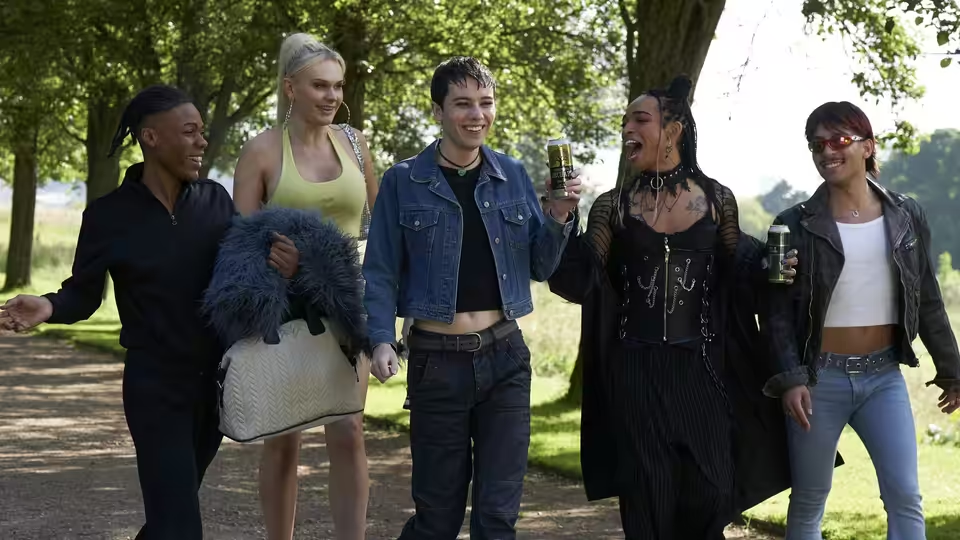
Brian Welsh directs the shifts between comedy and disturbing material without making either feel like an interruption. The queer friendships have pleasure and comic energy of their own, so their place in Byron’s life is easy to understand. The programme is clear about the appeal of sex, drugs and exploration, and also about how much can go wrong. It lets us worry about Byron while recognising why these new experiences seem worth the risk.
That becomes hardest to watch in the sex-work material. We were disturbed, because Howard keeps Byron’s youth apparent even when the character seems determined to appear in control. Writers Paris Lees, Georgia Christou and Paul Williams do not make the discomfort disappear by telling us exactly whom to blame or what lesson to take away. They let desire, money and the need for acceptance complicate Byron’s decisions, without requiring us to approve of them.
Cinematographer Kate Reid makes the queer nightlife look inviting enough to explain why Byron wants in. The surreal passages give the series scope to show how experiences feel to Byron, and they suit a character still imagining what life might become. The 2000s dance music gives the club scenes an urgency that fits Byron’s impatience. Spending time in these places matters: we need to understand the attraction if we are going to understand the choices.
The weakness is the occasional urge to make the story more reassuring than the character requires. Lees, Christou and Williams are most convincing when they allow awkwardness and contradictory feelings to remain; the more conventional stretches press too hard to make Byron’s experiences feel instructive. Howard has already made the feelings clear without that help. It is a limited complaint, but noticeable in a drama whose strongest passages trust us with difficult material.
Coming-of-age drama often makes being different look like a problem that a few good friends can solve. This series gives friendship its due without pretending that class, masculinity or uncertainty about gender can be settled so neatly. Its explicit material makes it a poor choice for a soothing evening, though the humour gives us welcome breaks from the discomfort. Watch it when there is time afterwards to talk about Byron.