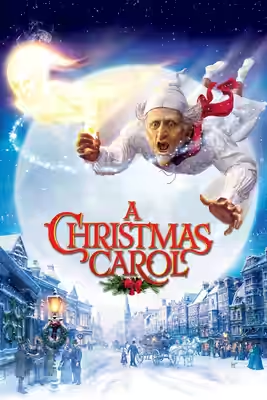
Robert Zemeckis films Dickens’s own words inside a London that is often beautiful, with faces that never come alive. Carrey’s Scrooge is better than you fear and the ghosts are properly frightening, but the story’s heart gets lost under the spectacle.
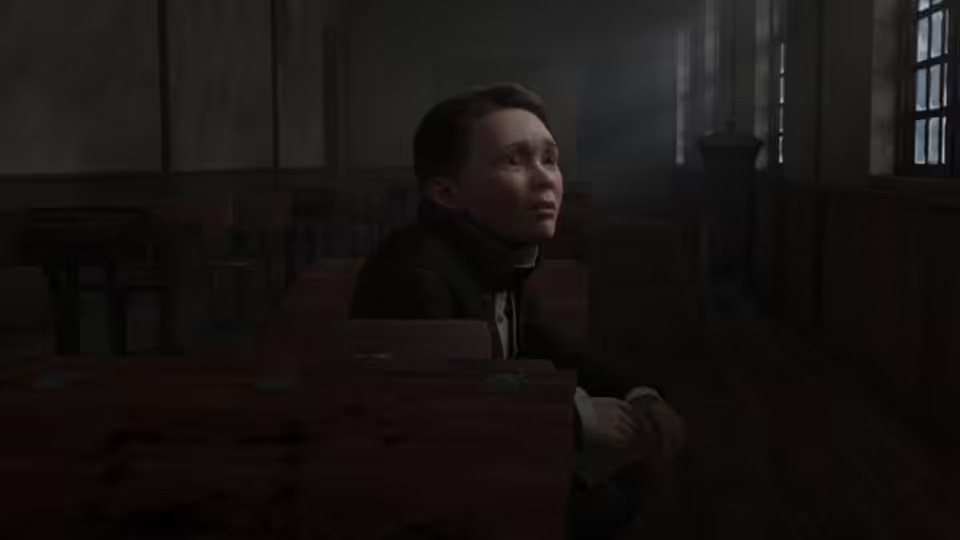
Robert Zemeckis has done to Dickens what he did to a children’s picture book in The Polar Express: put actors in sensor suits, recorded their movements, and built everything else in a computer. His screenplay keeps a remarkable amount of the original text; whole speeches arrive as written in 1843. Jim Carrey plays Scrooge and all three ghosts. Gary Oldman plays Bob Cratchit, Marley and Tiny Tim. It runs 96 minutes, carries a PG, and is a stranger film than the family label suggests.
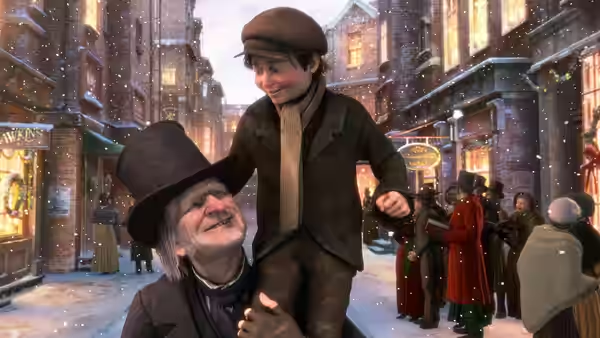
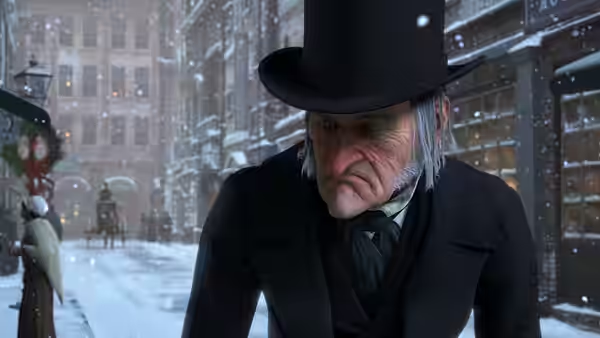
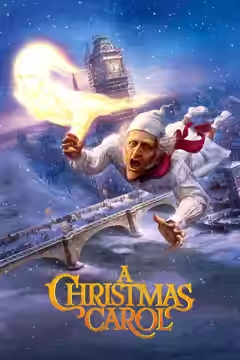
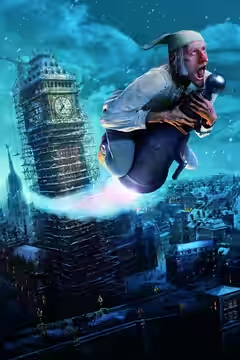
The city is the best thing in it. Doug Chiang’s London is snow on slate and soot on brick, lamps lit at four in the afternoon, and Robert Presley’s camera is free to go anywhere in it, which it does, dropping from a church spire to a doorstep in one movement. The opening flight across the rooftops, with Alan Silvestri arranging the carols into something between a hymn and a march, is what this technology was built for. When the Ghost of Christmas Present lifts Scrooge through his own ceiling and the floor turns to glass beneath them, we felt the drop in our stomachs. It is a fairground effect, and a good one.
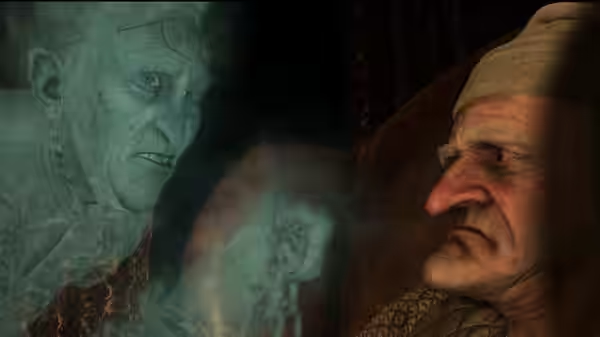
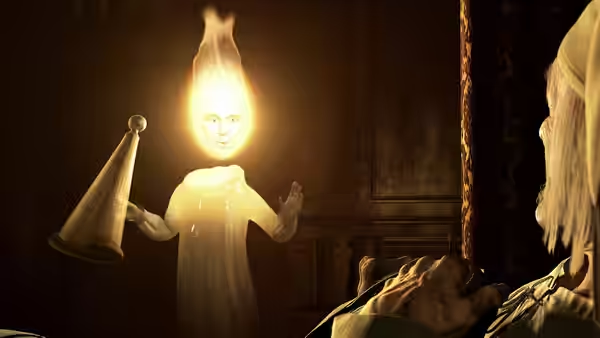
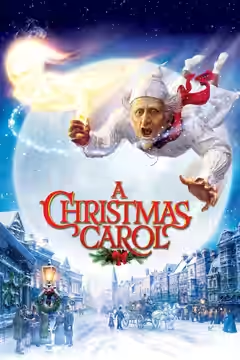
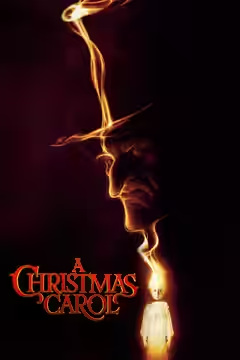
Zemeckis has also remembered that this is a ghost story. Marley arrives wrapped in chains and cash boxes, and when he unties the bandage around his head his jaw drops further open than a jaw should and stays there. The Ghost of Christmas Past is a candle flame with a face that will not keep still. We were unsettled by both of them and glad to be; most versions treat the spirits as a tour party, and here they are something you would not want in the bedroom. Dermot Power dresses Scrooge for the night in a nightshirt and cap that make him look like a plucked bird, which is right.
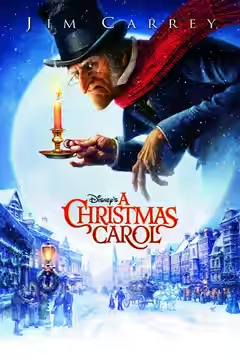
Carrey is better than the casting suggests. His Scrooge is thin, hooked and clipped, and he keeps the mugging in check until the last reel. The famous lines about workhouses and the surplus population are read flat, as a man stating what he takes to be fact, and they land harder for it. As the three spirits he is more variable: the Past whispers, the Present bellows, the Future says nothing at all. Oldman’s Cratchit is gentle and small. Colin Firth’s Fred and Bob Hoskins’s Fezziwig do what is asked and no more.
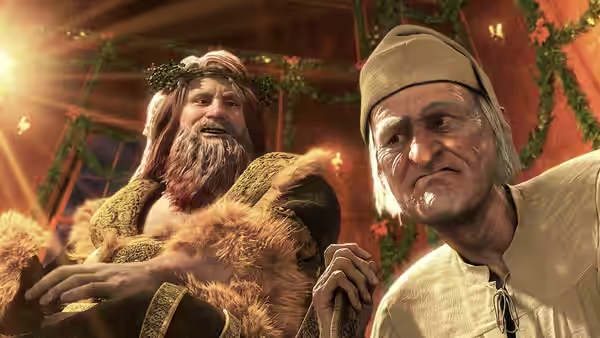
The faces are the problem, and they are the problem in every scene. Performance capture records where an actor’s body goes and not what happens behind the eyes, and so the eyes here are glass. Scrooge gets away with it, because Scrooge is meant to look half dead. Fred, Belle and the Cratchit children do not. At Fezziwig’s party a room full of people dance and laugh and not one of them looks as if they can see anybody else. Tiny Tim, voiced by Oldman and modelled as a round-cheeked doll, is on screen for a few minutes and never becomes a child we worry about, which in this story of all stories is a serious loss.
And then there is the last stretch. Late on, Zemeckis decides the story needs a set piece, and we will not describe it beyond saying that Jeremiah O’Driscoll cuts it fast and it goes on for what feels like ten minutes. We stopped being frightened and started checking the time, and the thing the sequence pushes aside is the part of the book where a man understands what his life has added up to. The film gives his change of heart less screen time than the noise.
Against Zemeckis’s own record this is better than The Polar Express: darker, tighter, more faithful to its source and more interesting to look at. Against the story’s record on film it sits below the middle, because the versions people return to are the ones that make you cry for Cratchit, and nobody is going to cry for a rendered face with a fixed stare. Most critics were a little cooler on it than we are, and we understand why.
Worth an evening if you want the text read properly and a London you can fall into, and if you can accept that the people in it are furniture. Children of eight or so may find Marley more than they bargained for; the PG is honest about that. Watch it at home with the lights off, where the ghosts still work and the faces are smaller.