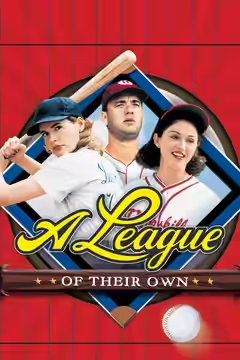
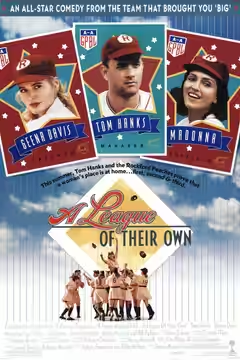
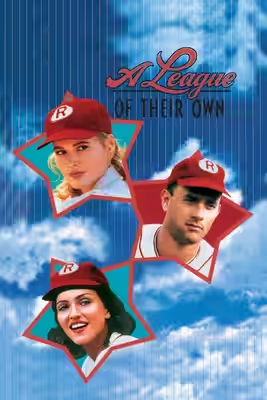
Allow Marshall’s women’s baseball comedy is funny, warm and worth an evening for Geena Davis and the team around her. The sisterly conflict feels pushed, and the sentiment occasionally needs reining in.
Allow Marshall’s A League of Their Own is a warm, funny sports comedy worth forgiving for its occasional determination to make us cry. A women’s baseball league during the Second World War gives it plenty to work with before anyone starts stressing the importance of it all. Marshall is most assured in the recruiting scenes, where curiosity about the players keeps the comedy moving. She makes us want to know who will be sharing the field.
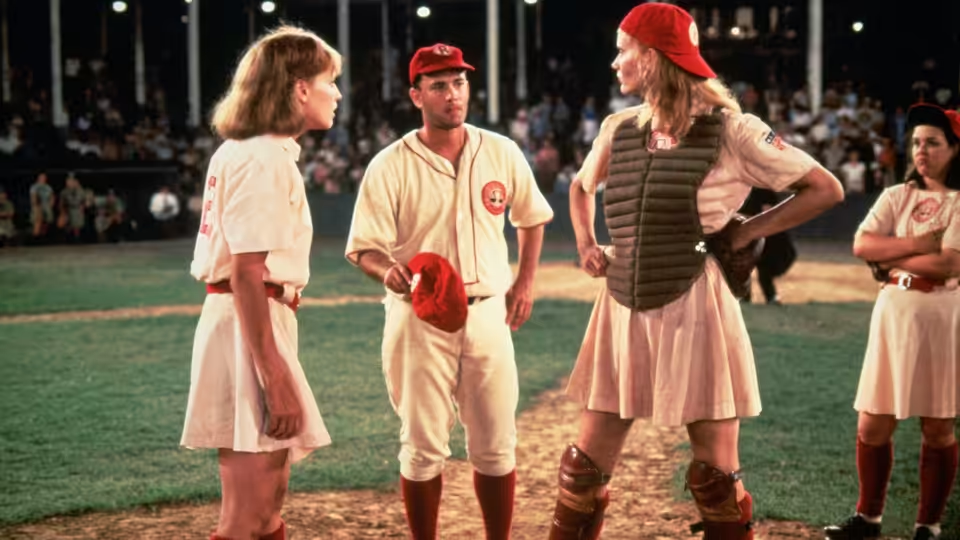
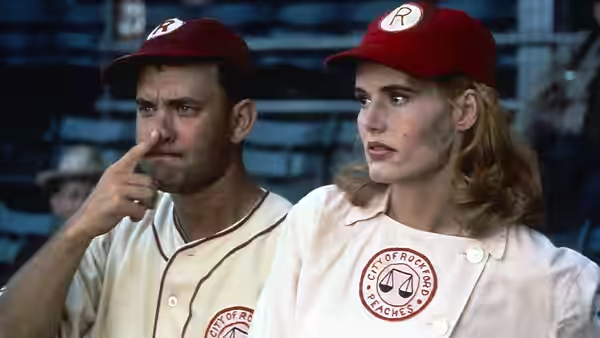
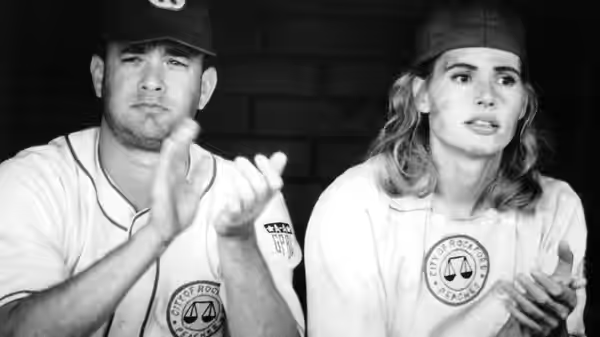
Geena Davis gives Dottie Hinson the calm authority the film needs. Her performance makes sporting ability look like something a woman can possess without continually explaining herself, and she holds our attention without competing for the joke. Lori Petty’s Kit Keller is more impatient and more openly hungry for recognition. Together they give the sisterly rivalry a believable beginning, even if Babaloo Mandel and Lowell Ganz’s screenplay later keeps pushing it harder than the performances require.
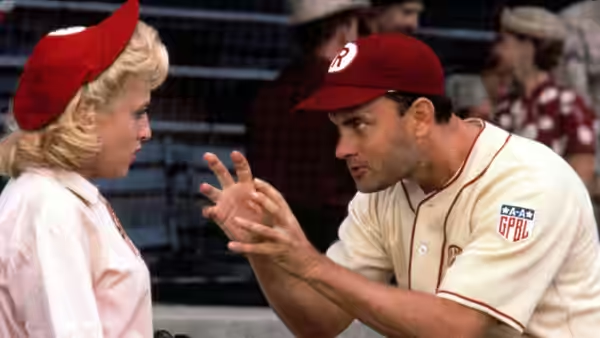
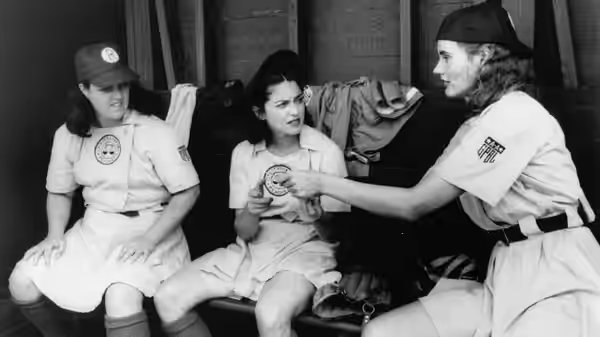
Tom Hanks’s Jimmy Dugan gets the broad comedy, and Hanks makes it count. We laughed at his exasperation with the players, because he gives the coach’s injured dignity such disproportionate weight. Yet the film gives this man rather more attention than he needs when there are so many women worth getting to know. Madonna makes Mae Mordabito an alert, funny presence, and Rosie O’Donnell’s Doris Murphy brings welcome bluntness. We would gladly exchange some of Jimmy’s development for more of their company.
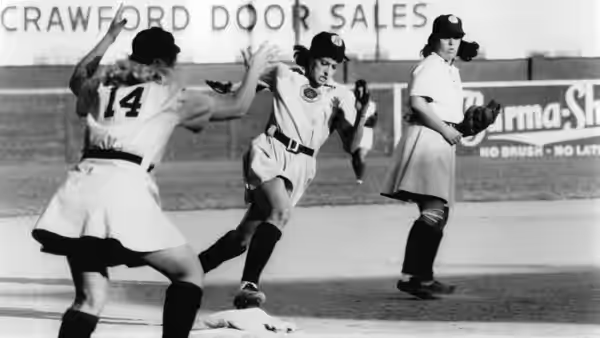
Miroslav Ondříček’s photography keeps enough space around the players for us to follow their work, so the baseball remains intelligible without constant explanation. Bill Groom’s production design gives the period surroundings an everyday quality; they suit a story about women getting on with a job. The settings support the comedy without repeatedly demanding to be admired. Editors George Bowers and Adam Bernardi are especially effective in the montages, letting the games gather pace without making the women seem interchangeable.
The heavier passages are less secure. Mandel and Ganz lean on the sisters’ conflict until it begins to feel imposed, and the supporting players can be left waiting while the film asks us again to feel proud of them. Hans Zimmer’s score adds more feeling than those scenes need; Davis can hold a moment perfectly well without musical reassurance. At 128 minutes, the film has room for its ensemble, which makes the uneven attention a little frustrating. Some of that time would be better spent letting the other players speak.
Still, Marshall understands an important pleasure of the sports film: watching capable people find out what they can do together. The baseball remains enjoyable even when the quarrels become predictable, and the comedy gives the players lives beyond representing an advance for women. There is affection here for vanity, irritation and imperfect manners. That helps the film survive its more dutiful stretches, because the people are usually good company before they are asked to be inspiring.
No knowledge of baseball is required, though a little tolerance for sporting sentiment helps. This is an easy film to choose for company with different tastes: there are good jokes, recognisable family tensions and performers who know when to leave a line alone. Allow Marshall the occasional unnecessary tear, and the evening should look after itself.