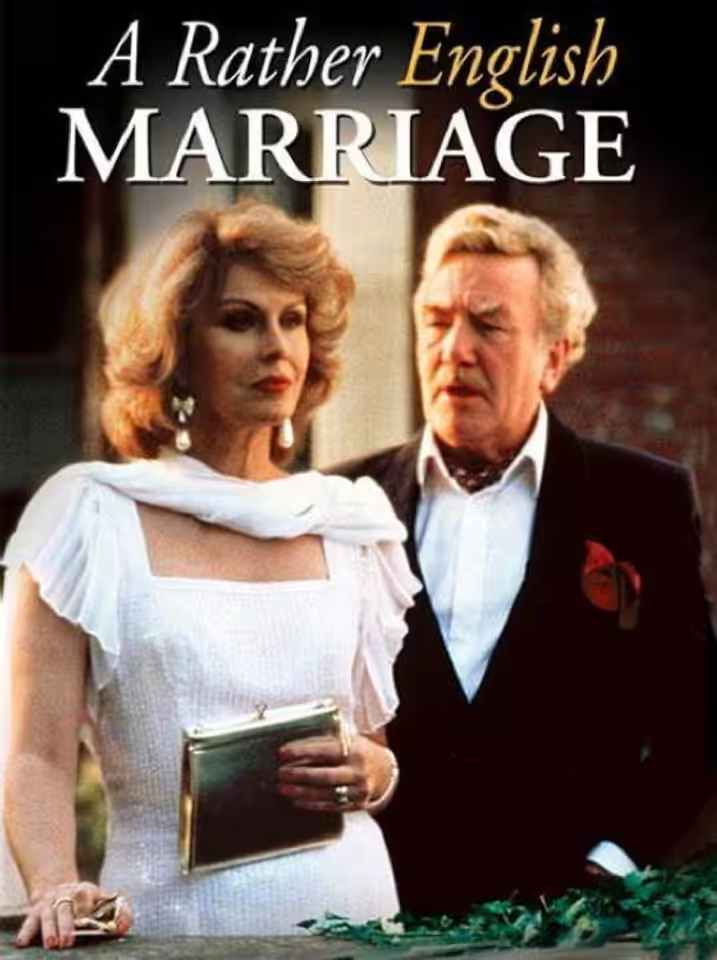
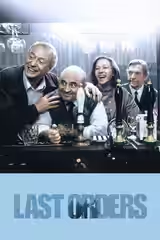
A small, made-for-television film about two widowers and a large house, carried almost entirely by Albert Finney and Tom Courtenay. It looks like 1998 television and sounds like Andrew Davies, and both men are so good that neither matters much.
Andrew Davies adapts Angela Lambert’s novel into something that could be described, unkindly, as an odd-couple comedy for the over-seventies. Two wives die on the same night in the same hospital. One husband is Reggie Conyngham-Jervis (Albert Finney), a retired RAF squadron leader who has never made his own breakfast and does not intend to start. The other is Roy Southgate (Tom Courtenay), a retired milkman who has done nothing else. Roy moves into Reggie’s house, and the film watches what two men who would never otherwise have spoken do with each other’s company. It is modest, it is funny, and it is better than it needs to be.
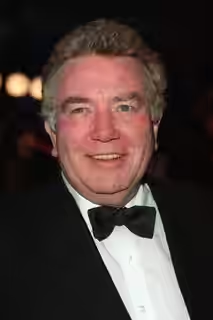
Finney plays Reggie as a man who has been performing the squadron leader for fifty years and has forgotten there was ever anyone else underneath. He shouts for things. He drinks before lunch. He tells the war story again. Finney gives all of it enormous relish and then, in the quiet moments, lets us see a frightened old man who cannot find the kettle. It is a big performance, but it is big because Reggie is, and Finney knows exactly when to take the volume down.
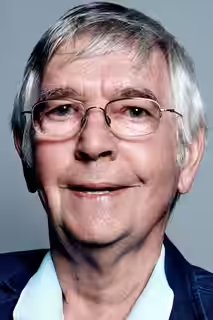
Courtenay has the harder job and does it better. Roy is a man who has spent his life being polite to people who did not notice him, and Courtenay plays that without once asking for sympathy. He stands in doorways. He says thank you to people who have done him no favours. In the hospital scenes early on, while Finney makes a noise, Courtenay simply sits, and it moved us more than we expected; we found ourselves close to tears without quite knowing when it had happened. The two of them share a long history of working together, and it shows in how little either needs to do to get a reaction from the other.
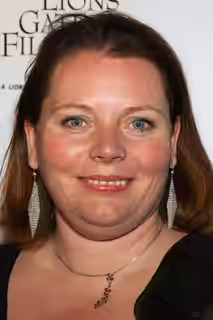
Joanna Lumley’s Liz Franks, the dress-shop owner who sets her sights on Reggie, is the third leg of the thing, and Lumley is wise enough to play her as a person rather than a gold-digger. Liz wants a comfortable old age and sees one going begging. Lumley gives her a brisk, well-dressed loneliness that makes her easy to like and hard to trust, and the scenes where she and Roy size each other up across Reggie’s kitchen are the sharpest in the film.
It was made for television and it looks it. Gavin Finney’s photography is flat and brownish in the house interiors, and the exteriors have the slightly muddy colour of British television of the period. Michael Pickwoad’s design of Reggie’s house is the exception: large, cold, full of things nobody has dusted, and plainly too big for one man and an unused drinks tray. Frances Tempest puts Reggie in blazers that have seen better decades and Roy in the same cardigan for most of the running time, which is right. Jim Parker’s score is light and stays out of the way. Dave King cuts the flashbacks to the war, with John Light as the young Reggie, in cleanly enough, though the film does not need as many of them as it has.
The flaws are the ordinary ones of a television drama with 104 minutes to fill. The middle stretch repeats itself, with one more drunken dinner and one more quiet morning after than the story requires. Davies’s script is sharp line by line and a little schematic scene by scene; you can see the class lesson being set out well before it is taught. The ending is tidier than the men deserve.
The pleasure is simpler than any of that. Two of the best actors this country produced in the last century sit in a kitchen and talk about their dead wives, and the film has the sense to let them. Watch it at home, where it was meant to be seen, and do not expect it to look like anything. Expect it to be acted as well as anything you will see this week.