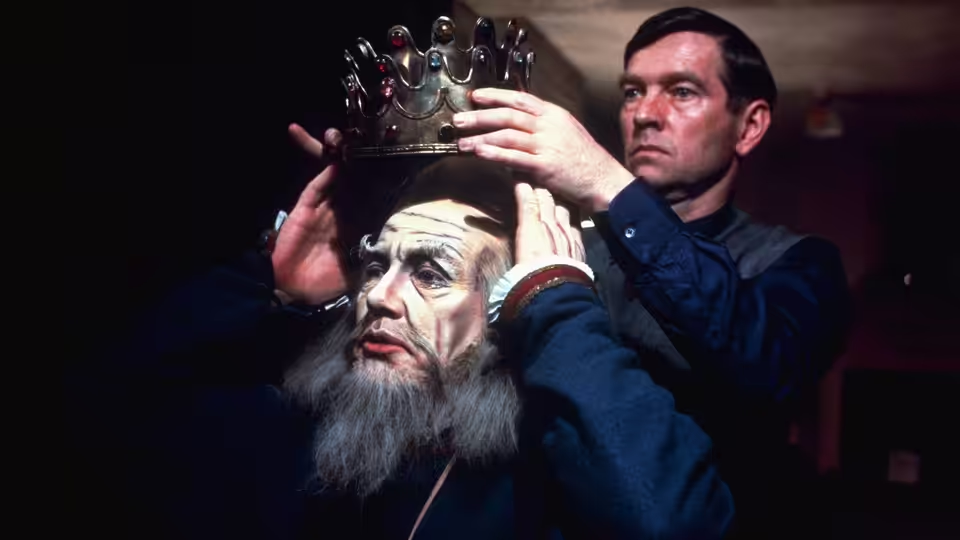
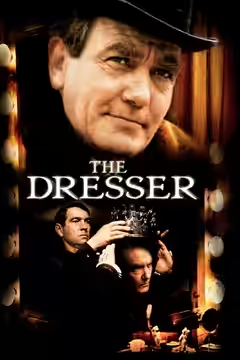
Peter Yates films Ronald Harwood’s backstage play with a camera and not much else, and it does not matter. Albert Finney and Tom Courtenay, as a ruined actor-manager and his dresser, give two performances that need each other, and one is a little better.
Ronald Harwood’s screenplay, from his own play, spends a single evening backstage with a touring Shakespeare company in wartime England. Sir (Albert Finney), the actor-manager, has been found in the town in a state and put into hospital. Norman (Tom Courtenay), who has dressed him for years, arrives at the theatre to find the stage manager, Madge (Eileen Atkins), ready to cancel tonight’s King Lear. Then Sir walks in, having discharged himself, and Norman sets about getting him onto the stage. Peter Yates directs. We enjoyed it a great deal and recommend it, with the warning that it is a play with a camera pointed at it and never quite pretends otherwise.
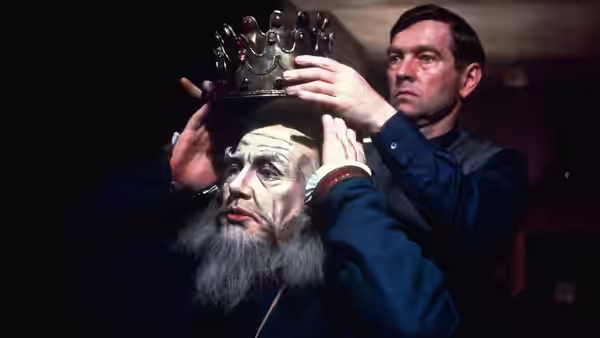
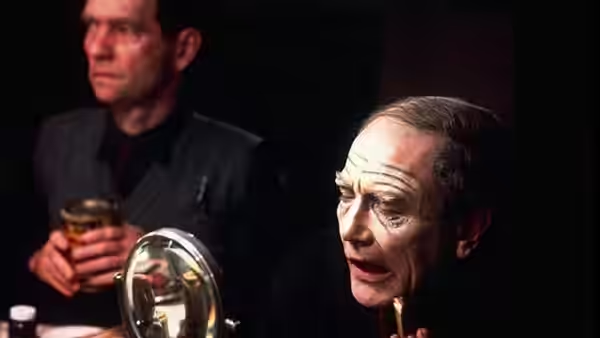
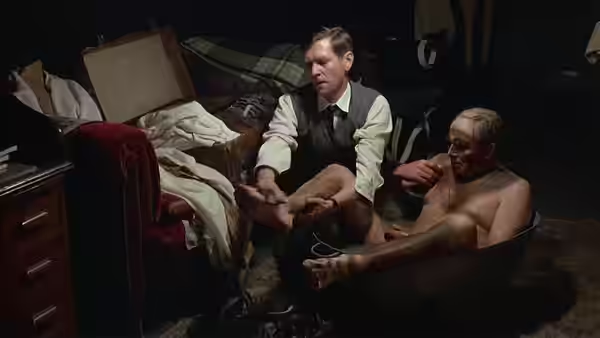
The best of it happens in a dressing room. Norman coaxes Sir through the make-up, stick by stick, and Sir cannot remember what play he is in. He begins a speech from Othello, is corrected, and carries on blacking up anyway. Courtenay plays Norman as a man whose whole self is arranged around another person’s needs: quick hands, a hip flask in the pocket, a voice that goes up at the end of every encouragement like a nurse’s. Finney plays Sir as ruin. He is enormous, red-faced, one moment a lion and the next a frightened child looking for his hat. Neither performance would work alone.
Yates opens the play out where he can. The film begins on stage, then follows Sir into the town and onto a railway platform, where he bellows at a departing train to stop, and it stops. Kelvin Pike shoots the theatre in brown and gold and the town in flat grey, so the building feels like the only warm place for miles. Stephen B. Grimes gives the dressing room a cluttered plausibility: pots, wigs on their blocks, framed notices, a single bulb over the mirror. James Horner’s score is small, mostly woodwind and a little brass, and stays out of the dressing room when the two men are talking. Ray Lovejoy cuts patiently and holds on faces; the film runs 118 minutes, many of them in close-up.
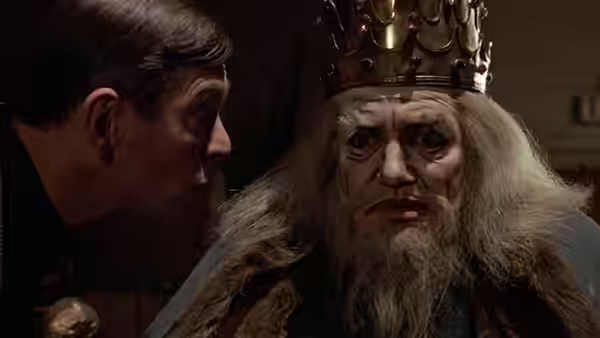
The moment that got us comes during the performance. The storm scene arrives, the sirens have gone outside, and Norman, Madge and a handful of stagehands work the thunder sheet, the wind machine and the drums in the wings while Sir, on stage, demands more. We were laughing and then, without noticing the join, we were not, because Finney’s Lear is getting his storm from a row of frightened people beating tin, and it is the only thing holding him up. It is the best sequence in the film: a theatre as a machine for keeping one man alive for one more night.
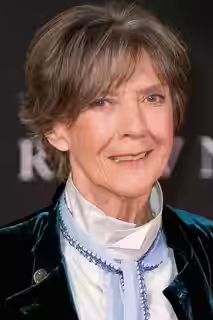
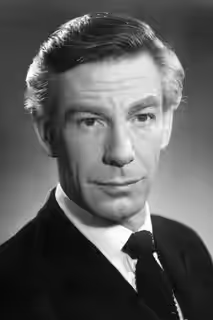
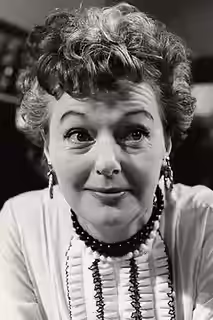
Around the leads the company is thinly drawn, and this is where the play shows through. Edward Fox’s Oxenby, the sullen actor with a play of his own, glowers from a corner and gets two good lines. Zena Walker’s Her Ladyship has one real scene with Sir and spends it telling him what he already knows. Cathryn Harrison’s Irene, the young actress Sir fancies, exists to make a point about him. Michael Gough and Lockwood West, as the company’s old men, are better served, and West’s Thornton, pressed into the Fool at short notice, is quietly touching. Eileen Atkins does more with Madge’s set face than the script gives her, and her late scene with Sir nearly undid us.
Finney is plainly a younger man under the make-up, playing old with a padded stomach and a shuffle, and where Sir is meant to be dying rather than performing dying, we could see the actor at work. Courtenay’s Norman is so complete that the film tilts towards him whenever they share the frame. Most critics have split the credit evenly. We would give Courtenay the larger share.
The last half hour stays in the dressing room and takes a turn we will not describe. Watch it with the sound up. Half the pleasure is in the wings, in whispers and cues and the scrape of scenery; the people you do not see are running the show.