Gena Rowlands and Peter Falk make this family drama painful, recognisable and difficult to shake. John Cassavetes sometimes lets distress run into repetition, but the performances justify the considerable demands on our patience.
A Woman Under the Influence is a painful, absorbing family drama, with a performance by Gena Rowlands that makes its exhausting length worth accepting. John Cassavetes writes and directs without making Mabel Longhetti’s distress easy to understand or comfortable to watch. We are asked to spend time with her, including time when our sympathy has little practical use. At 155 minutes, the film sometimes asks more patience than it needs.
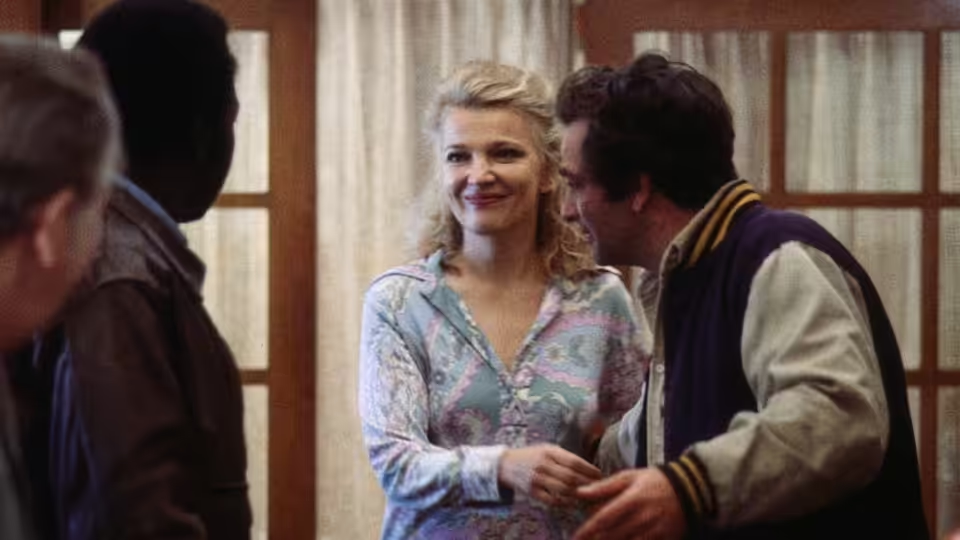
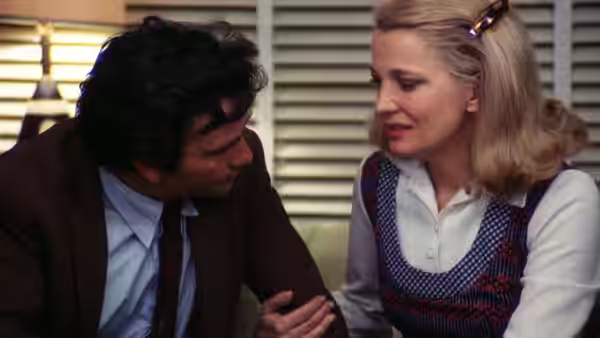
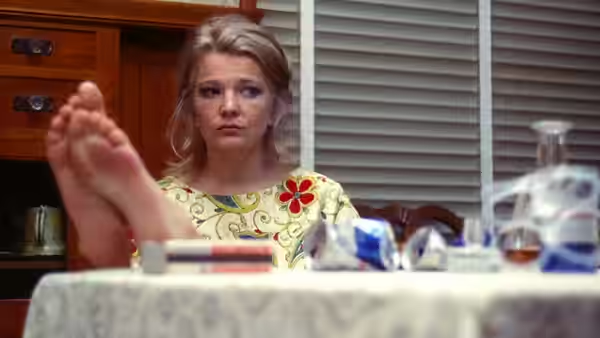
Gena Rowlands makes Mabel’s need to be understood feel urgent enough to crowd out almost everything else. We were upset by the strain of watching her try to connect with people who cannot quite reach her. The size of the performance can be troubling, and the charge of overacting is worth considering. But making Mabel quieter or more consistent would also make her easier for everyone else to accommodate. She refuses that convenience, and we think she is right.
Peter Falk’s Nick Longhetti is essential to this effect. His bewilderment has weight, and the affection he brings to the part prevents us from treating the husband as a simple explanation for everything that hurts. He makes it possible to recognise Nick’s difficulty without excusing his response to it. The two performances are so forceful that we sometimes find ourselves judging one person through the other’s distress, then having to reconsider. Neither actor lets us settle comfortably into taking sides.
The photography by Al Ruban and Mitch Breit makes looking at these people feel increasingly uncomfortable. Faces carry so much of the trouble that a more decorative treatment would be distracting. Bo Harwood’s music is valuable for leaving that discomfort intact. The craft gives the performances room without making their force easier to bear.
The editing by Sheila Viseltear, David Armstrong and Beth Bergeron preserves the pressure of these encounters, sometimes beyond what they can bear. Staying with an uncomfortable exchange can uncover another feeling; it can also mean waiting for a scene whose point we have already grasped. We felt that repetition in stretches of the film. The duration contributes to our sense of how difficult living with these people would be. A little less repetition would still have helped.
As a drama about a family struggling with mental distress, the film is unusually unwilling to let affection solve the problem. That is where its attention to social expectations becomes persuasive. Mabel is surrounded by people, yet being understood remains desperately difficult. John Cassavetes gives that difficulty enough time to become oppressive, while retaining sympathy for the people involved. Trying to reduce Mabel to a diagnosis would mean overlooking much of what the performances make troubling about the family’s behaviour.
This is demanding viewing even for those who normally welcome difficult domestic dramas. The leads make the family recognisable without making its pain easy to put aside, and that is the strongest reason to stay. Our reservation is the repeated insistence on feelings the actors have already made clear. Choose it for an evening when there is time afterwards to talk.