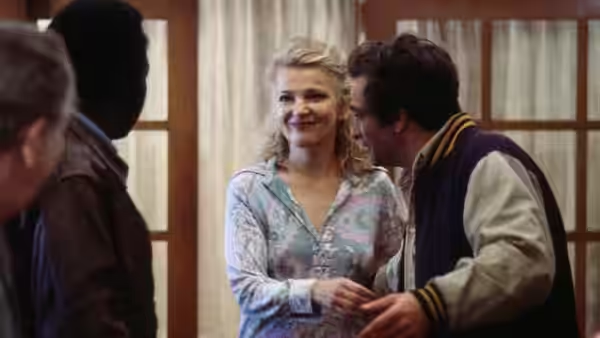
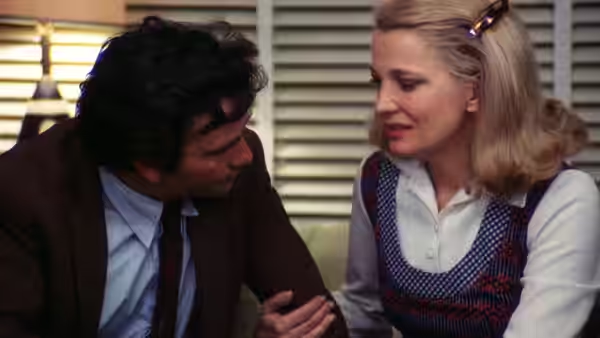
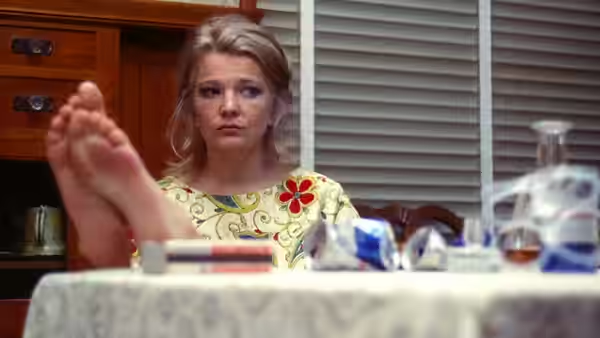
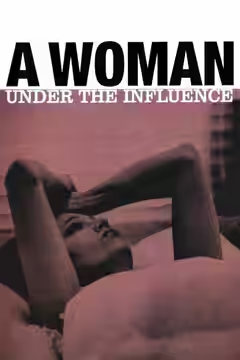
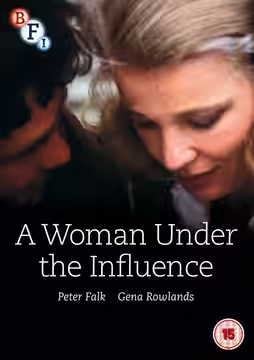
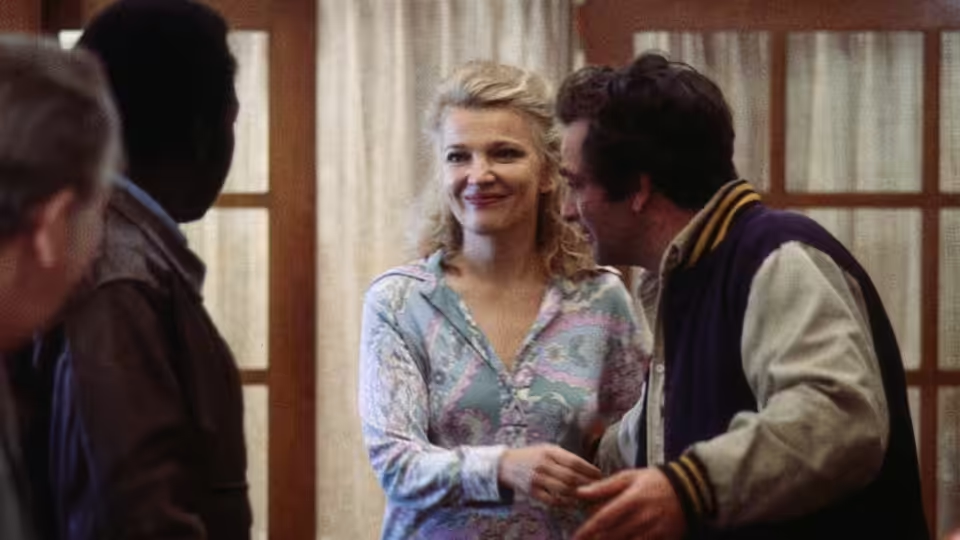
Mabel Longhetti (Gena Rowlands) smiles beside Nick Longhetti (Peter Falk) among guests indoors
Film review

A Woman Under the Influence

1974 · Directed by John Cassavetes · 2h 35m

In a sentenceGena Rowlands makes us wish we could ask the family to give her five minutes

Mabel Longhetti (Gena Rowlands) struggles with mental distress and the expectations of her family. Her husband, Nick Longhetti (Peter Falk), tries to understand her behaviour, but his own responses complicate their life together. Their family circle includes Margaret Longhetti (Katherine Cassavetes). Mabel wants to connect with the people closest to her, while those around her struggle to decide how to respond. Affection, uncertainty and social expectations shape a family life in which Mabel’s behaviour becomes everyone’s concern, and being together offers no simple reassurance.

Plays from YouTube when you press play; nothing loads from them until then.

Fi1m review

Gena Rowlands and Peter Falk make this family drama painful, recognisable and difficult to shake. John Cassavetes sometimes lets distress run into repetition, but the performances justify the considerable demands on our patience.

A Woman Under the Influence is a painful, absorbing family drama, with a performance by Gena Rowlands that makes its exhausting length worth accepting. John Cassavetes writes and directs without making Mabel Longhetti’s distress easy to understand or comfortable to watch. We are asked to spend time with her, including time when our sympathy has little practical use. At 155 minutes, the film sometimes asks more patience than it needs.

Gena Rowlands makes Mabel’s need to be understood feel urgent enough to crowd out almost everything else. We were upset by the strain of watching her try to connect with people who cannot quite reach her. The size of the performance can be troubling, and the charge of overacting is worth considering. But making Mabel quieter or more consistent would also make her easier for everyone else to accommodate. She refuses that convenience, and we think she is right.

Peter Falk’s Nick Longhetti is essential to this effect. His bewilderment has weight, and the affection he brings to the part prevents us from treating the husband as a simple explanation for everything that hurts. He makes it possible to recognise Nick’s difficulty without excusing his response to it. The two performances are so forceful that we sometimes find ourselves judging one person through the other’s distress, then having to reconsider. Neither actor lets us settle comfortably into taking sides.

The photography by Al Ruban and Mitch Breit makes looking at these people feel increasingly uncomfortable. Faces carry so much of the trouble that a more decorative treatment would be distracting. Bo Harwood’s music is valuable for leaving that discomfort intact. The craft gives the performances room without making their force easier to bear.

The editing by Sheila Viseltear, David Armstrong and Beth Bergeron preserves the pressure of these encounters, sometimes beyond what they can bear. Staying with an uncomfortable exchange can uncover another feeling; it can also mean waiting for a scene whose point we have already grasped. We felt that repetition in stretches of the film. The duration contributes to our sense of how difficult living with these people would be. A little less repetition would still have helped.

As a drama about a family struggling with mental distress, the film is unusually unwilling to let affection solve the problem. That is where its attention to social expectations becomes persuasive. Mabel is surrounded by people, yet being understood remains desperately difficult. John Cassavetes gives that difficulty enough time to become oppressive, while retaining sympathy for the people involved. Trying to reduce Mabel to a diagnosis would mean overlooking much of what the performances make troubling about the family’s behaviour.

This is demanding viewing even for those who normally welcome difficult domestic dramas. The leads make the family recognisable without making its pain easy to put aside, and that is the strongest reason to stay. Our reservation is the repeated insistence on feelings the actors have already made clear. Choose it for an evening when there is time afterwards to talk.
Critical consensus AI synthesised

72
Positive
5
Mixed
5
Negative
0

The reviews lean towards qualified admiration, with praise centred on the performances and the film’s treatment of family life and social pressure. Gena Rowlands receives the strongest notices, while Peter Falk is also praised for giving the husband nuance and helping sustain the story. Several critics find the film powerful or moving despite its flaws, and its sympathetic depiction of recognisable family behaviour is another source of approval.

The divide concerns how much frustration accompanies that force: the ten assessments split evenly between positive and mixed, with none classed as negative. Empire finds the length sometimes frustrating, while the Los Angeles Times offers the clearest dissent on Rowlands, calling her performance overacting even as it finds the film moving and frightening. The available responses range from enthusiastic praise to substantial reservations about unevenness and a personal style that can leave viewers confounded.

Time Out
★★★★★ · DP
100

The page describes the film as one of Cassavetes’ best, with an ambiguously titled story that carries social implications. The review’s praise is qualified by its emphasis on that ambiguity.

Read the full review →
RogerEbert.com
· Roger Ebert
89*

The page is identified as a Great Movie review, indicating a favorable assessment. The inaccessible article provides no details about what the critic specifically praises.

Read the full review →
Empire
1 January 2000 · William Thomas
75*

The critic finds the film powerful despite its sometimes frustrating length. Gena Rowlands’s performance is singled out, with Peter Falk’s strong turn also helping sustain the story.

Read the full review →
Slant Magazine
8 February 2026 · ★★★½ · Derek Smith
70

Smith finds the film profound and moving, while calling the Blu-ray a budget-friendly entry point despite its lack of a 4K upgrade. He praises the film’s exploration of social pressures and the transfer’s balanced mono sound.

Read the full review →
The New Yorker
9 December 1974 · Pauline Kael
67*

Pauline Kael’s Current Cinema column reviews A Woman Under the Influence alongside another film. The provided page contains no review text, so it does not reveal her verdict or what she singles out.

Read the full review →
The New York Times
29 April 1994
65*

The page content is unavailable, so the critic’s verdict cannot be established. The URL identifies a review naming A Woman Under the Influence, but offers no details about what it praises or criticizes.

Read the full review →

Straight answers AI written, from our review

Is A Woman Under the Influence worth watching?
A Woman Under the Influence is worth watching for those who welcome demanding family dramas, and we score it 86 out of 100. Gena Rowlands and Peter Falk make the family’s pain recognisable and hard to shake, though the 155-minute running time includes stretches of distress that repeat what the performances have already made clear.
How long is A Woman Under the Influence, and what is it rated?
A Woman Under the Influence runs 2h 35m. It is a drama and romance film.
Where can I watch A Woman Under the Influence in Japan?
A Woman Under the Influence is not on any streaming or rental service in Japan at the moment. It is available in 5 other countries; change your country at the top of the page to see where. Availability is checked daily.
How violent or frightening is A Woman Under the Influence, and is it suitable for children?
A Woman Under the Influence carries a US R certificate and is better suited to adults than children, with mental distress and strained family encounters making it emotionally unsettling. We found Mabel’s attempts to connect with people who cannot quite reach her upsetting; that sustained discomfort is the concern we can identify, rather than any specific level of violence.
How does A Woman Under the Influence compare to Secrets & Lies?
A Woman Under the Influence is the more exhausting choice beside Secrets & Lies; we recommend the latter for those who want humour alongside painful family conversations. Both give performances time to develop affection and accumulated hurt, but Cassavetes prolongs the distress, sometimes repetitively. Rowlands and Falk make that discomfort worth accepting, while Leigh’s film offers a better fit for a less relentlessly difficult evening.
What should I watch after A Woman Under the Influence?
After A Woman Under the Influence, try Secrets & Lies (1996, Fi1m 88): Family affection and accumulated hurt emerge through performances allowed time to breathe. Then A Separation (2011, Fi1m 93): Another marriage examined without letting sympathy settle comfortably on either side; and The Piano Teacher (2001, Fi1m 82): A harsher study of a woman’s distress, with little interest in reassurance.

Cast

Awards

Academy Awards, 1975

Nominated
Best Actress
Nominated
Best Director

If you liked this, try…

  1. Secrets & Lies (1996, Fi1m 88)Family affection and accumulated hurt emerge through performances allowed time to breathe.

  2. A Separation (2011, Fi1m 93)Another marriage examined without letting sympathy settle comfortably on either side.

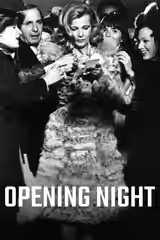
  3. Opening Night (1977) · not on Fi1m yetGena Rowlands makes another woman’s distress impossible to watch from a safe distance.

  4. The Piano Teacher (2001, Fi1m 82)A harsher study of a woman’s distress, with little interest in reassurance.

  5. Ordinary People (1980, Fi1m 81)For another family whose love cannot make its members understand each other.