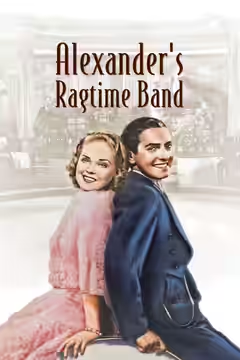
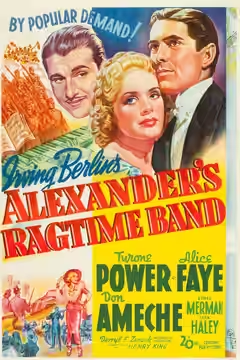
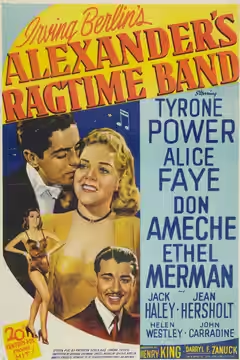
Henry King’s musical is a delivery system for more than two dozen Irving Berlin songs, and as such it is a pleasure. The story between them is thin, the history careless, and Alice Faye and Ethel Merman carry most of the rest.
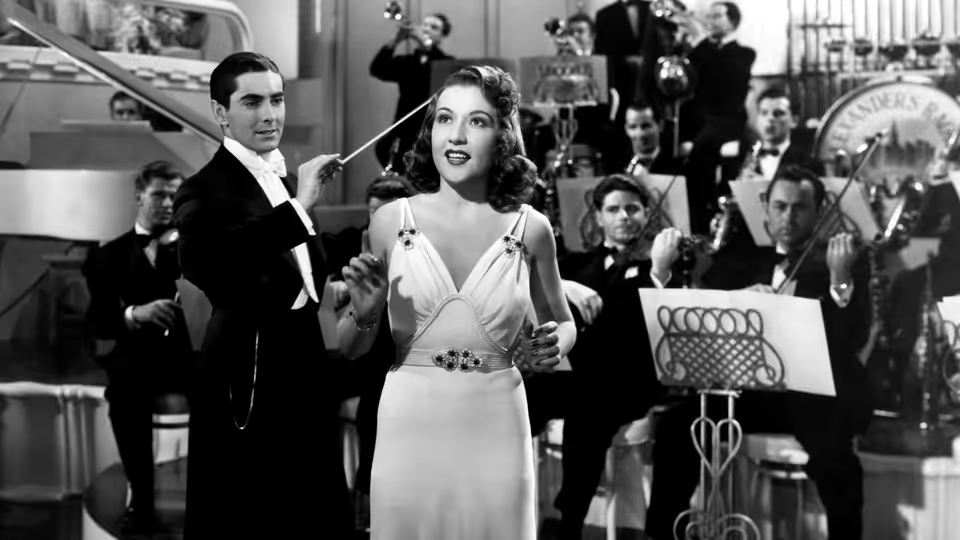
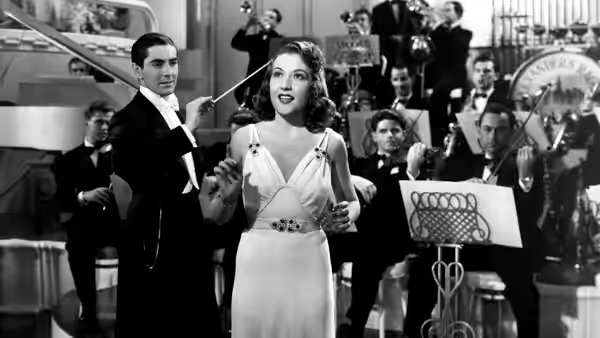
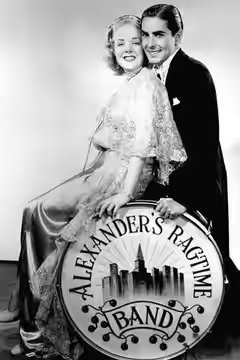
Alexander’s Ragtime Band is not really a film about a bandleader. It is 106 minutes built to hold as many Irving Berlin songs as a film could carry in 1938, more than two dozen by most counts, hung on a plot that starts in a Barbary Coast saloon in 1911 and marches on through the century. The studio’s own tagline called it an American cavalcade, and that is honest: the songs are the parade and the people are there to carry them. Taken on those terms it is a good evening. Asked to be a drama it is thin, and asked to be history it is careless.
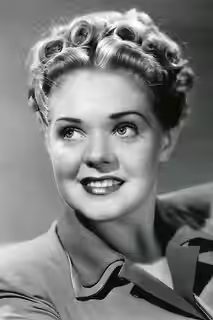
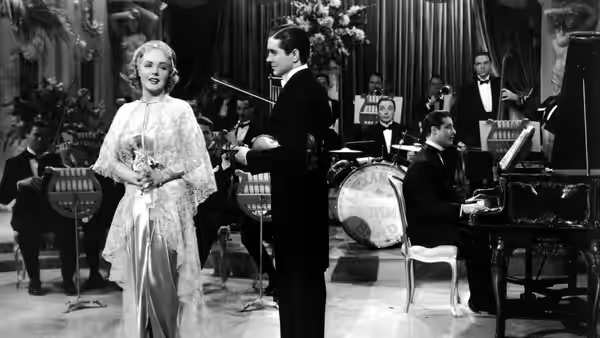
The songs are staged with more care than anything else. Alfred Newman first gives us the title number as a five-piece racket in a smoky room, then lets it grow, as the band does, into full brass and strings, so that by the time we hear it again we know how far these people have come without being told. Alice Faye has a low, unhurried voice with no showing off in it, and when she sits by Don Ameche’s piano to sing ‘Now It Can Be Told’, a new song Berlin wrote for the picture, we were moved more than the flimsy scene around it had any right to expect. She simply sings the words and looks at him. That is the film’s best minute, and it is a quiet one.
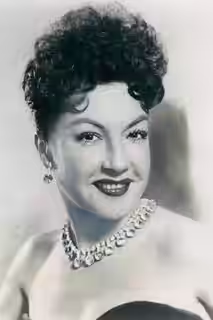
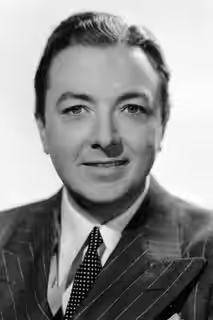
Ethel Merman arrives late, as Jerry Allen, and from then on the film has two engines. She sings ‘Heat Wave’ straight at the back wall in a dress Gwen Wakeling has cut to leave nothing to chance, and the screen seems slightly too small for her. Jack Haley, as the drummer Davey Lane, gets the comic numbers and the reaction shots, and he is better value than his billing suggests: a small, anxious man who knows exactly when to look worried.
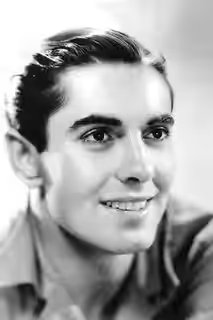
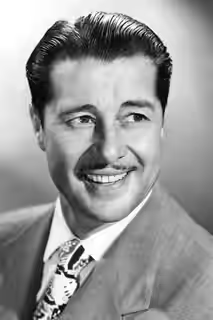
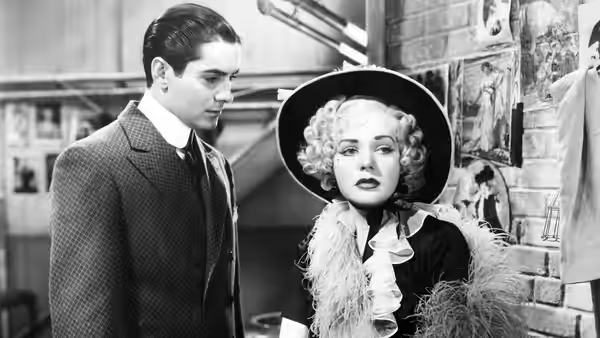
The trouble is the man in the middle. Tyrone Power is handsome and photographs like a statue, and Roger Grant asks nothing more of him than that. He holds the violin as an accessory and leads the band by standing in front of it. Kathryn Scola and Lamar Trotti have written him one quality, stubbornness, and every scene with Stella is the same quarrel in a different hat. Ameche, as the pianist who writes the songs and loves the singer, does the wistful third wheel with grace, and the picture is warmer whenever he is at the keyboard.
Then there is the calendar. Barbara McLean bridges whole decades with a headline and a dissolve, and nobody ages by a day. Songs turn up ten and twenty years before Berlin wrote them; ‘Heat Wave’, from 1933, is belted out in a stretch the film has placed well before that. Most critics have waved this through on the grounds that the tunes are the point. We found it nagged. A film that calls itself a cavalcade has promised us a passage of time, and this one keeps forgetting what year it is.
The craft around the gaps is solid Fox work. J. Peverell Marley lights the saloon with lamplight and cigarette smoke, so the early scenes have some grain and heat, and then lights the later stages flat and bright, which is correct for a revue and duller to look at. Wakeling’s costumes do the time-keeping the faces will not: Stella’s feathers and hobble skirt give way to bobs and bias-cut satin, and it is the clothes that tell us the war has come and gone. McLean, to her credit, mostly lets the songs run whole. Henry King keeps the camera still and the singers centred, which is modest and right.
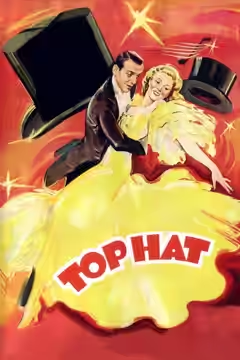
Against Top Hat, made three years earlier from the same songbook, this has no dancing to speak of and no lightness in the book. It is a singers’ film, and it has two singers worth the price. Watch it as a concert with interruptions. The interruptions are short, and Faye and Merman will be back before you have finished your tea.