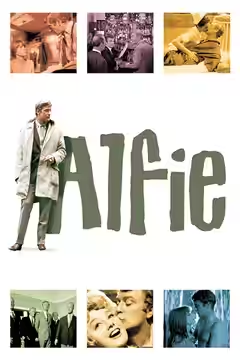
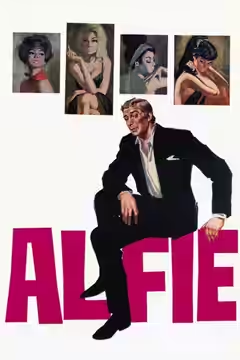
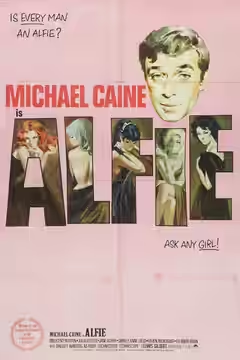
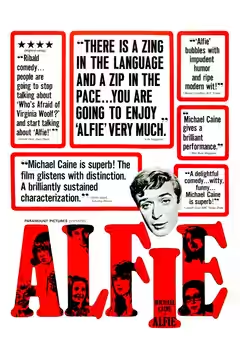
Michael Caine talks to the camera for 114 minutes and we listened to every word, laughing for an hour and then wishing we had not. Lewis Gilbert’s film is baggier than its admirers admit and harder than its reputation as a swinging romp.
Alfie Elkins (Michael Caine) drives other people’s cars, sleeps with other people’s wives, and tells us about it. Lewis Gilbert’s film, from Bill Naughton’s screenplay of his own play, is built on that one device: a man turning to the camera, mid-seduction or mid-excuse, to explain what he is doing and why it is perfectly reasonable. For the first hour it is a comedy about a charmer. For the second it is about what the charmer costs everyone around him, and the second hour is what makes the film worth your evening.
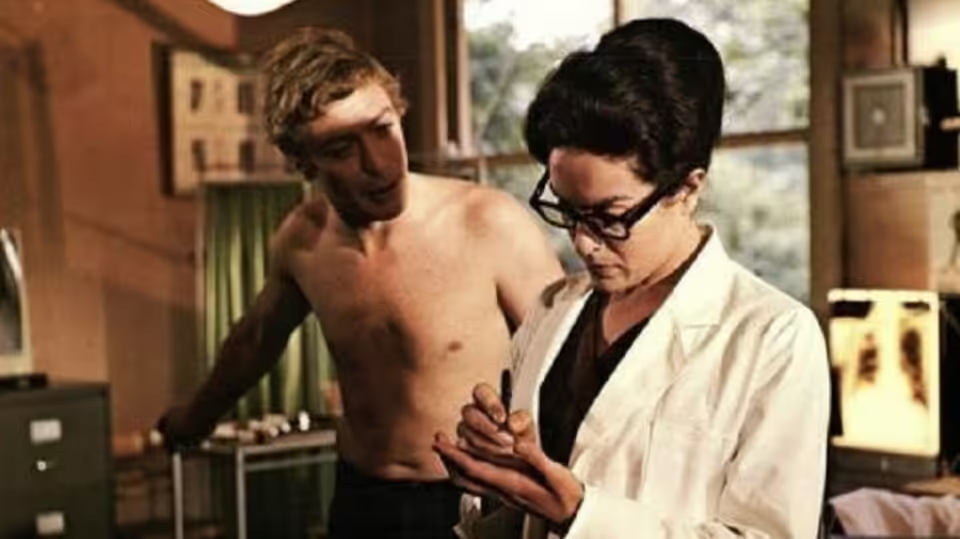
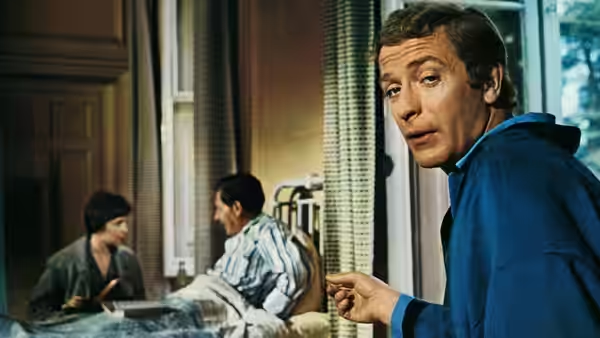
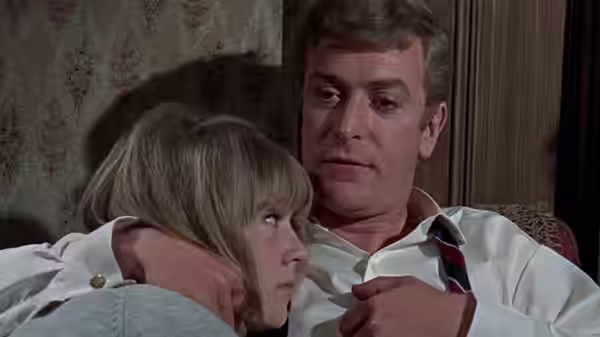
Caine is the whole show, and he knows it, and the remarkable thing is how little he does. He never raises his voice. He tells us his rules about women, never let them get their hooks in, a bird is a bird, in the tone of a man passing on a tip about the horses. He is funny because he believes every word. Watch him laid up in hospital with a bad chest, already sizing up the nurses, or being told by Eleanor Bron’s doctor that he needs rest and hearing the word convalescence as a promise of leisure. The performance dates from the year after The Ipcress File and it is the better of the two.
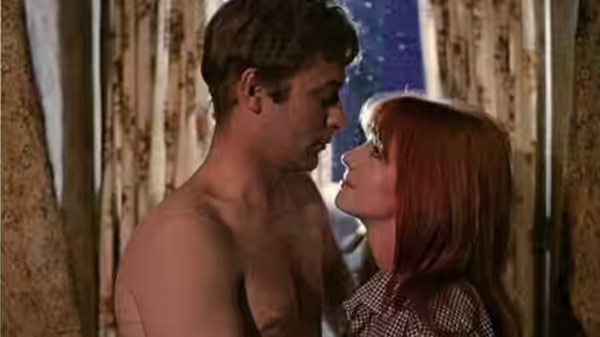
The women are not decoration, which is where the film is smarter than its own tagline. Julia Foster’s Gilda, the plain girl who cooks for him and asks for nothing, is the best thing in it after Caine. She watches him with a patience that is not stupidity, and when she finally acts on what she has seen, the film does not need to underline it. Millicent Martin’s Siddie is all lipstick and lunch hours. Jane Asher’s Annie scrubs his flat until he cannot stand the cleanliness. Shelley Winters, as the wealthy American Ruby, is the thinnest of the threads, played broad where the others are played small, and her scenes are where we looked at our watch.
Otto Heller shoots a London of damp pavements by the river, a launderette, a hospital ward with the radiators on, and Alfie’s bedsit with its one good jacket hung on the door. He keeps the camera at Caine’s eye level for the asides, so we are always the mate he is talking to over a pint. Thelma Connell cuts between the women as briskly as Alfie moves between them, then lets the later scenes run long enough to hurt. Sonny Rollins’s tenor saxophone carries the film in and out of Alfie’s moods; it struts under the early scenes and goes quiet when he does.
There is a scene in the second half, in Alfie’s room, involving Vivien Merchant’s Lily and Denholm Elliott, that we will not describe. We can say that it is played almost without dialogue, that Merchant does more with a cup of tea than most actors manage with a speech, and that Caine’s face afterwards does something it has not done in the previous ninety minutes. We laughed at Alfie for an hour and then, in that room, felt we had been slow to see what was in front of us. The film makes its point there once and does not repeat it.
Not all of it holds. The structure is a string of episodes, and the stretch with Shirley Anne Field’s Carla could be lifted out without anyone noticing the join. The asides sometimes tell us what Heller’s pictures have already shown. Graham Stark’s Humphrey, the bus conductor who is kind to Gilda, and Alfie Bass’s Harry, the husband in the next hospital bed, are barely sketched, though Stark makes his decency land in about four lines. And some of the talk about birds has aged the way that talk does. You will have to decide whether the film is laughing at Alfie or with him, and the answer changes from scene to scene, which we think is the point.
Gilbert would hand the camera to another talker in Shirley Valentine (1989), and that film is warmer and softer and wants to be liked. This one does not. Among the British films of its decade about working men and the women they use, it is the one that gives the women the last look.
See it for Caine and Foster, and stay for the scene with Vivien Merchant. It runs 114 minutes and carries a 15, and the certificate is earned by one quiet scene rather than by any of the bedroom doors.