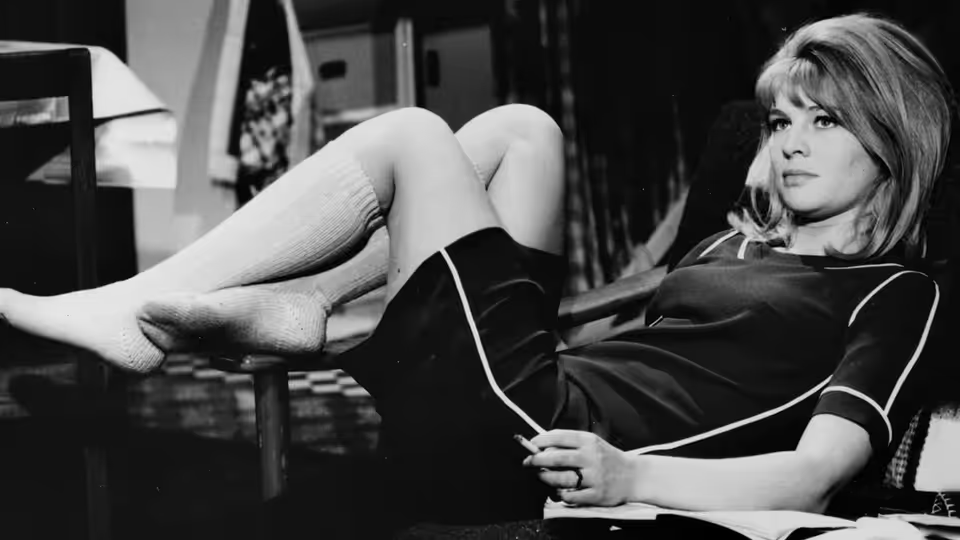
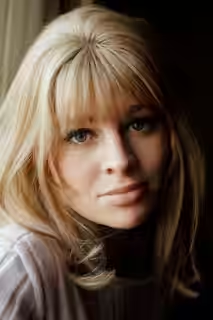
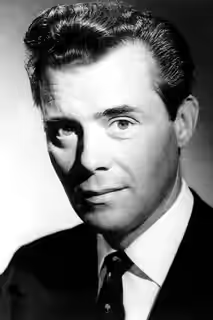
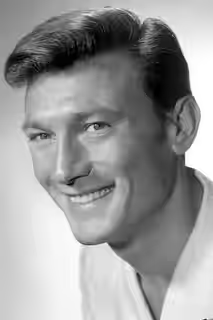
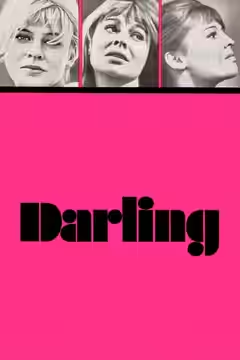
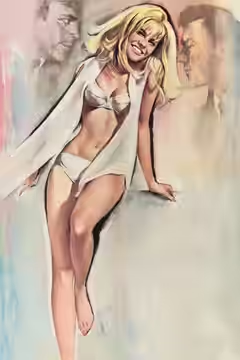
John Schlesinger’s portrait of a girl who gets everything she points at is sharp, handsome and rather pleased with itself. Julie Christie and Dirk Bogarde make it worth an evening; the script’s contempt for her is worth an argument afterwards.
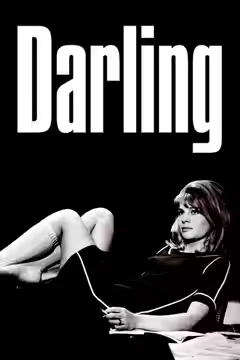
John Schlesinger’s Darling opens on a hoarding. A poster appealing for famine relief is pasted over, sheet by sheet, with the face of Diana Scott on a magazine cover, and for the next 128 minutes the film keeps making the same point with slightly less economy. Diana (Julie Christie) is telling her life story to a women’s magazine, and Frederic Raphael’s screenplay lets us hear her version while Schlesinger shows us what happened. The gap between the two is the film. It is a clever device, and it is also a thumb on the scales, because she is never once allowed to be right.
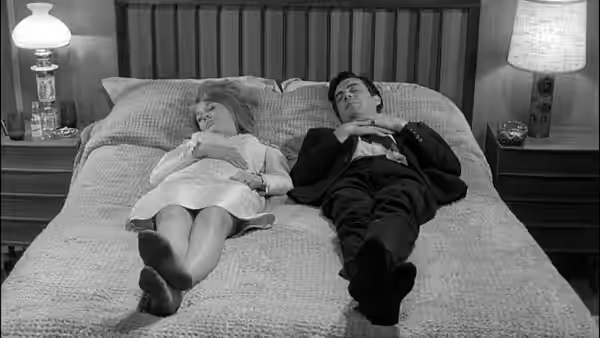
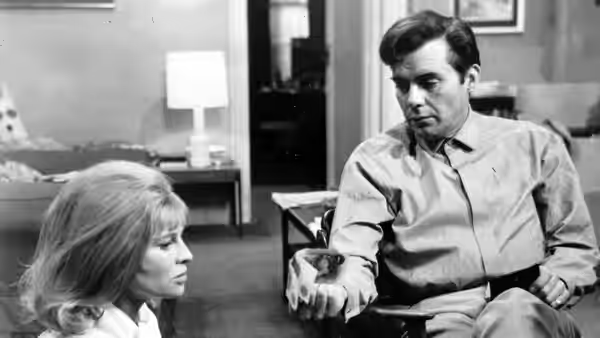
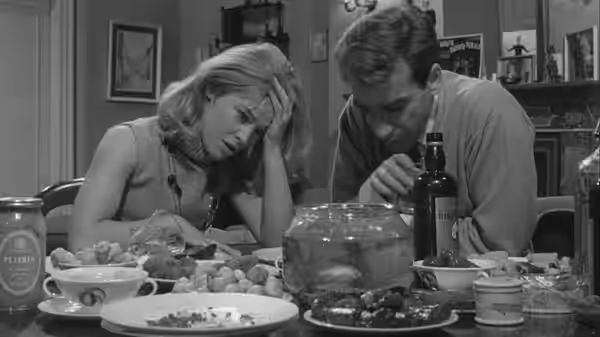
What she wants is not complicated. Robert Gold (Dirk Bogarde), a television interviewer, stops her in the street for a piece about the young, and within a few scenes they have both left their marriages for a flat and a life of long evenings and cheap wine. Then she meets Miles Brand (Laurence Harvey), who runs advertising accounts and knows people. Robert talks to her about books. Miles can get her work. The rest of the film is the argument between the two men, conducted mostly over her head.
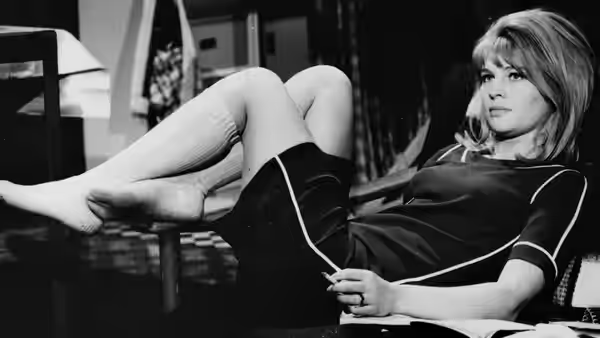
Christie plays Diana as someone who has learned that a laugh will get her out of any room she does not want to be in, and she uses it on everyone, including us. She is quick, funny and physically restless, forever reaching for a cigarette or a coat. The film thinks she is empty. Christie does not agree, and she is right; watch her face when Robert is being clever at her expense and there is somebody there who knows exactly how she is being judged and has decided not to mind. It is the performance that made her, and it deserved to.
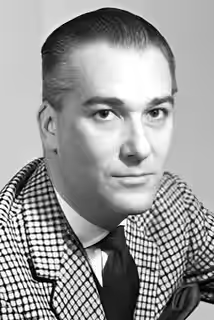
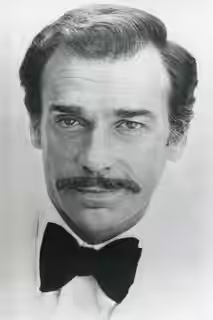
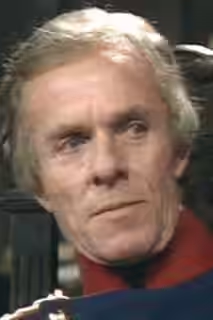
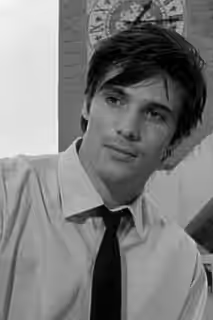
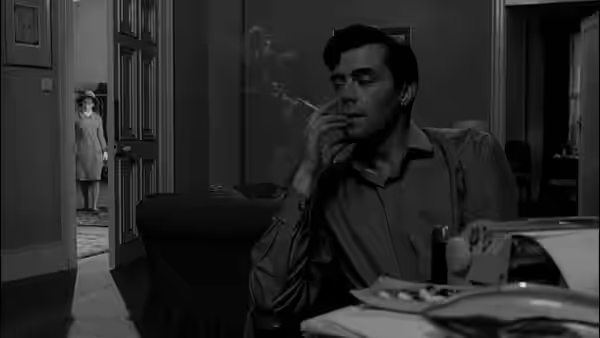
Bogarde is the film’s conscience and also its worst snob, and he plays both without asking us to like him. Robert speaks in finished sentences, corrects her, forgives her and then does not, and Bogarde lets a real tiredness show under the tweed. When he finally tells her what he thinks of her, late in their time together, we found ourselves on her side, which we suspect Raphael did not intend, and it is the moment the film became interesting to us rather than merely well made. Harvey, as Miles, is all polish and no temperature, which is what is asked of him, and it is a small pleasure to hear him make a proposition sound like a quarterly report.
Kenneth Higgins shoots London in hard black and white, streets and stairwells and shop windows, and gets close enough in the interview scenes that the film has the grain of a news report. Jim Clark cuts against the voiceover: Diana says one thing about herself and we see the other. John Dankworth’s score is cool jazz, brass over a walking bass, and it gives the parties a lift the people at them do not have. Julie Harris dresses Christie in clothes that are neat at the start and expensive later, and you can follow the plot from the hats.
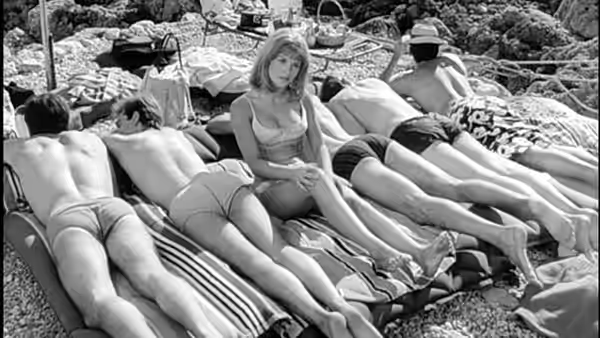
The satire is where it lets itself down. Raphael has a good line for everyone and a kind word for no one, and the party scenes, in which the rich are bored and cruel in ways anybody could have predicted, run past their point. Roland Curram’s Malcolm, the photographer who becomes Diana’s friend, is the one person the film seems fond of, and it treats his private life as a running joke. The moral, that a girl who wants nice things deserves whatever she gets, is delivered with a straight face by a glossy film full of nice things. We laughed at the dialogue and felt slightly grubby about the aim.
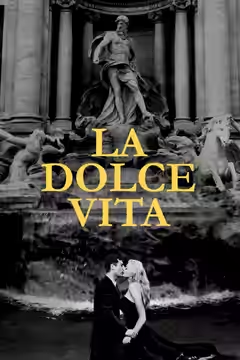
Schlesinger’s Billy Liar (1963), which also had Christie in it, was kinder to its dreamer, and this is the same director and producer, Joseph Janni, looking up the social ladder instead of down. The view is colder. The comparison the film invites is Fellini’s La Dolce Vita (1960), and the difference is plain: Fellini enjoyed the party. Schlesinger watches it from the doorway and disapproves.
It runs 128 minutes and carries a 15 certificate, and it is worth your evening for Christie, for Bogarde and for Higgins’s London, which is a place rather than a period. Watch it with someone who will take Diana’s side. The film will not, and that is the argument you will be having at the end.