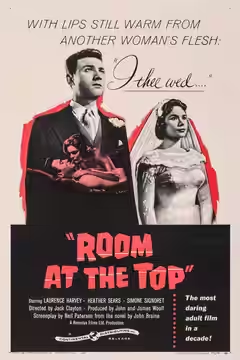
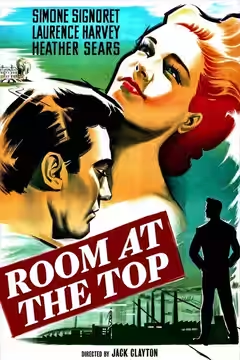
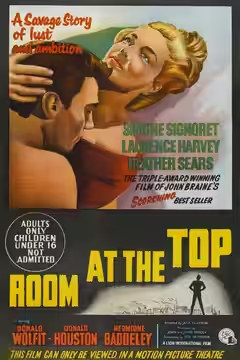
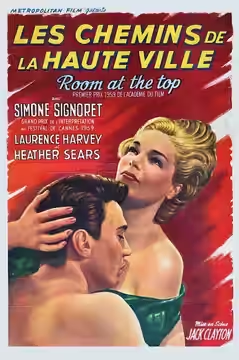
Jack Clayton’s first feature is a hard, unhurried film about a clerk who wants the boss’s daughter and falls for a married woman instead. Simone Signoret is the reason to watch it, and Laurence Harvey is the reason it is not better than very good.
Joe Lampton (Laurence Harvey) gets off a train in a northern town with one suitcase and a job in the town hall accounts department. On his first walk he looks up at the houses on the hill, where the mill owners live, and asks who owns the biggest. Then he sets about getting into it. Jack Clayton, directing his first feature from Neil Paterson’s screenplay of John Braine’s novel, takes 115 minutes over the climb, and Room at the Top is a good film that is very nearly a fine one. It is worth your evening. It is also worth knowing in advance which of its two lead performances to watch.
Joe’s route up is the amateur dramatic society, where the town’s money spends its Tuesday nights. Susan Brown (Heather Sears) is the daughter of Mr Brown (Donald Wolfit), who owns the factory, and she comes with a boyfriend, Jack Wales (John Westbrook), who flew in the war and has never had to ask the price of anything. Joe spent his war in a prison camp studying for his exams, and Paterson’s script lets that fact sit between the two men without anyone saying it twice. Alice Aisgill (Simone Signoret) is the other woman at the society: French, married to George Aisgill (Allan Cuthbertson), a man who speaks to her as if she were staff. Joe wants Susan for what she comes with and Alice for what she is, and he is not honest with either of them about which is which.
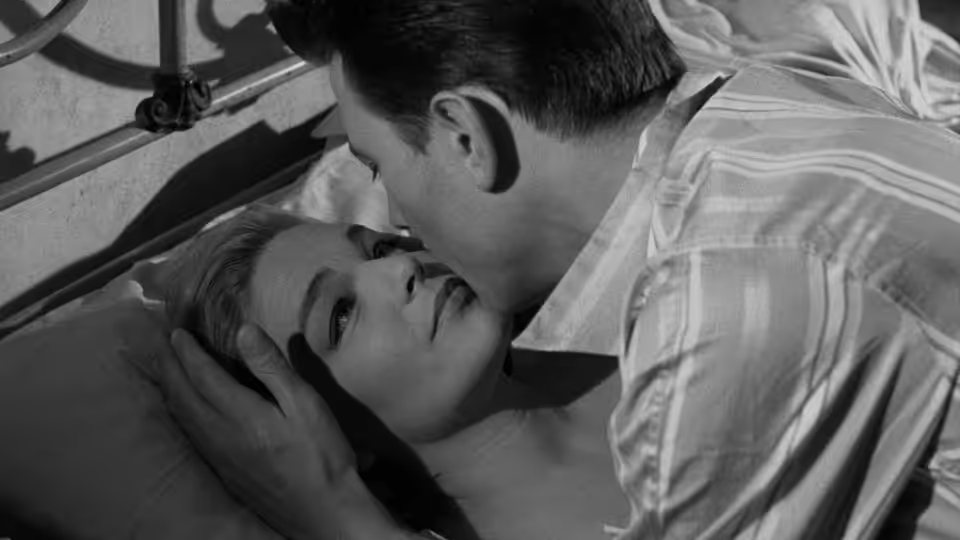
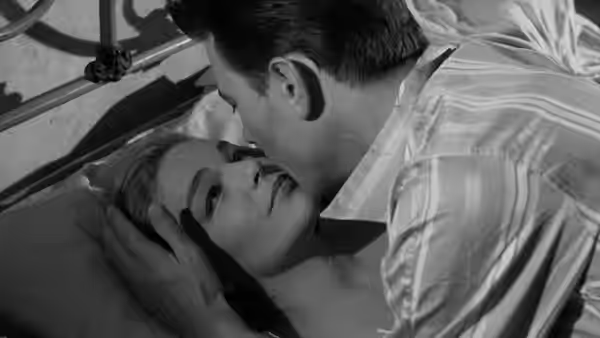
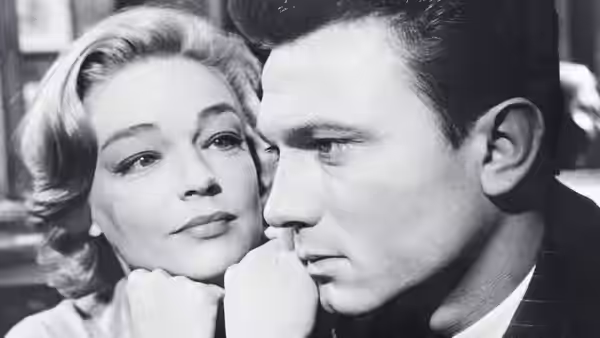
Signoret is the film. She plays Alice as a woman who has already worked out exactly what Joe is and has decided to love him anyway, and she does most of it by listening. Watch her in the pub when he talks about money: she does not argue, she waits, and when she does speak it is to tell him something true about himself that he did not want to hear. It moved us more than we expected, and we were slightly ashamed to be moved, because the film has made it plain she deserves better and it is not going to give it to her. There is a scene in her flat, early in the affair, where she straightens his collar before he leaves, and it told us more about the two of them than any of the dialogue.
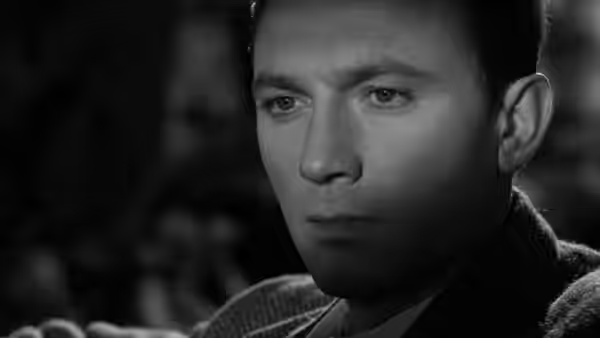
Freddie Francis shoots the town in black and white with a lot of weather. The terraces and chimneys sit at the bottom of the frame and the hill sits at the top, so that every exterior is a diagram of what Joe wants. Indoors he lights faces hard from one side, and in the Aisgills’ flat he keeps George in shadow so completely that Cuthbertson barely needs to act. Ralph Kemplen holds the rows in long takes and cuts the love scenes short, which is discreet in the 1958 manner and also right for the film, since what happens in bed matters less here than what is said afterwards. Mario Nascimbene’s score is used sparingly, a small sour theme that comes in when Joe is alone and stays out of the arguments.
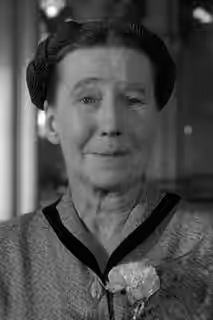
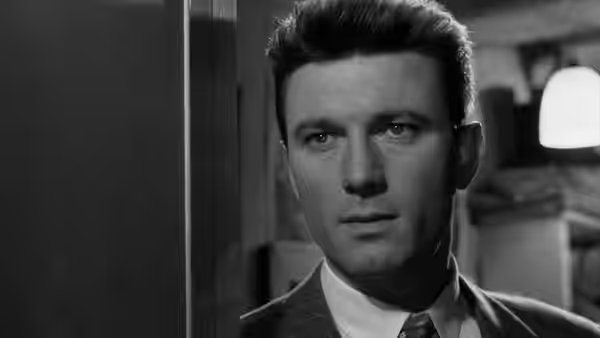
Harvey is the problem. He has the cheekbones and the resentment, and he can do the stare at the hill, but he cannot do the charm that would explain why anybody in this town lets him near their daughter. His vowels wander. When Joe is meant to be winning people over, we watched them being won and did not understand it. Sears has the harder job, because Susan is written as a girl whose only quality is being rich, and neither she nor the script finds anything else in her. The older actors do better. Wolfit plays Brown as a man who buys people and says so to their faces, and Hermione Baddeley, as Alice’s friend Elspeth, gets one drink and one speech and makes the film a little wiser for it.
The last third turns to melodrama, and we will not describe how. A machine starts up, and we could hear it running. It does not undo what came before, but it explains why some critics call the plot dated, and we think that is fair. Clayton would make The Innocents three years later and show he could do dread; here he is better at rooms and faces than at events.
It was an X certificate when it came out and it is a 12 now. Nothing in it would trouble a teenager today except the idea, which still should.