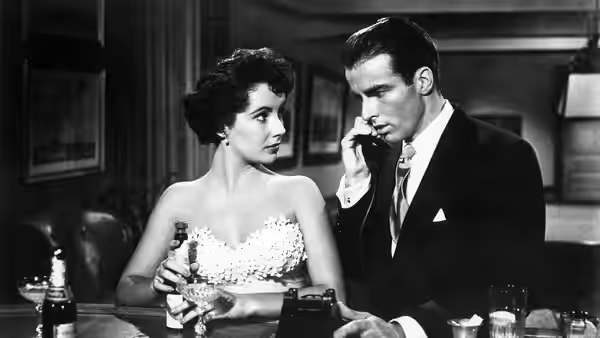
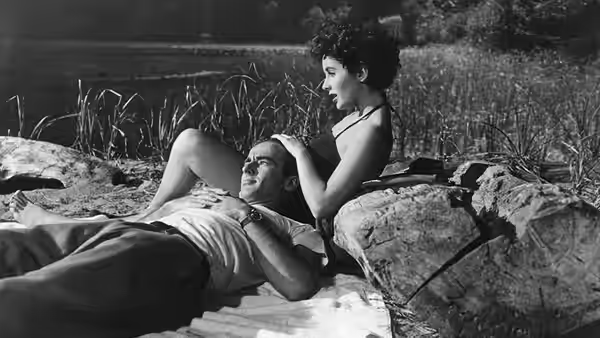
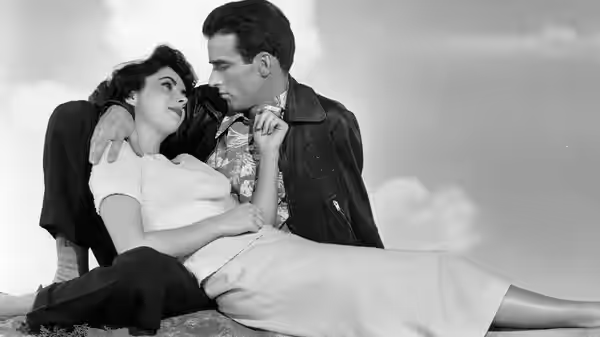
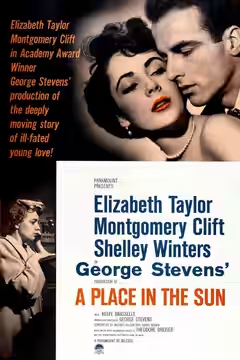
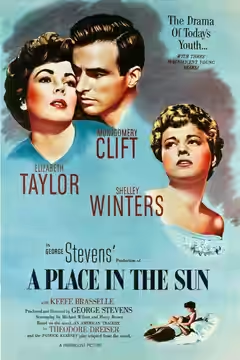
George Stevens’s version of Dreiser’s An American Tragedy is slow, handsome and harder than it looks. Montgomery Clift and Elizabeth Taylor are filmed as if the camera were in love with them, and the film asks us to be too, at Shelley Winters’s expense.
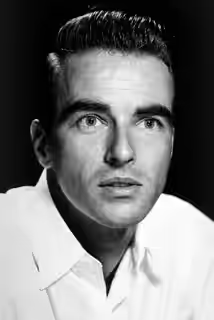
A young man walks along a highway with his thumb out. Behind him a billboard shows a girl in an Eastman swimsuit; in front of him an open car goes past, and the girl in it does not look round. That is the first minute of A Place in the Sun, and George Stevens has told you most of the story already. The young man is George Eastman (Montgomery Clift), come to ask his rich uncle for a job.
It is adapted by Harry Brown and Michael Wilson from Theodore Dreiser’s novel An American Tragedy, brought forward to the present day. It has Stevens’s pace: 122 minutes in which nobody hurries and every shot is allowed to finish. We admire it, and we would send you to it with one warning: it is much kinder to two of its characters than to the third.
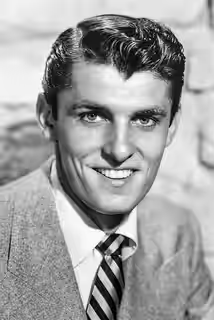
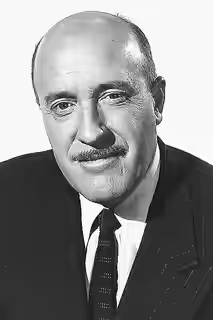
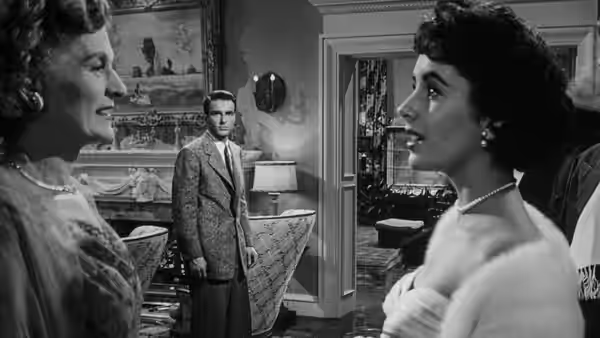
The uncle, Charles Eastman (Herbert Heyes), receives George in the big house, then hands him to his son Earl (Keefe Brasselle), who puts him in the packing room and tells him the firm does not allow its men to go out with its girls. George goes out with one anyway. Alice Tripp (Shelley Winters) works on the line beside him, and they meet properly one night at the pictures. The scenes in her rented room are the film’s plainest and, for a while, its most affecting. William C. Mellor lights them with one lamp and the glow of a radio, and Winters plays a woman who cannot believe her luck and is right not to.
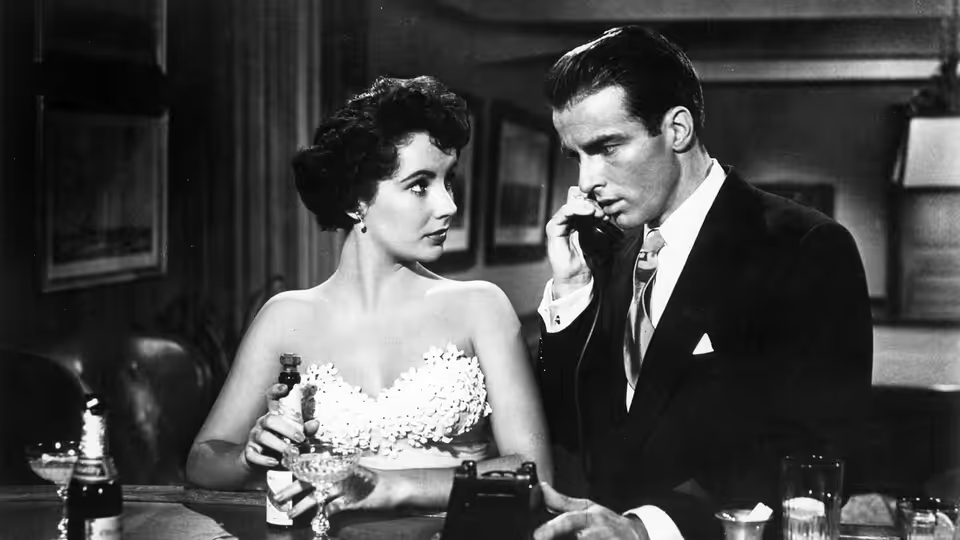
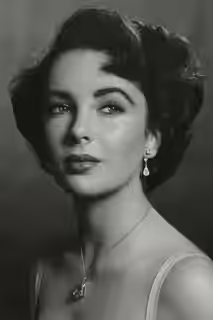
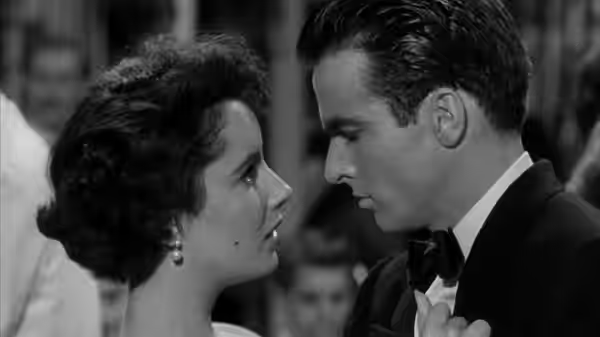
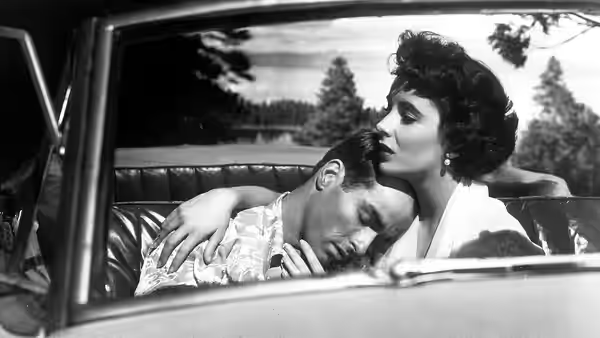
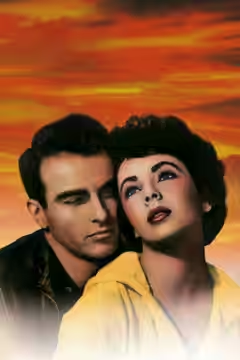
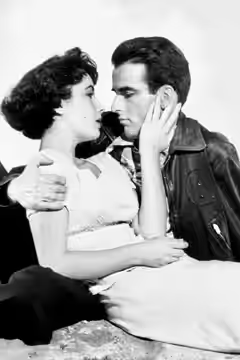
Then George is invited up to the house, and the girl from the car, Angela Vickers (Elizabeth Taylor), sees him, and Stevens moves the camera in on the two of them until there is nothing on screen but their faces. Clift’s is turned half away. Taylor’s fills the rest of the frame while she talks in a rush about how she can tell he is unhappy. We forgot to breathe. It is not the dialogue, which is close to nonsense; it is the size of it, two faces so near the lens that you can see the light shift in Taylor’s eyes, and a man who has never been properly looked at realising that he is.
Mellor shoots the whole film in black and white with real black in it: the factory floor grey, the lake white glare, the nights deep. William Hornbeck dissolves one image into the next so slowly that both sit on screen together, Angela’s face laid over a shot of Alice waiting, a lake laid over a bed. It is not subtle, but it makes the film feel like something remembered rather than something happening. Franz Waxman’s score swells whenever Taylor appears and goes thin and nervous around Winters. Edith Head puts Taylor in a white strapless gown and puts Winters in a coat.
Now the warning. Alice is written to be got rid of. The screenplay gives her a plaintive voice on the telephone and a habit of turning up, and takes away nearly everything that might make us want her to stay. Winters plays exactly what is written; the trouble is what was written. Halfway through we caught ourselves wishing she would go away so George could get back to the lake, and did not much like ourselves for it. Whether Stevens wanted us to feel that or simply felt it himself, we cannot tell.
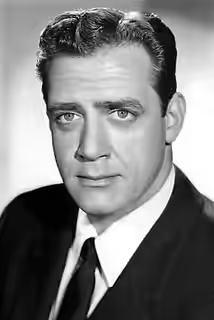
The second half takes the story somewhere we will not describe. Raymond Burr arrives as District Attorney R. Frank Marlowe and gives a performance louder than anything around it, and the last forty minutes are steadier and more conventional than the first eighty. Anne Revere, as George’s mother Hannah, has a handful of scenes and makes them count without raising her voice.
Clift had a way of looking as if he were listening to something in the next room, and Stevens uses it: George never quite belongs to any scene he is in. Watch it in the dark and let the dissolves do their work. And when the telephone rings in Alice’s room, notice who the film cuts to.