Rosa Salazar gives this enjoyable cyborg adventure enough warmth to survive its crowded screenplay. Robert Rodriguez stages the fights with clarity and invention, though a weak romance keeps interrupting a heroine we would happily spend more time with.
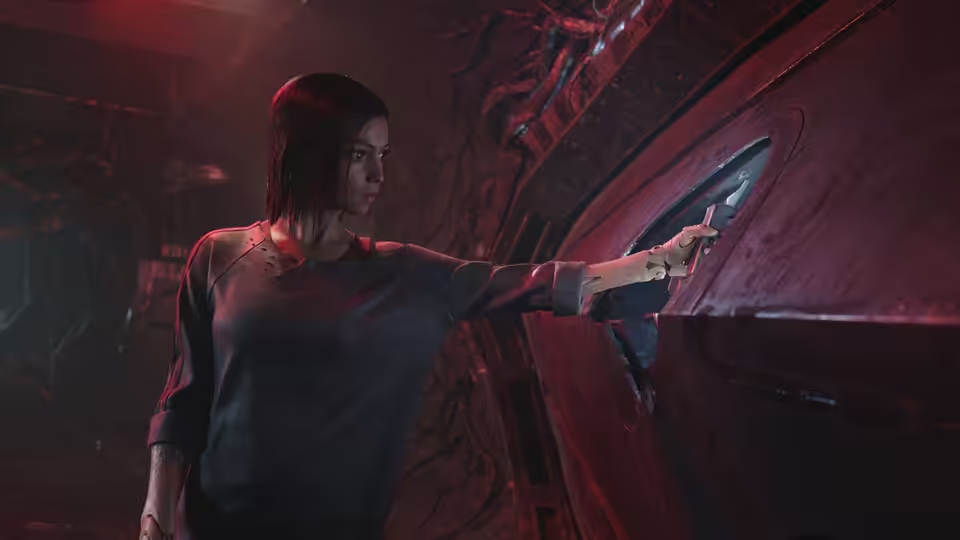
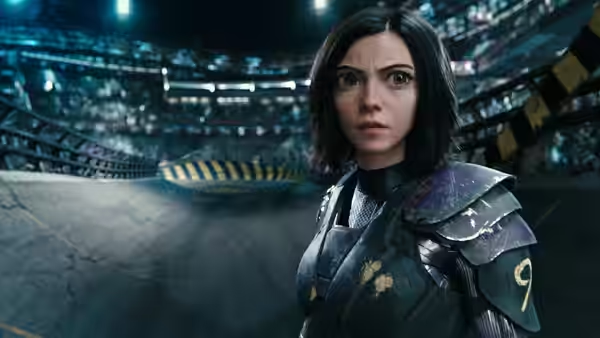
Alita: Battle Angel is a good science-fiction adventure carrying more story than it can comfortably manage. Robert Rodriguez gives the cyborg fights room to make sense and takes Alita’s feelings seriously, which matters more than the elaborate machinery around her. The film asks us to accept a digitally created heroine with conspicuously large eyes. Rosa Salazar earns that acceptance quickly, even while the screenplay is busy introducing more people and problems.
Her performance makes Alita curious about the people around her and eager for their affection. The eyes initially demand attention, but the small changes of expression soon hold it without any help from their size. We were unexpectedly touched by that open, hopeful face; Rosa Salazar gives Alita an eagerness to connect that survives even the stiffer dialogue. The director is right to take those feelings seriously rather than keep breaking them up with jokes.
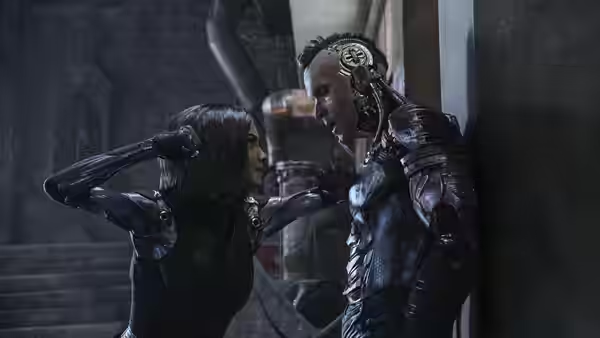
Bill Pope’s cinematography is particularly helpful in the fights, giving the acrobatics enough space for us to understand how one movement leads to the next. Editors Ian Silverstein and Stephen E. Rivkin preserve that clarity, so speed does not leave us trying to reconstruct what just happened. The motorball sequences benefit most: the excitement comes from watching bodies move through a shared space, with the cutting keeping up. For an effects-heavy action film, the simple pleasure of being able to follow the action counts for a great deal.
Production designers Steve Joyner and Caylah Eddleblute give Iron City enough detail to sustain interest beyond the immediate business of the plot. The city looks as though people could live there, a useful grounding for a story populated by such conspicuously artificial bodies. That detail deserves more time than the busy screenplay allows it. Junkie XL’s music is less distinctive: it encourages excitement reliably enough, but adds little to the feeling its lead is already providing.
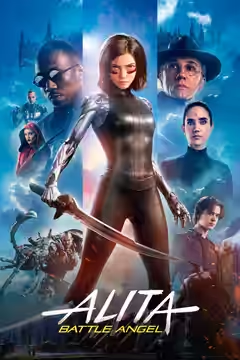
James Cameron and Laeta Kalogridis have less success with the romance, which struggles to make Alita’s attachment feel particular to the person in front of her. The writing gives Keean Johnson’s Hugo too little personality to justify the attention, and the dialogue pushes feelings the scenes have not yet earned. Christoph Waltz gives Dr. Dyson Ido a steadier presence, but the family material also has to compete with too many other concerns. The screenplay keeps finding another subject before it has done enough with the last one.
Most critics disagree with us, finding the muddled story and thin romance enough to outweigh the film’s pleasures. We think they undervalue the sustained appeal of Rosa Salazar’s performance and the precision of the fights. The complaints about the writing are fair, but we never stopped caring about Alita when the screenplay gave her room. An action adventure can get quite a long way with that much working for it. See it for the cyborg, with patience to spare for the courtship.