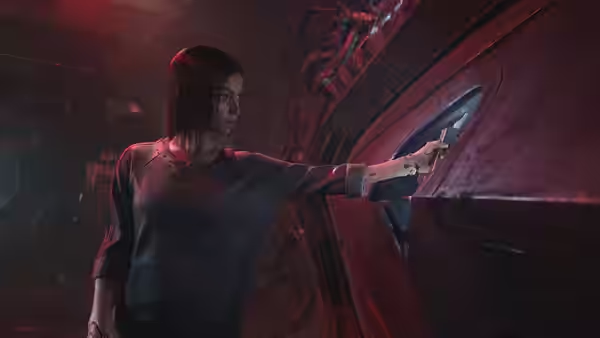
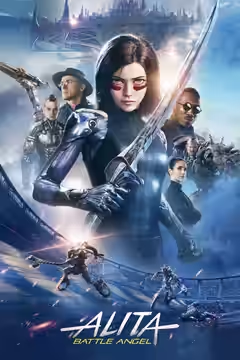
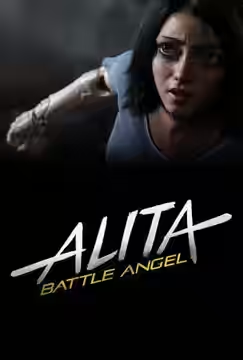
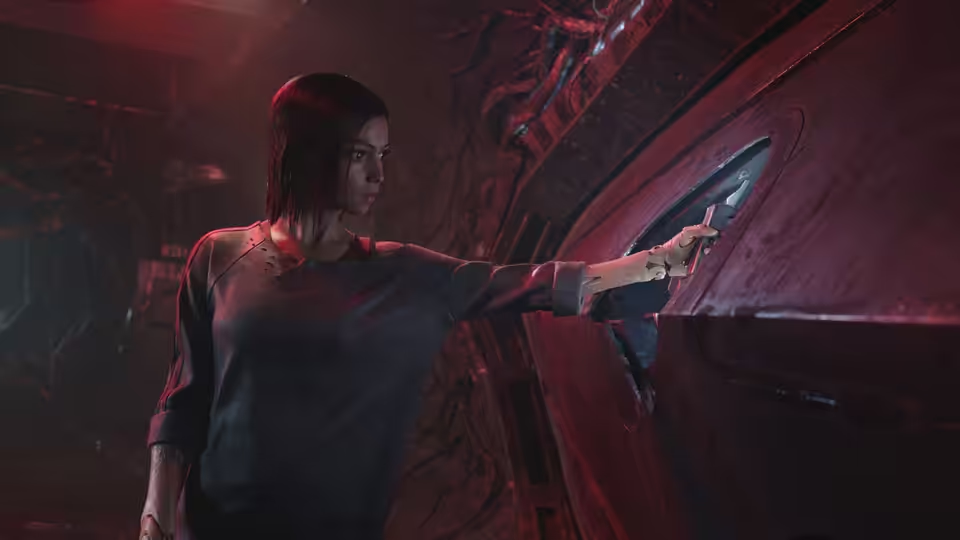
Alita (Rosa Salazar) reaches toward a control panel in a dim, industrial room
Film review

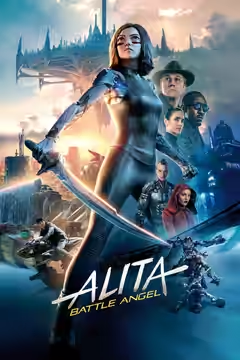
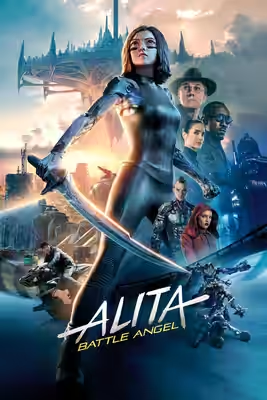
Alita: Battle Angel

2019 · Directed by Robert Rodriguez · 2h 02m · PISF 12+

In a sentenceA cyborg with enormous eyes is easier to believe in than her boyfriend

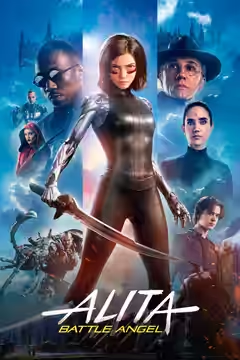
In Iron City, cyborg Alita (Rosa Salazar) tries to find a place among humans and machines. Dr. Dyson Ido (Christoph Waltz) and Hugo (Keean Johnson) bring family ties and romance into her life, while Vector (Mahershala Ali) is among the dangers she faces. Alita puts her artificial body to work in fights and the sport of motorball. Her feelings raise questions that combat cannot settle: who she can trust, what she wants, and what being human might mean for someone with an artificial body.

Plays from YouTube when you press play; nothing loads from them until then.

Fi1m review

Rosa Salazar gives this enjoyable cyborg adventure enough warmth to survive its crowded screenplay. Robert Rodriguez stages the fights with clarity and invention, though a weak romance keeps interrupting a heroine we would happily spend more time with.

Alita: Battle Angel is a good science-fiction adventure carrying more story than it can comfortably manage. Robert Rodriguez gives the cyborg fights room to make sense and takes Alita’s feelings seriously, which matters more than the elaborate machinery around her. The film asks us to accept a digitally created heroine with conspicuously large eyes. Rosa Salazar earns that acceptance quickly, even while the screenplay is busy introducing more people and problems.

Her performance makes Alita curious about the people around her and eager for their affection. The eyes initially demand attention, but the small changes of expression soon hold it without any help from their size. We were unexpectedly touched by that open, hopeful face; Rosa Salazar gives Alita an eagerness to connect that survives even the stiffer dialogue. The director is right to take those feelings seriously rather than keep breaking them up with jokes.

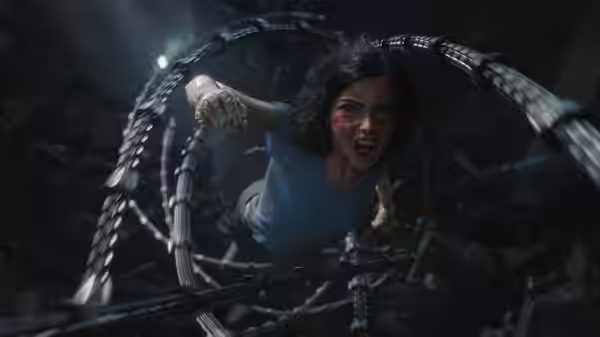
Bill Pope’s cinematography is particularly helpful in the fights, giving the acrobatics enough space for us to understand how one movement leads to the next. Editors Ian Silverstein and Stephen E. Rivkin preserve that clarity, so speed does not leave us trying to reconstruct what just happened. The motorball sequences benefit most: the excitement comes from watching bodies move through a shared space, with the cutting keeping up. For an effects-heavy action film, the simple pleasure of being able to follow the action counts for a great deal.

Production designers Steve Joyner and Caylah Eddleblute give Iron City enough detail to sustain interest beyond the immediate business of the plot. The city looks as though people could live there, a useful grounding for a story populated by such conspicuously artificial bodies. That detail deserves more time than the busy screenplay allows it. Junkie XL’s music is less distinctive: it encourages excitement reliably enough, but adds little to the feeling its lead is already providing.

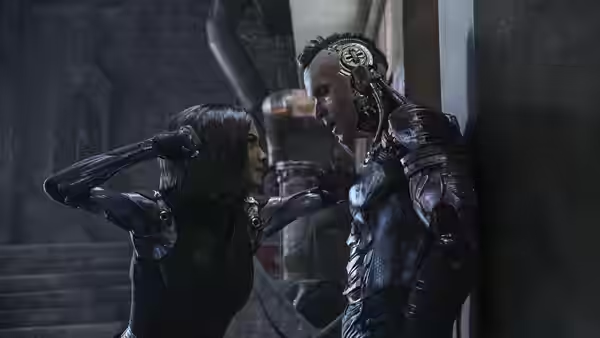
James Cameron and Laeta Kalogridis have less success with the romance, which struggles to make Alita’s attachment feel particular to the person in front of her. The writing gives Keean Johnson’s Hugo too little personality to justify the attention, and the dialogue pushes feelings the scenes have not yet earned. Christoph Waltz gives Dr. Dyson Ido a steadier presence, but the family material also has to compete with too many other concerns. The screenplay keeps finding another subject before it has done enough with the last one.

Most critics disagree with us, finding the muddled story and thin romance enough to outweigh the film’s pleasures. We think they undervalue the sustained appeal of Rosa Salazar’s performance and the precision of the fights. The complaints about the writing are fair, but we never stopped caring about Alita when the screenplay gave her room. An action adventure can get quite a long way with that much working for it. See it for the cyborg, with patience to spare for the courtship.

Critical consensus AI synthesised

51
Positive
7
Mixed
7
Negative
11

The reviews are divided, leaning negative, but praise repeatedly centres on Rosa Salazar’s expressive performance and the energetic action. Even several unconvinced critics find life in Alita herself, while the fights and motorball sequences earn credit for inventive choreography and clear staging. Supporters find enough charm, earnestness and technical ingenuity to enjoy a familiar science-fiction adventure; detractors tend to admire individual sequences without caring much about the story.

Reservations cluster around the weak romance, muddled plotting and franchise setup, with several reviews finding that spectacle cannot compensate for thin characterisation. The spread is wide: the same sentiment that charms some critics strikes others as formulaic or hollow. Alita’s digital appearance also divides opinion: Vulture finds her enlarged eyes expressive, while Paste considers her computer-generated face distracting. The disagreement is chiefly over whether the performance and action can sustain a film whose storytelling draws complaints even from supporters.

IndieWire
31 January 2019 · B+ · Michael Nordine
83

Nordine calls the film Rodriguez’s best since Sin City and says it lives up to its potential while leaving viewers wanting more. He especially praises Rosa Salazar’s expressive, physically impressive motion-capture performance as Alita.

Read the full review →
Little White Lies
31 January 2019 · 2/4/4 · David Jenkins
80

Jenkins finds the film an infectiously fun, charming adventure epic. He singles out the superb lead performance for praise.

Read the full review →
Los Angeles Times
11 February 2019 · Kenneth Turan
75*

Turan finds the familiar sci-fi adventure surprisingly enjoyable, thanks to its energy, sentiment and technical ingenuity. He especially praises Rosa Salazar’s expressive performance and Weta Digital’s convincing cyborg effects.

Read the full review →
The AV Club
1 February 2019 · B- · Jesse Hassenger
70

Hassenger finds the film a lot of fun, despite an unconvincing romance and an awkward sequel-bait ending. He particularly praises the inventive, fluidly shot action, especially Alita’s fights and the kinetic motorball scenes.

Read the full review →
Vulture
1 February 2019 · Emily Yoshida
70*

Yoshida finds the film ungainly and hokey but engaging and unexpectedly charming. She singles out Rosa Salazar’s magnetic performance and expressive big eyes as what makes it work.

Read the full review →
Screen Daily
1 February 2019 · Tim Grierson
65*

The page identifies this as a review, but its verdict is unavailable in the paywalled text. The standfirst says the filmmakers bring the graphic novels to life, without revealing what the critic singles out.

Read the full review →

Straight answers AI written, from our review

Is Alita: Battle Angel worth watching?
Alita: Battle Angel is worth watching for science-fiction action fans who value a sympathetic heroine and clearly staged fights; we score it 72 out of 100. Rosa Salazar gives Alita enough warmth to keep us invested, though the crowded screenplay and unconvincing romance require some patience.
How long is Alita: Battle Angel, and what is it rated?
Alita: Battle Angel runs 2h 02m and is rated 12+ by the PISF in Poland. It is an action and science fiction film.
Where can I watch Alita: Battle Angel in Poland?
Alita: Battle Angel is streaming on HBO Max and Disney+ in Poland, and it is also available to rent from Amazon Prime Video and Apple TV from zł 9.99. It leaves HBO Max on 31 October. Availability is checked daily; the links above go straight to each service.
How violent or frightening is Alita: Battle Angel, and is it suitable for children?
Alita: Battle Angel has a UK 12A certificate and features cyborg fights and fast-moving motorball action, making it a more natural choice for teenagers than young children. The certificate allows under-12s with an accompanying adult, but we would urge caution for children sensitive to combat; the clearly staged action remains central to the film.
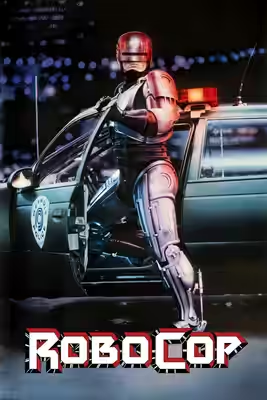
How does Alita: Battle Angel compare to RoboCop?
Alita: Battle Angel is the gentler cyborg adventure, while we recommend RoboCop as the sharper, stronger film for adults comfortable with savage violence. Both give us a person to care about inside a reconstructed body, but Alita favours earnest emotion and acrobatic action over corporate satire, with a weaker romance slowing its progress.
What should I watch after Alita: Battle Angel?
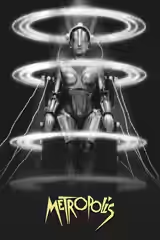
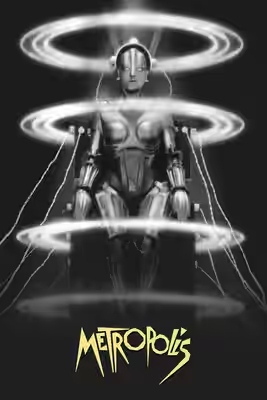
After Alita: Battle Angel, try RoboCop (1987, Fi1m 91): Another reconstructed body, with sharper satire and considerably less restraint about violence. Then Ghost in the Shell (1995, Fi1m 83): For a more searching account of consciousness inside an artificial body; and Metropolis (1927, Fi1m 87): A divided city and an artificial woman, rendered with an enduring strangeness.

Cast

If you liked this, try…

  1. RoboCop (1987, Fi1m 91)Another reconstructed body, with sharper satire and considerably less restraint about violence.

  2. Ghost in the Shell (1995, Fi1m 83)For a more searching account of consciousness inside an artificial body.

  3. Metropolis (1927, Fi1m 87)A divided city and an artificial woman, rendered with an enduring strangeness.

  4. Robot & Frank (2012) · not reviewed yetA quieter human and robot pairing, where affection grows through practical companionship.

  5. Mars Express (2023) · not reviewed yetFrench animation that gives its robots a knotty detective story to navigate.

Free account

Know what to watch tonight

Two lists that know where things are streaming, collections you can share, your own score beside ours, and Discover that remembers what you have seen.

  • Want to see, sorted by what is streaming now
  • Seen, with your score out of ten
  • No adverts, ever