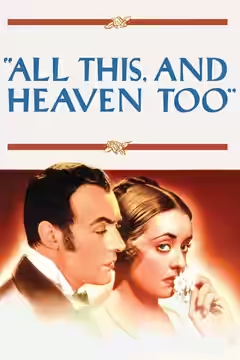
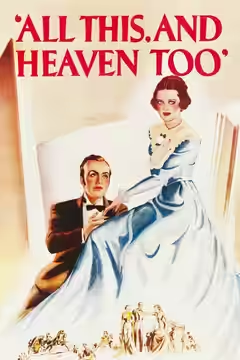
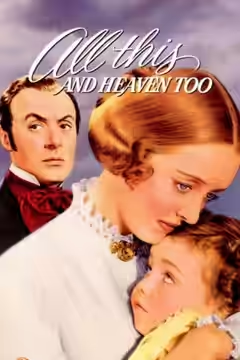
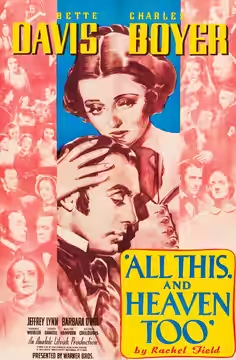
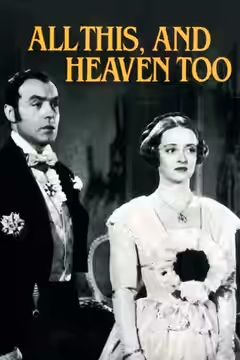
Anatole Litvak’s period drama is handsomely mounted and quietly acted, with Bette Davis unusually still and Barbara O’Neil doing the shouting for everyone. It is also 141 minutes long, and about a third of them are spent waiting.
Anatole Litvak’s film of Rachel Field’s novel takes a real French scandal of the 1840s and turns it into a Bette Davis picture, which is to say that a woman suffers beautifully for two hours and twenty minutes while men fail to say what they mean. It is handsomely made and mostly well acted, and it is far too long. Casey Robinson’s screenplay decided early that the governess was blameless and the Duc was a gentleman, and having decided it, has nowhere much to go but slowly.
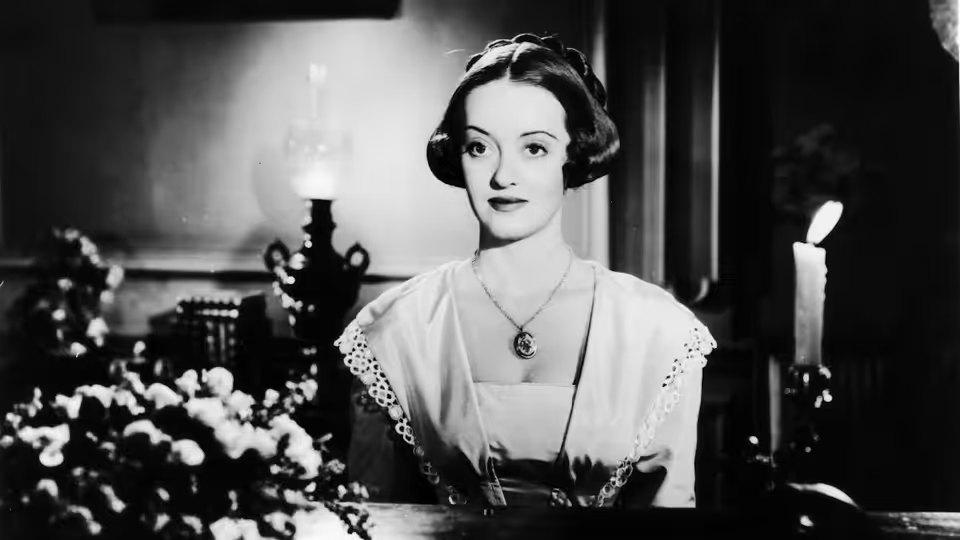
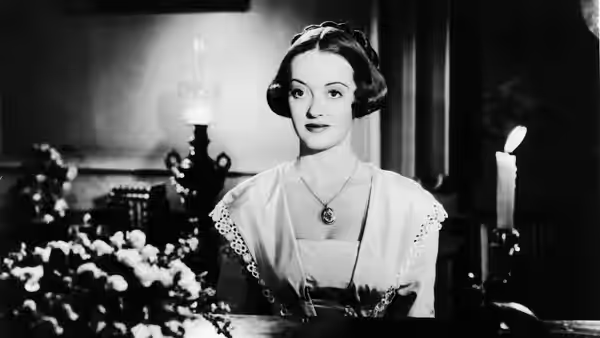
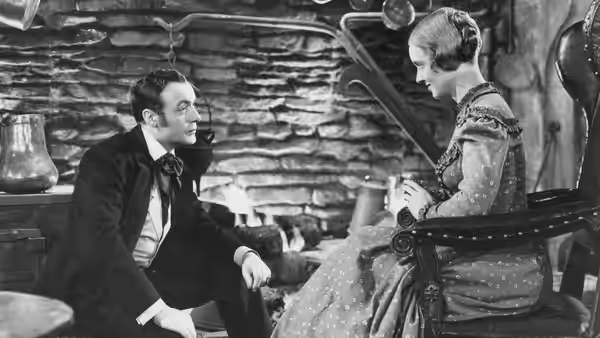
Davis plays Henriette with almost none of her usual weaponry. No flashing eyes, no cigarette, no curl of the lip; she keeps her hands still and her voice low and lets the household come to her. It is a disciplined performance and for long stretches a quiet one, and we admired it more than we felt it. Boyer, as the Duc, is gentler still, a tired man who has retreated into his children, and the film’s romance consists mostly of the two of them being kind in adjoining rooms. That is the point, and it is also the problem. A love that never once raises its voice is hard to keep watching for 141 minutes.
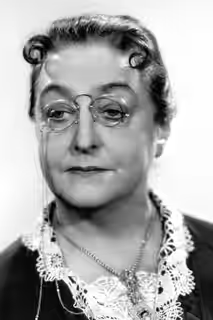
The voice that does get raised belongs to Barbara O’Neil. Her Duchesse is jealous of her husband, jealous of her own children for taking his attention, and jealous of the new governess before the woman has unpacked. O’Neil plays her in nightdresses and shawls, sitting up in bed with her hair coming down, and she is the one person on screen whose feelings are not under lock and key. The film treats her as the villain. We felt sorrier for her than it wanted us to, and the scenes in which the Duc walks out of her room in the middle of a sentence are the ones we went home thinking about.
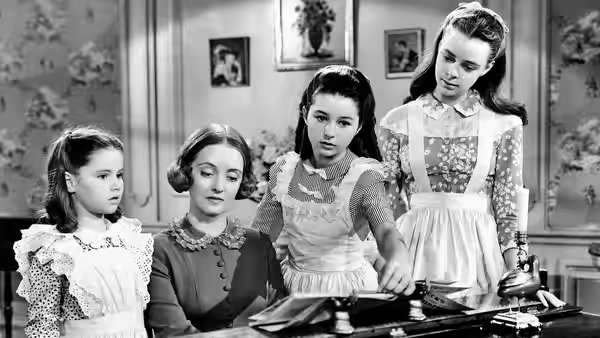
Ernest Haller shoots the Praslin house as a place of tall doors and long halls, lit by candles and windows, with the governess’s face the brightest thing in most rooms. Orry-Kelly keeps Davis in dark dresses with white collars, so that she reads as a nun or a nurse next to the Duchesse’s ruffles and silks, and the eye has picked its side before anyone speaks. Max Steiner’s score does the rest, and then some; there is a theme for the lovers that arrives every time they look at each other, and by the second hour we could hear it coming and braced. Warren Low cuts the school framing and the Paris flashback cleanly, but nobody asked him to lose half an hour, and half an hour is what it needed to lose.
Virginia Weidler is good as Louise, the eldest daughter, who is old enough to understand what her mother is and young enough to be hurt by it every time. Harry Davenport does his kind old man as Pierre, a servant who takes to the governess at once. Henry Daniell arrives late as Broussais, thin-lipped and suspicious of everyone, and the picture wakes up whenever he is in it, which is not often enough. Jeffrey Lynn’s Field has almost nothing to do except be decent, and does that.
Somewhere past the ninety-minute mark, with the children in bed and the adults once again standing in doorways not saying what they mean, we looked to see how much was left. Litvak has the manner of a big prestige picture, the carriages, the crowds, the panelled rooms, without the urgency of one. The scandal at the centre of the story was one of the ugliest of its century, and the film keeps it at arm’s length, in the past tense, told to schoolgirls who need protecting from it. So, apparently, do we.
See it for O’Neil, for Haller’s candlelight and for Davis proving she could do quiet. See it on a wet afternoon with nothing else booked. It runs 141 minutes and carries a U certificate, and a story this small did not need the first.