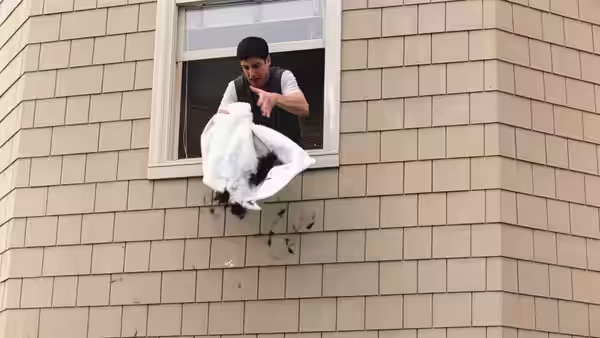
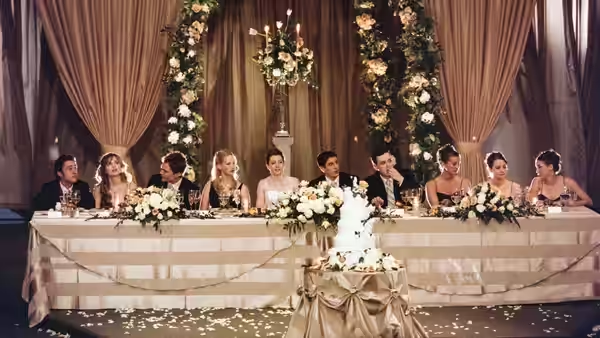
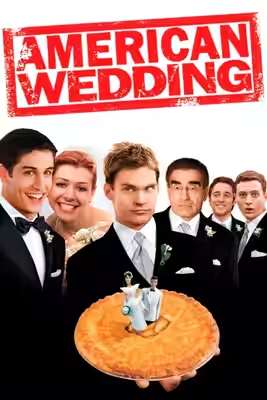
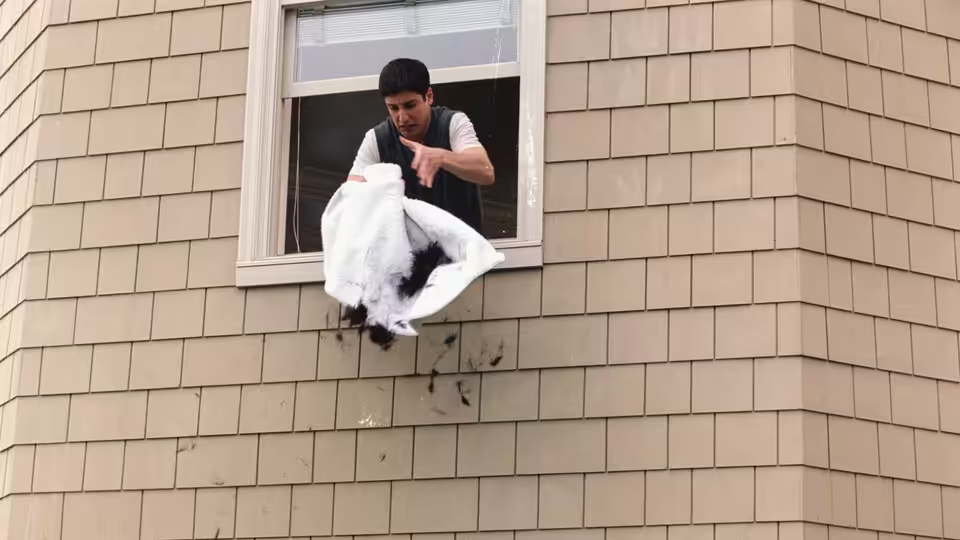
Jim Levenstein (Jason Biggs) leans from a window, tossing a white wedding dress outside
Film review

American Wedding

2003 · Directed by Jesse Dylan · 1h 43m · ICAA 18

In a sentenceSomeone should have let Eugene Levy check the guest list

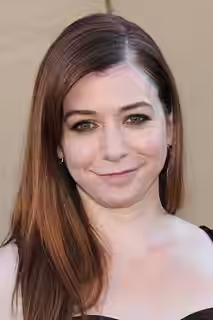
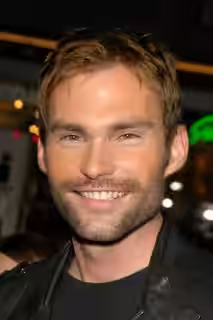
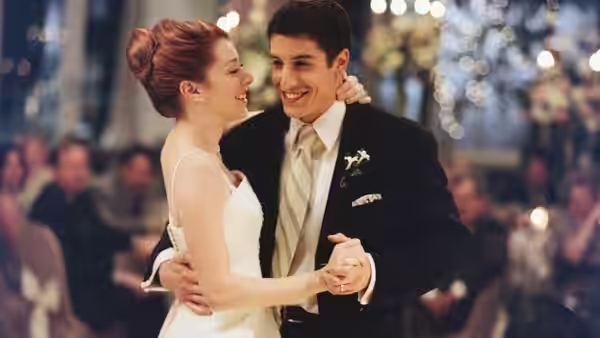
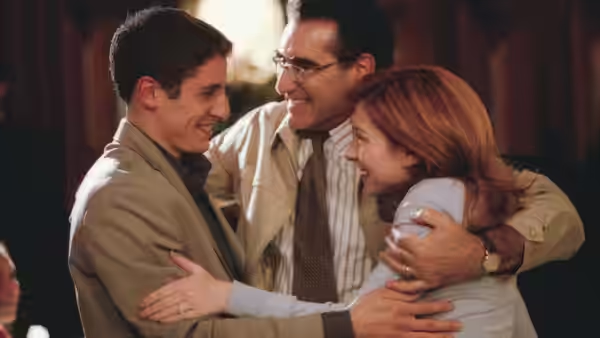
Jim Levenstein (Jason Biggs) and Michelle Flaherty (Alyson Hannigan) are preparing to marry. Jim wants a wedding that goes smoothly, but Steve Stifler (Seann William Scott) is among the friends involved, and restraint is not his habit. Stifler also wants to impress Cadence Flaherty (January Jones), giving him a reason to attempt better manners. Jim’s Dad (Eugene Levy) brings parental concern to the preparations. Between the wedding, his friends and the prospect of married life, Jim has plenty of opportunities for the sexual embarrassment he hopes to avoid.

Fi1m review

Eugene Levy supplies the warmth and Seann William Scott supplies more noise than the occasion needs. American Wedding has a few good laughs, but its tired humiliations make for a long reception.

American Wedding wants to let its characters grow up while keeping the sexual humiliations coming. Jesse Dylan directs Adam Herz’s screenplay as an amiable gathering repeatedly interrupted by somebody demanding a bigger laugh. We get a few, though not enough to justify spending an evening with them. The difficulty is that the film keeps asking us to care about these people, then reduces them to whatever embarrassing function the next joke requires.

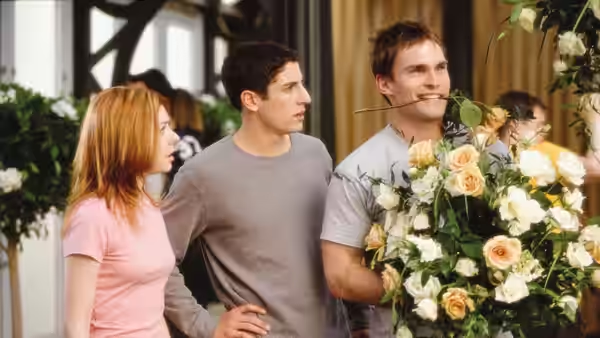
Jason Biggs and Alyson Hannigan give Jim Levenstein and Michelle Flaherty enough goodwill to make the wedding a plausible occasion for affection. Yet the couple too often feel like hosts obliged to stand aside while a guest takes over their party. Seann William Scott’s Steve Stifler gets the attention, and the performance has the physical commitment the material needs. The balance is poor: a character who can enliven a scene becomes exhausting when so much of the film depends on him.

We laughed at Stifler trying to impress Cadence Flaherty, played by January Jones, because his struggle to appear acceptable gives the vulgarity a purpose. Seann William Scott is funny when we can see the effort involved in holding his character back. Too often, Adam Herz simply lets him carry on, as though persistence were enough to keep a joke alive. That also leaves the surrounding cast with too little to do once his antics have taken over.

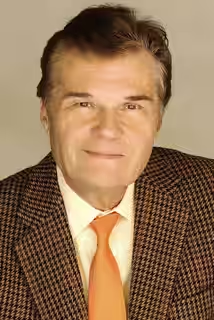
Eugene Levy, as Jim’s Dad, is more rewarding company. His warmth makes the parental concern worth something, and we never feel that the performance is asking us to despise Jim for being awkward. Fred Willard, playing Harold Flaherty, brings welcome comic assurance to material that needs the help. Neither can fix the screenplay, but they make its affection seem less like a compulsory pause between crude jokes, which matters in a film asking us to take a wedding seriously.

Lloyd Ahern II’s cinematography is serviceable, and Clayton Hartley’s production design gives the farce a respectable setting to disrupt. That contrast does useful work, although there is little visual wit to sustain a scene once the writing runs short. Stuart H. Pappé’s editing cannot make repetition feel like escalation, and the larger comic passages often outstay their supply of surprises. The performers have to do most of the work, with diminishing returns when a scene depends on Stifler alone.

Christophe Beck’s music supports the sweeter passages, but the shifts between affection and humiliation still feel abrupt. There is nothing inherently wrong with a romantic comedy being coarse; embarrassment can tell us plenty about what people want and how badly they want it. Here, too much of the gross-out humour merely delays the next attempt at tenderness. The jokes have become familiar without becoming better timed, and the romance has to keep starting again.

By the standards of this sort of wedding farce, the cast is capable and the comic complications are thin. At 103 minutes, there is more space than Adam Herz has fresh material to fill, even allowing for the occasional welcome burst of silliness. Existing affection for these characters may help, but we found it increasingly hard to share their enthusiasm for the occasion. Come for Eugene Levy, if that is enough; do not expect the other guests to know when to leave.
Critical consensus AI synthesised

56
Positive
2
Mixed
8
Negative
2

The consensus is mixed, with praise clustering around the cast and individual comic scenes rather than the wedding story. The more receptive reviews find that the familiar combination of raunch and sentiment still produces laughs, helped by affable performances and farcical set pieces. Eugene Levy earns praise for his warmth and reliable comic timing, while Seann William Scott’s Stifler is a more divisive source of amusement: some welcome his antics, others find that he crowds out the remaining characters.

The spread is wide despite the concentration of mixed verdicts. Variety sees the move towards grown-up characters as a strength and finds this a funnier finish to the series. Empire finds the jokes stale and the gross-out material dispiriting, though it welcomes the wedding’s sweetness. Between those positions, reservations centre on fading shock value, uneven writing and sentiment that struggles to sit comfortably beside the cruder gags.

Variety
3 August 2003 · Robert Koehler
80*

Koehler finds this a strong, funnier finish to the franchise, with its shift toward grown-up characters paying off. He especially praises the farcical set pieces and Fred Willard’s comic performance.

Read the full review →
The AV Club
5 August 2003 · Nathan Rabin
65*

Rabin finds the comedy ramshackle but generally effective, with the series’ familiar mix of raunch and sentiment still working. He praises its affable cast and comic energy, while noting that its shock gags feel less shocking than they once did.

Read the full review →
RogerEbert.com
1 August 2003 · Roger Ebert
64*

The review page was blocked, so its verdict could not be verified. No specific praise or complaint is available from the accessible page.

Read the full review →
Screen Daily
31 July 2003 · John Hazelton
64*

The page identifies this as a review, but the review text is inaccessible. Its verdict and any specific praise or complaint cannot be determined.

Read the full review →
The New York Times
1 August 2003
64*

The page is blocked, so the critic’s verdict cannot be determined. The available information does not reveal what the review praises or criticizes.

Read the full review →
Time Out
· WI
64*

The available description says the film repeats the series’ established mix of sexual humiliation, scatology and sentimentality. The full review is unavailable, so its overall verdict and specific praise or complaint cannot be established.

Read the full review →

Straight answers AI written, from our review

Is American Wedding worth watching?
American Wedding offers a few laughs for viewers fond of these characters, but we find its repeated humiliations too thin to recommend and score it 54 out of 100. Eugene Levy supplies welcome warmth, while Seann William Scott’s Stifler takes up more space than the jokes can sustain.
How long is American Wedding, and what is it rated?
American Wedding runs 1h 43m and is rated 18 by the ICAA in Spain. It is a comedy and romance film.
Where can I watch American Wedding in Spain?
American Wedding is available to rent from Amazon Prime Video and Apple TV from €3.99. Availability is checked daily; the links above go straight to each service.
How violent or frightening is American Wedding, and is it suitable for children?
American Wedding has a UK 15 certificate and is unsuitable for children, with sexual embarrassment, crude jokes and gross-out humour the main concerns in our review. We would steer younger viewers and anyone squeamish about that humour away; the emphasis is on adult comedy rather than scares.
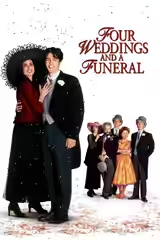
How does American Wedding compare to Four Weddings and a Funeral?
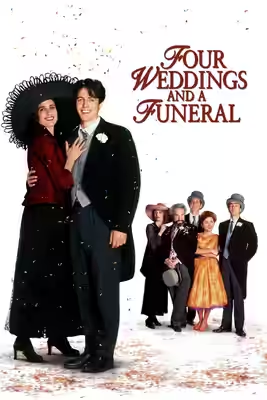
American Wedding is the coarser, more repetitive comedy; we recommend Four Weddings and a Funeral for sharper dialogue, better timing and more patience with its characters. The central romance in Four Weddings and a Funeral has weaknesses, but its supporting cast gets more room than American Wedding allows around Stifler’s antics.
What should I watch after American Wedding?
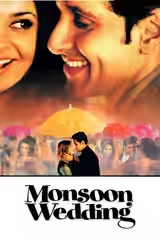
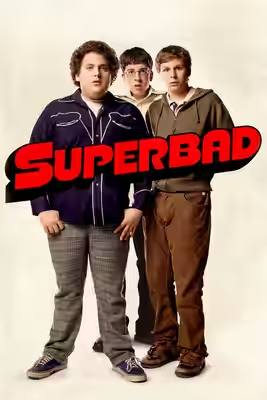
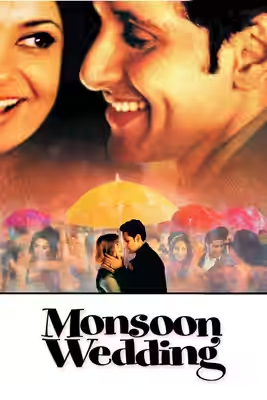
After American Wedding, try Four Weddings and a Funeral (1994, Fi1m 80): Wedding mishaps with sharper dialogue and more patience for the people involved. Then Superbad (2007, Fi1m 82): Crude jokes land harder when the friendship underneath has some weight; and Monsoon Wedding (2001, Fi1m 80): Family complications and wedding preparations given room for affection, resentment and proper consequences.

Cast

If you liked this, try…

  1. Four Weddings and a Funeral (1994, Fi1m 80)Wedding mishaps with sharper dialogue and more patience for the people involved.

  2. Superbad (2007, Fi1m 82)Crude jokes land harder when the friendship underneath has some weight.

  3. Monsoon Wedding (2001, Fi1m 80)Family complications and wedding preparations given room for affection, resentment and proper consequences.

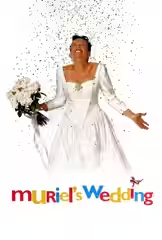
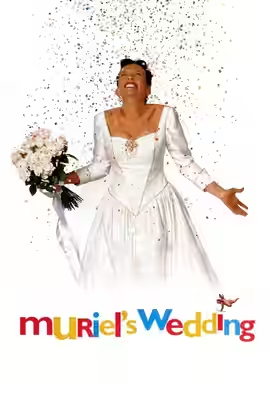
  4. Muriel's Wedding (1994, Fi1m 81)A wedding obsession with stranger laughs and a much stronger emotional pull.

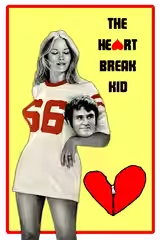
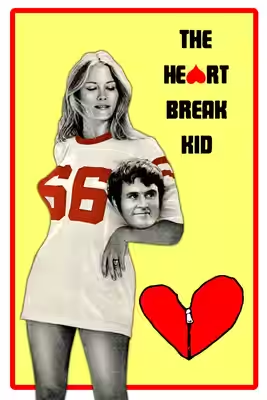
  5. The Heartbreak Kid (1972, Fi1m 78)For a less forgiving comedy about romance and spectacularly selfish behaviour.

Free account

Know what to watch tonight

Two lists that know where things are streaming, collections you can share, your own score beside ours, and Discover that remembers what you have seen.

  • Want to see, sorted by what is streaming now
  • Seen, with your score out of ten
  • No adverts, ever