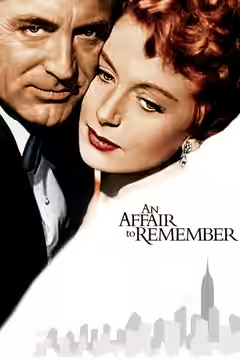
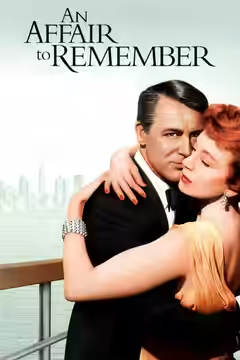
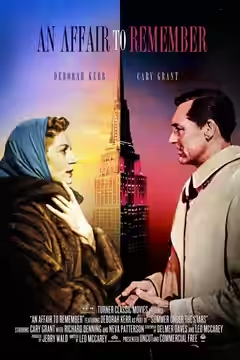
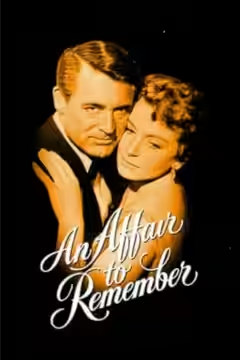
Cary Grant and Deborah Kerr make An Affair to Remember worth its stretches of delay. Leo McCarey’s romance is funny and affecting when it trusts them, less persuasive when it presses for sentiment.
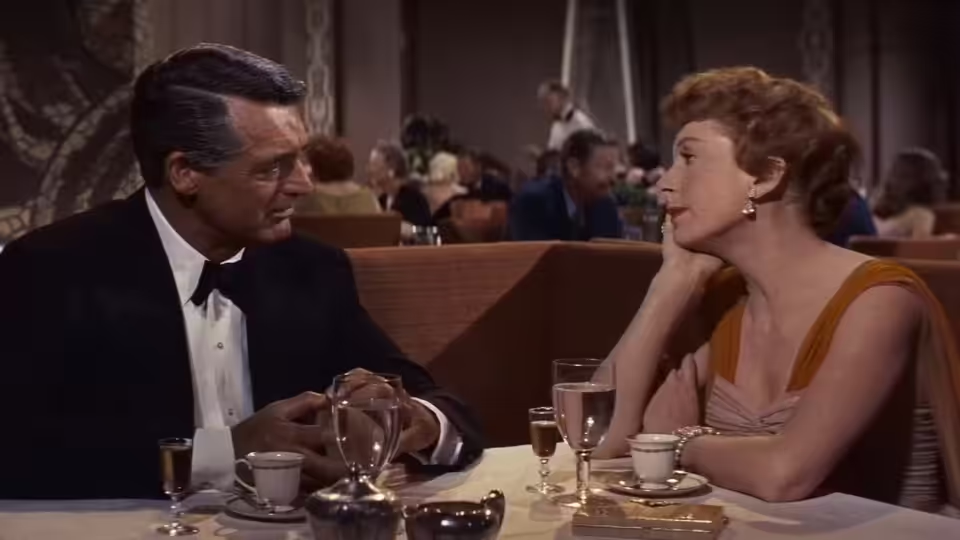
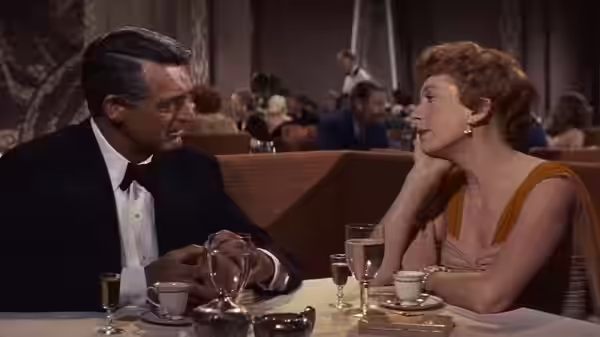
Leo McCarey’s An Affair to Remember is a good romance with a habit of keeping its lovers waiting longer than they need to. We recommend it for Cary Grant and Deborah Kerr, whose humour makes the sentiment easier to accept. The shipboard courtship gives them time to test one another without making every exchange a declaration. The director understands the pleasure of watching two people enjoy a conversation while trying to conceal how much the other person’s opinion matters.
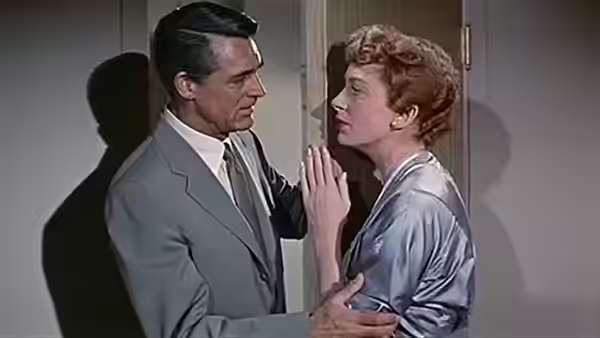
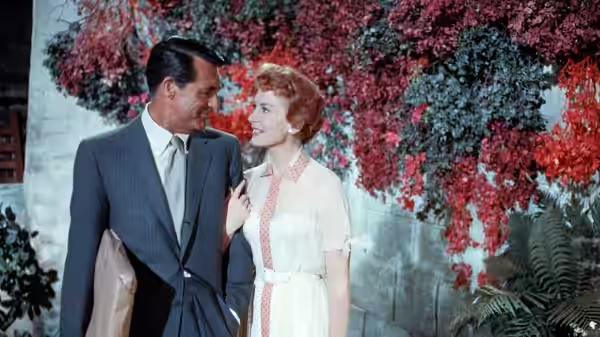
Cary Grant makes Nickie Ferrante’s charm seem practised but susceptible to interruption. His restraint is important: he leaves room for Deborah Kerr to answer, and the comedy depends on our attending to both of them. There is something touching about a confident performer allowing another person to unsettle his timing. We do not need Nickie to become solemn before we believe that his feelings might be serious, and the performance avoids insisting on that change.
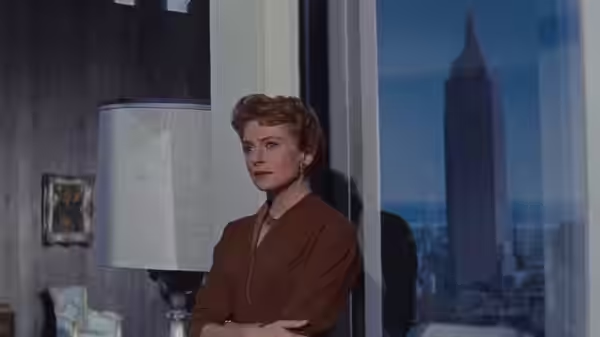
Deborah Kerr gives Terry McKay enough composure to make her participation in the flirtation feel like a choice. She is an attentive comic partner, with a reserve that encourages us to look closely at her responses. We were moved by the first kiss. Its gentle staging preserves the restraint of the earlier exchanges, so the tenderness feels like something these particular people have arrived at together. Nothing in the performances needs to be forced to make the moment count.
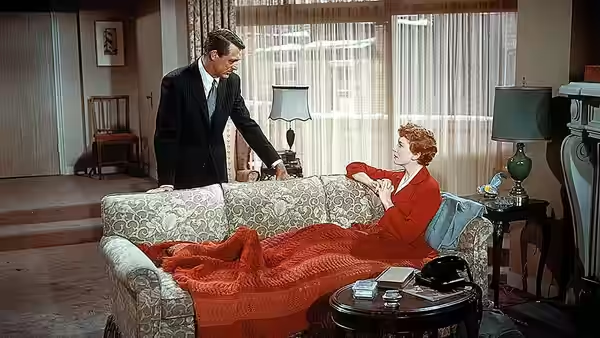
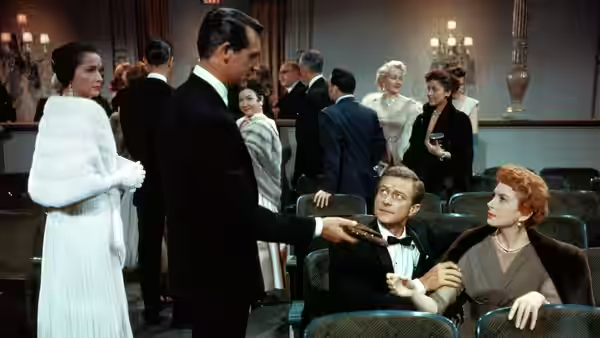
Milton Krasner’s widescreen photography serves the courtship well, giving the two performers space to remain interesting together. The width encourages us to notice their relationship within the image, rather than treating each face as a separate attraction. Charles LeMaire’s costumes contribute to the formality that makes small changes of manner noticeable. The polished appearance suits a romance conducted with this much self-possession, though the images are often more expressive than the film’s leisurely movement between them.
The screenplay by Delmer Daves and Leo McCarey has more trouble sustaining the romance once it must develop beyond those early encounters. The later complications ask for an indulgence that the dialogue cannot always earn, and the delay begins to feel imposed on the characters. James B. Clark’s editing allows the comic exchanges to settle, but that patience becomes less helpful when the story slows. A pause can give an actor something to play; repeated postponement gives the audience time to question the plot.
Hugo Friedhofer’s music supports the film’s tenderness, although its sweetness sometimes reinforces a feeling the performances have already made clear. The song sequences are a more noticeable interruption. They lengthen a film whose strongest pleasure is the concentration of two people attending to one another. There is room for music in that courtship, but these passages make it harder to recover the conversational ease that first drew us in.
Romantic melodrama needs some willingness to accept unlikely behaviour, and we are happy to grant it when the people remain convincing. Here, the performances keep that willingness alive through stretches when the writing tests it. The director’s light comic touch also matters: having enjoyed these people together, we have a reason to care when the mood grows serious. If impatience is your usual response to romantic hesitation, this is unlikely to cure it.