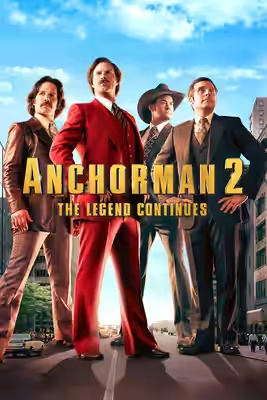
Adam McKay’s sequel has one sharp idea, that Ron Burgundy’s news team invented everything wrong with television news, and it is funny for as long as it stays on it. It keeps wandering off, and at 119 minutes the wandering shows.
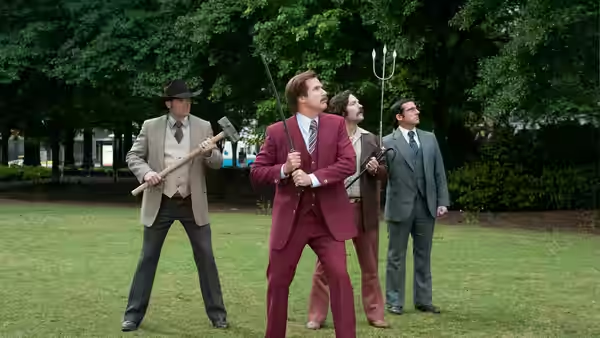
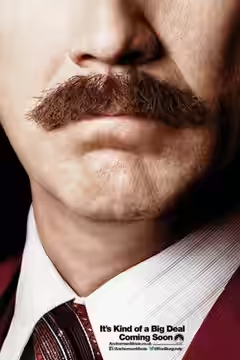
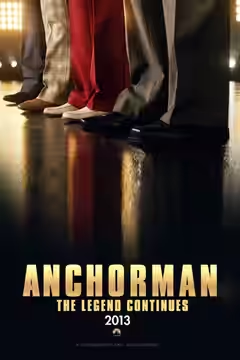
Nine years after Anchorman: The Legend of Ron Burgundy (2004), Adam McKay and Will Ferrell move their news team from San Diego to New York for the birth of 24-hour television news. Anchorman 2: The Legend Continues has one properly good idea: that four idiots handed the graveyard slot on a cable channel nobody watches invented every bad habit the news now has, the live car chase, the flag, the cute animal, the shouting about nothing. For twenty minutes the film sits on that idea and is funny. The rest of the time it is a sketch show looking for a reason to continue.
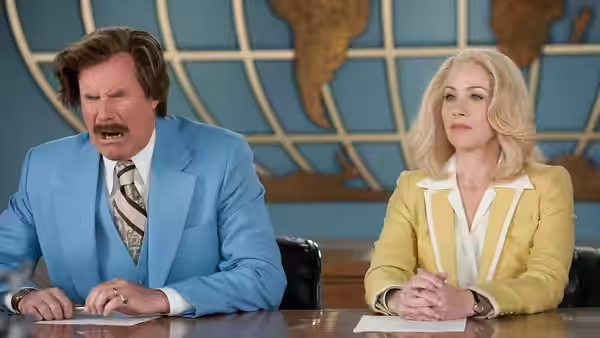
Ferrell has lost nothing in the gap: the sentences still begin with grandeur and finish wherever they finish, and he plays Ron’s stupidity as a kind of calm. Paul Rudd and David Koechner pick their characters back up as if they had never put them down, and Rudd’s cabinet of colognes from the first film has become a cabinet of something else. Christina Applegate is given a promotion and then little to do with it. Greg Kinnear’s Gary, Veronica’s new boyfriend, claims to read minds, a decent running joke run slightly too far.
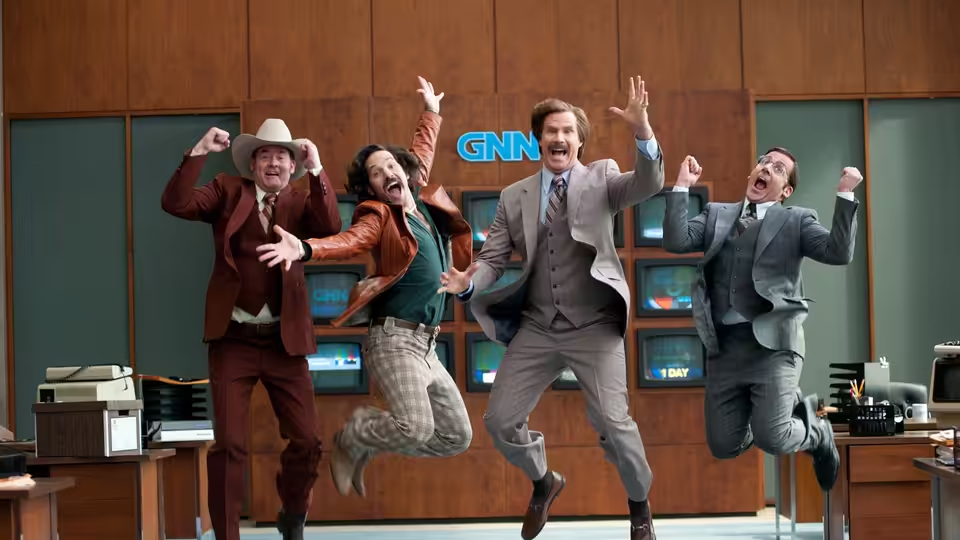
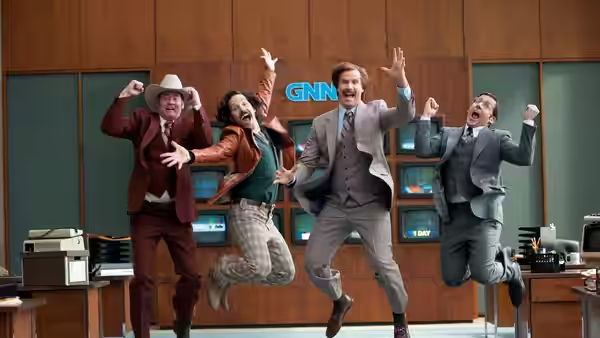
The newsroom is where the film works. Clayton Hartley builds GNN as a cavern of beige desks, brown and teal and far too big for the handful of people in it. Oliver Wood lights it flat and even, like the television it is mocking. Meagan Good plays the boss, Linda Jackson, straight, and that gives Ferrell something to push against; the scenes in which Ron cannot stop remarking on her race walk a narrow line and mostly stay on it. James Marsden’s Jack Lime, all teeth and hair, is the best new arrival. Then the first two o’clock broadcast goes out, and we laughed out loud: told there is nothing to report, the team fills the hour with a live car chase, a montage of flags and Ron’s opinion that America is the greatest country on Earth, and the phones light up.
Steve Carell is the problem and Kristen Wiig is half the answer. Brick was a seasoning in the first film, a line of nonsense a scene; here he is a main course, and McKay has not noticed that nonsense works in small helpings. Wiig’s Chani, a GNN secretary as unmoored as he is, is the right partner for him, and their first scene, two people failing to make eye contact for a full minute, is the strangest and sweetest thing in the film. By their fourth scene we had stopped laughing.
Melissa Bretherton and Brent White cut the film with the stitches showing. Scenes run past their natural end because another good take existed. The second half takes a turn we will not describe. We can say that it removes Ron from the newsroom, from the satire and from the other three men for a long stretch, and that we were bored, and then faintly cross at being bored by so many funny people with so much money. A late set piece restages the original’s most famous scene at several times the scale, and the scale is the only joke. John Nau and Andrew Feltenstein supply soft-rock pastiche and the odd mock-heroic swell and otherwise keep out of the way.
Against the first film this is baggier and in one respect better. The original had one plot and a quotable line a minute; this has three plots and a dozen lines that will survive. But the satire is sharper than anything in 2004. Josh Lawson’s Kench Allenby, the Australian who owns GNN and an airline and would like the news to be kind about the airline, is a joke the film could have stayed with all night.
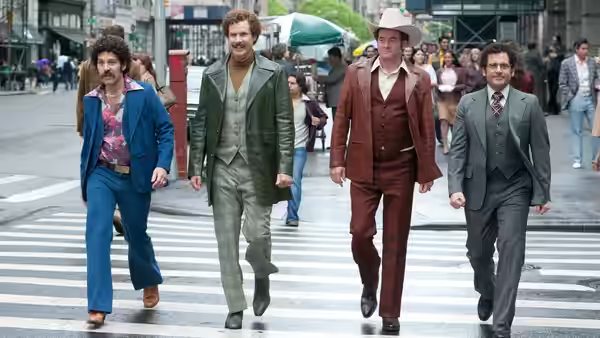
If you know the first film it is worth an evening, and probably a better one at home, where the slack stretches can be taken up with a pause and a drink. If you do not, it is a good twenty minutes about the news with a hundred minutes of men in brown suits attached. It runs 119 minutes and carries a 15.