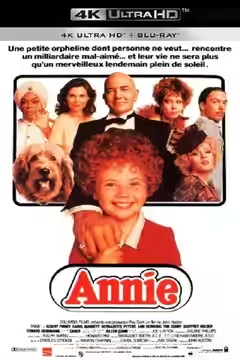
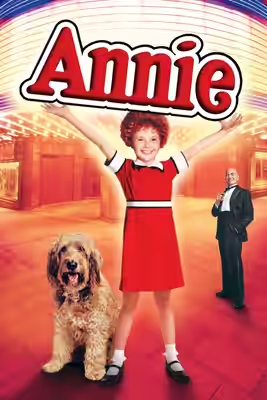
John Huston’s Annie is lavish, well cast and half an hour too long. Carol Burnett, Tim Curry and Bernadette Peters keep it watchable, but the musical numbers cannot compensate for everything that drags between them.
John Huston’s Annie is handsome and too slow, with enough good performances to make its faults frustrating. It is too long by half an hour, and rescued, again and again, by its adult performers. We can see the appeal of its musical numbers and its refusal to be embarrassed by its own cheerfulness. But at 127 minutes, it asks the cast to keep an unwieldy family entertainment moving when the direction ought to be helping them.
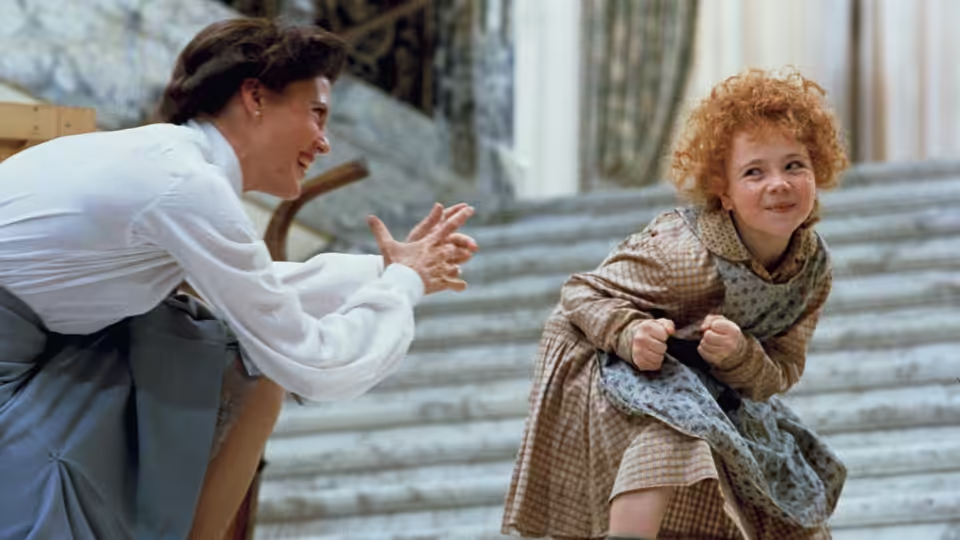
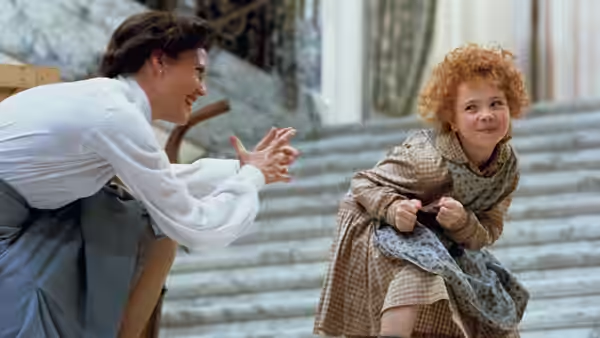
Aileen Quinn is a brisk, loud, unembarrassed Annie, and there is something welcome about a lead performance that does not continually ask to be loved. Her directness keeps the sentiment from becoming unbearable. We felt a welcome lift during It’s the Hard Knock Life, because the number has the force and bustle the surrounding film keeps promising. That energy is difficult to sustain when everything around the songs takes so long.
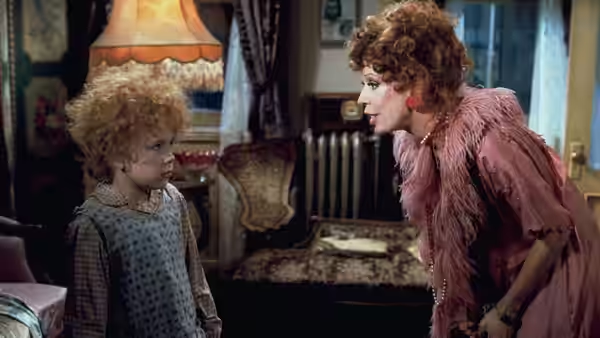
Carol Burnett is the reason to stay. Her Miss Hannigan has a comic rhythm that makes even the broadest material feel slightly unpredictable. Burnett waits a beat longer than anyone expects, so that the anticipation becomes part of the joke. Tim Curry as Rooster Hannigan and Bernadette Peters as Lily St. Regis add enough comic appetite to make us forgive a good deal, but Burnett is the performer who most reliably prevents the film from becoming a chore.
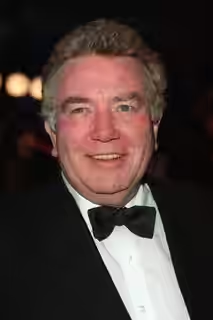
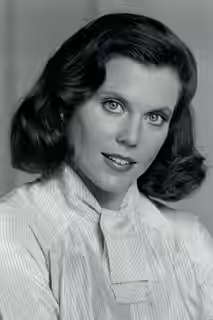
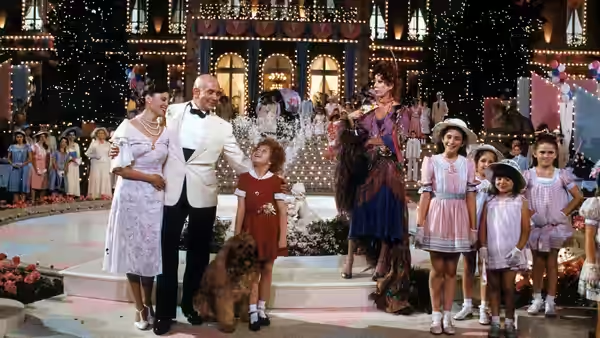
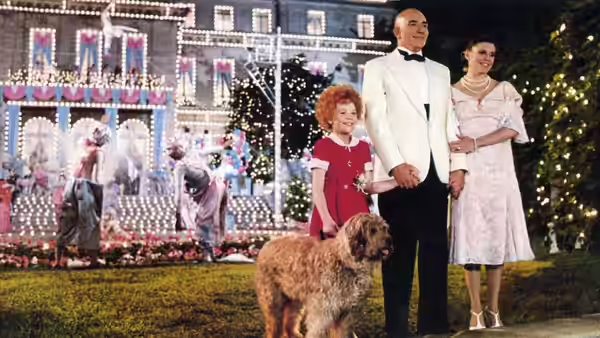
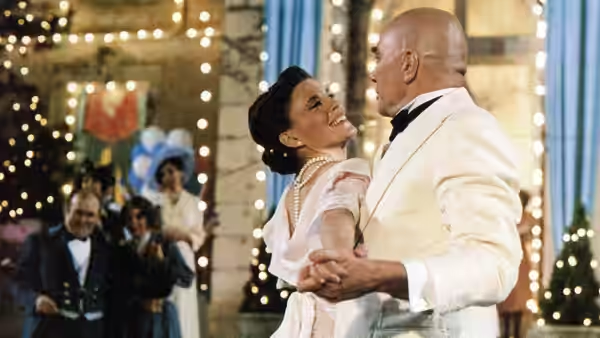
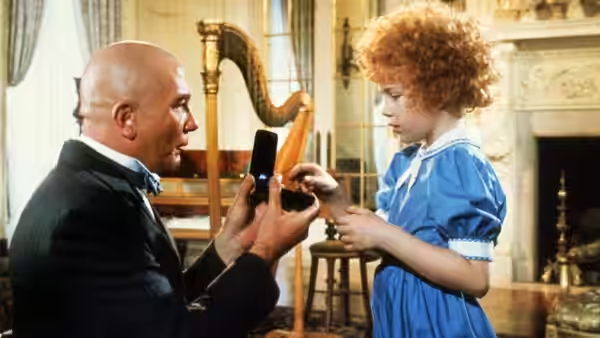
Albert Finney gives ‘Daddy’ Oliver Warbucks enough weight to stand alongside all that comic business without trying to compete with it. His performance is more restrained, and the contrast helps. Ann Reinking is a warm Grace Farrell, though warmth is often all the film appears to want from her. The casting is better than the use Huston makes of it, and the stretches between the numbers would benefit from the decisiveness the performers can supply on their own.
Dale Hennesy’s production design makes the surroundings imposing enough to compete with the performers, which is not always helpful. Richard Moore’s cinematography is handsome without doing enough to make the dancing feel spontaneous. Michael A. Stevenson’s editing is the larger problem: the numbers too often feel assembled rather than allowed to develop. We want the pleasure of following a performance, and the cutting repeatedly interrupts it before the movement can establish its own rhythm.
Charles Strouse and Ralph Burns are credited for the music, and the songs give the film much of the lift that Huston’s direction lacks. The delivery is emphatic, sometimes wearingly so, but an emphatic musical can still be an enjoyable one. What hurts Annie is how rarely the pace relaxes into something easy or gathers into something swift. Its good moments remain good moments, separated by more waiting than a family musical should require.
At its best, this is the sort of unabashed musical in which a forceful performer can make a broad joke or a familiar sentiment worth another hearing. Huston never quite finds the light touch that would let those pleasures carry an evening. Quinn’s appeal and Burnett’s timing are substantial consolations, but they cannot shorten the stretches that drag. If Burnett is not enough of a reason for you, choose a shorter musical.