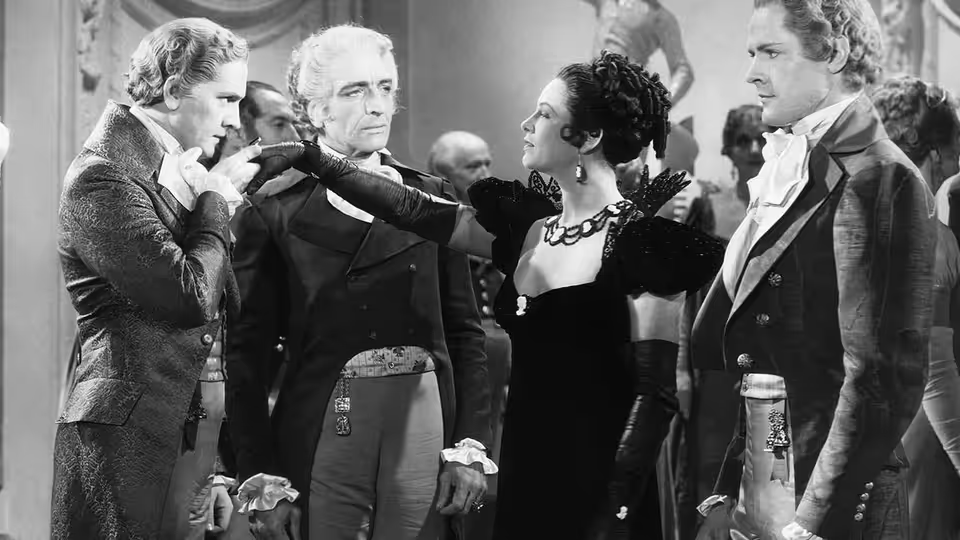
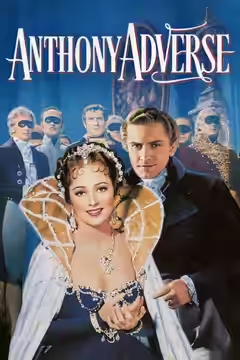
Warner Bros. boils a thousand-page bestseller down to 141 minutes and keeps the furniture rather than the story. It is handsomely lit and magnificently scored, Claude Rains and Gale Sondergaard are a treat, and the man in the title role is the least interesting person in it.
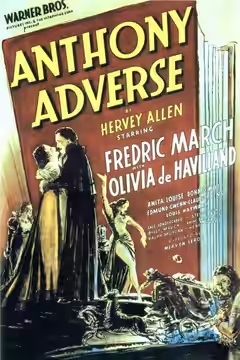
Hervey Allen’s Anthony Adverse was one of the great doorstops of the 1930s, a novel that follows one man from a convent step in Italy through Cuba, Africa and Napoleon’s Paris, and Warner Bros. bought it, hired Mervyn LeRoy and asked Sheridan Gibney to fit it into an evening. The result runs 141 minutes and feels both too long and cut to the bone. Every chapter arrives, delivers its moral, and is gone before we have found our seats. What survives is the production: sets, costumes, Tony Gaudio’s photography and an Erich Wolfgang Korngold score that does most of the feeling the film forgets to do itself.
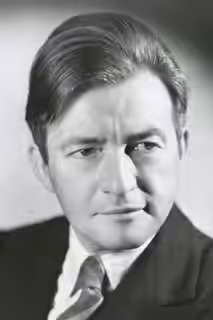
The first forty minutes are the good ones. Claude Rains plays the Marquis Don Luis as a powdered, gouty man who has never once been contradicted, and he is delighted by his own cruelty in a way that never rises above a murmur. Anita Louise and Louis Hayward are the lovers, and Gaudio lights their stolen scenes almost entirely from candles and windows, so the faces float and everything behind them is black. When the story reaches the convent, and the boy climbs a tree to see over the wall, Korngold gives him a theme so open and unguarded that we were moved before anything had happened. It is the one stretch where the music and the pictures and the writing want the same thing.
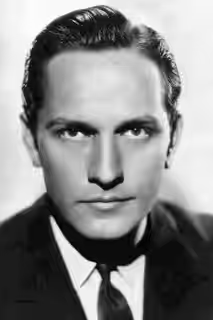
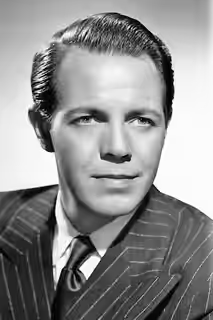
Then the boy becomes Fredric March, and the film has a problem it never solves. March is a fine actor and he is wrong here. Anthony is supposed to be young, hungry and easily led, and March plays him as a man who has already read the ending. He is grave in the counting house, grave in love, grave in the tropics; the script keeps telling us he has changed and his face keeps declining to confirm it. Olivia de Havilland is given a girl who wants to sing and a scene or two to want it in, and she is charming with almost nothing.
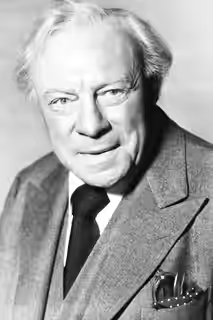
The supporting cast does the work. Gale Sondergaard’s Faith Paleologus stands very still in doorways and says less than anyone else in the film, and we watched her whenever she was on. Edmund Gwenn is warm and decent as Bonnyfeather, Donald Woods is loyal and sensible as Nolte, and Akim Tamiroff, as the debtor Cibo, is the only person in the Cuban section who seems to be enjoying the climate.
The middle hour is where it goes wrong, and we can say plainly what we felt: bored by the Cuban accounts, and then irritated by the African ones. Anthony goes to run a slaving station, and the film treats the trade as scenery for his conscience. Steffi Duna’s Neleta exists to tempt him and Ralph Morgan’s Debrulle to reproach him, and nobody in the frame who is not white is permitted to be a person. It is an ugly thing to watch, and worse for being incidental; the film wants credit for Anthony’s remorse without spending a minute on what he was remorseful about. Ralph Dawson’s editing does not help. Each episode is cut to the same shape, arrival, lesson, departure, and by the time we reach Paris the film is summarising itself.
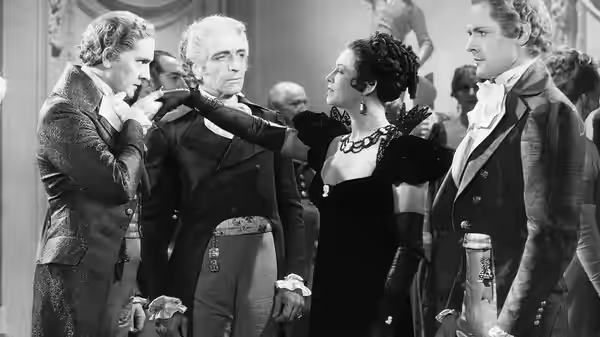
Milo Anderson’s costumes are the other thing worth staying for. The Marquis’s coats are stiff and pale and slightly too tight, Angela’s dresses simple until they are not, and the Paris finale is a parade of court dress under chandeliers that Gaudio lets shine while the story stalls beneath it.
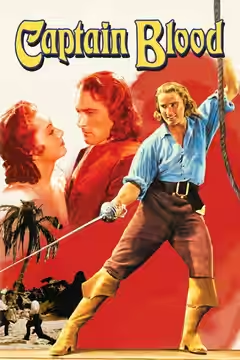
Against the other Warner costume pictures of the period this one is the odd fit. Captain Blood (1935) took a fat novel and threw away everything that was not a fight or a kiss, and was honest about it. Anthony Adverse keeps the moral education and throws away the time it would take to earn it, so we are told a man has grown wiser and shown only that he has grown older.
Watch it for the first act, for Rains and Sondergaard, and for Korngold, who scored a better film than the one in front of him. If you stay past Cuba, be prepared to keep your own map.