Film review

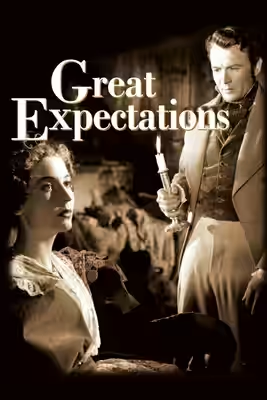
Great Expectations

1946 · Directed by David Lean · 1h 58m · PG

In a sentenceA graveyard turns out to be quite sensible preparation for meeting the grown-ups

DramaRomance

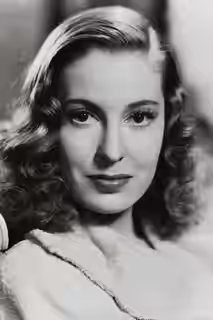
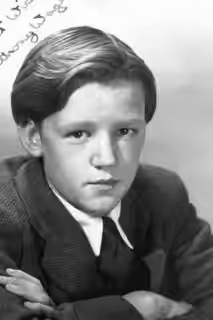
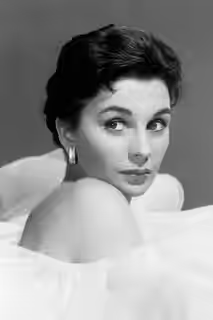
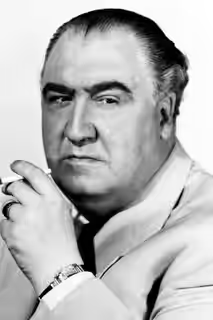
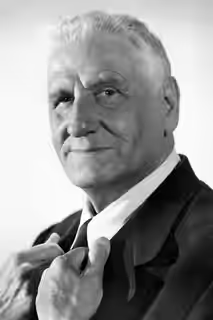
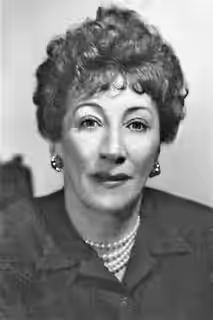
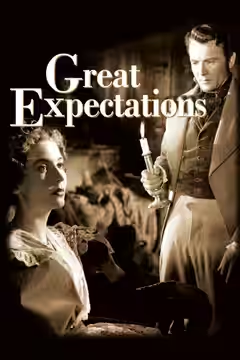
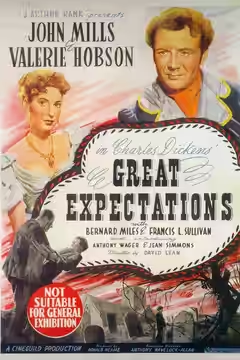
David Lean adapts Charles Dickens’s novel about Pip, whose childhood leads into an adult life shaped by class and his relationship with Estella. Tony Wager plays the young Pip, with John Mills taking over as an adult; Jean Simmons and Valerie Hobson play Estella at the corresponding ages. Pip’s story brings him into contact with Joe Gargery (Bernard Miles), Miss Havisham (Martita Hunt) and Abel Magwitch (Finlay Currie). Alec Guinness plays Herbert Pocket, while Francis L. Sullivan appears as Mr Jaggers.

Fi1m review

David Lean makes Dickens frightening and funny, with a child’s vulnerability kept firmly in view. The adult romance is less persuasive, but the supporting performances and the oppressive settings make this an easy recommendation.

David Lean’s Great Expectations is a fine Dickens adaptation, and the childhood scenes are the reason to choose it. Lean understands how frightening adult behaviour can look before a child has the means to explain it. The period setting never becomes an excuse to make everyone seem quaint. There is cruelty here, as well as comedy, and the film gives both room to trouble Pip. The adult romance is less convincing, but it does not undo the early work.

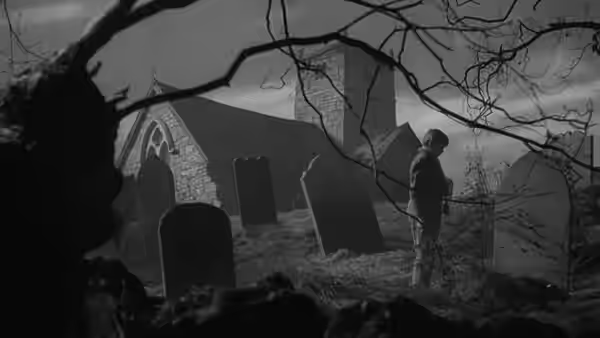
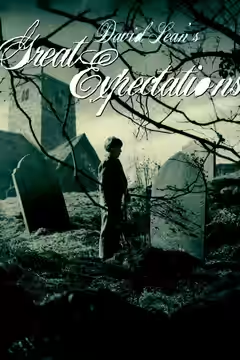
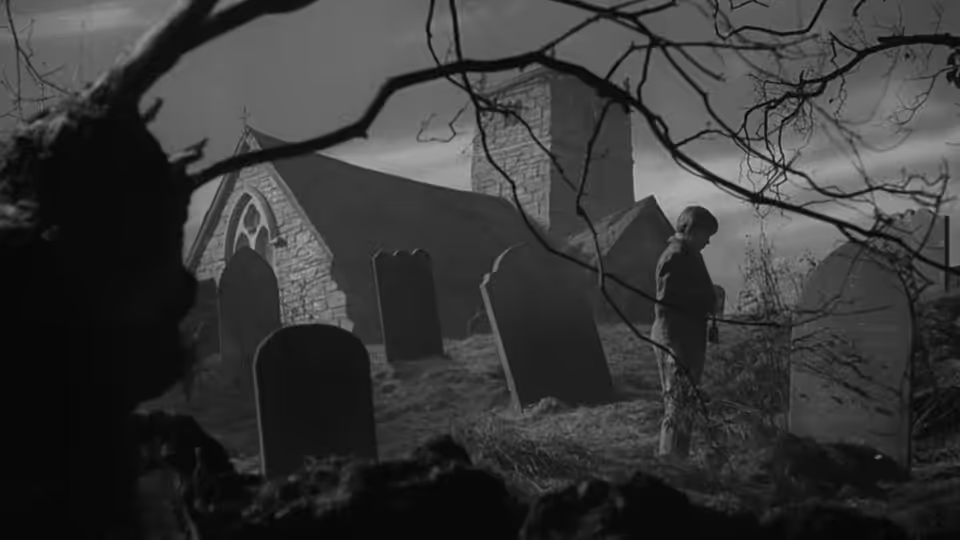
We were frightened by the opening graveyard scene. What got to us was the child’s vulnerability in a place that already seems hostile, before we have had time to settle into watching a literary adaptation. Tony Wager’s young Pip makes fear look immediate and unpractised; nothing about his distress seems calculated to win our sympathy. Guy Green’s black-and-white photography makes the graveyard feel cold and exposed, with little comfort in being able to see so much of it.

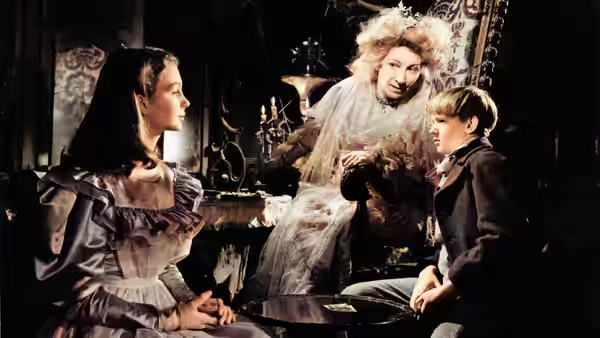
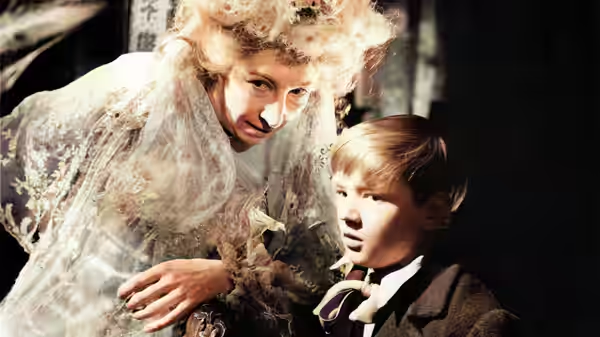
Miss Havisham’s mansion is equally unsettling, though John Bryan’s production design offers plenty to look at. The rooms feel occupied by someone who has no intention of making a visitor comfortable. Martita Hunt’s Miss Havisham belongs in them so completely that the surroundings do not distract from her. That matters in a film with so much period detail: we keep watching the person. Hunt makes this strange household feel like somewhere a person might actually live, unhappily.

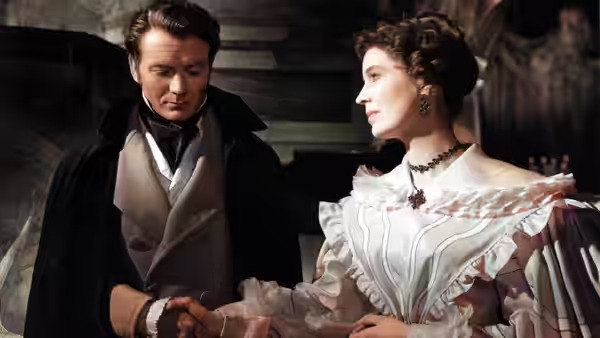
Jean Simmons gives the young Estella an assurance that makes Pip’s uncertainty more painful to watch. Their childhood scenes have an awkwardness that the adult pairing cannot quite recover. John Mills remains an engaging Pip, but Valerie Hobson’s Estella is harder to understand, and the romance asks for feelings the performances do not fully supply. Walter Goehr’s music gives it a warmth that the playing does not always earn. This is the film’s substantial weakness.

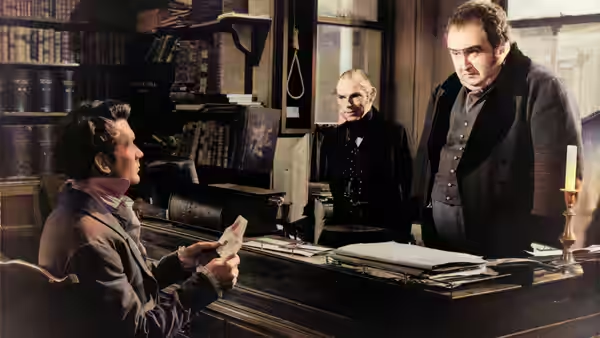
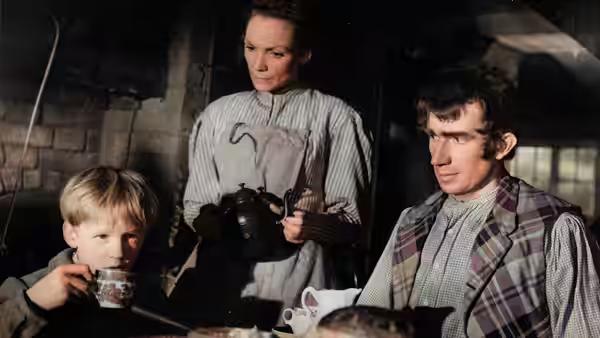
The supporting players help keep that weakness from taking over. Alec Guinness makes Herbert Pocket welcome company, bringing a lightness that matters in a story so crowded with disapproval. Bernard Miles gives Joe Gargery a directness we can believe in, while Francis L. Sullivan’s Mr Jaggers has the firmness to hold our attention without demanding our affection. We need these differences between people, especially when the central couple grow less absorbing. The cast rarely feels like a procession of literary names.

Lean cuts down the novel without making it hard to follow, and Jack Harris’s editing keeps a crowded story moving cleanly. We have enough time with young Pip to register how each encounter affects him. There is pleasure in the briskness, particularly when a supporting player can establish a character without a long introduction. The cost is some emotional haste once the children have grown up, though the film’s 118 minutes never feel dutiful.

For all the attention paid to period detail, Lean keeps the question of class close to Pip himself. We found it painful to watch a child learning to measure his worth through other people’s judgements; that gives the film a force its romance cannot quite match. We would recommend it warmly to anyone wary of respectable literary adaptations, with a reservation about the adult leads. Give the graveyard your full attention.
Critical consensus AI synthesised

5 of 6
Positive
4
Mixed
1
Negative
0
Radio Times
★★★★★ · Andrew Collins
100

This black-and-white adaptation is one of David Lean's early masterpieces and a carefully pruned version that retains the magical Dickens spirit. It features superlative film-making from one of Britain's greatest directors, with magnificent visuals that earned Oscars for cinematography and design.

Read the full review →
RogerEbert.com
22 August 1999 · Roger Ebert
90*

Lean’s adaptation succeeds in bringing Dickens’ classic set-pieces vividly to life on screen without clashing with readers’ mental images. The gothic atmosphere of Miss Havisham’s mansion and the macabre elements are singled out for particular praise.

Read the full review →
The New Yorker
24 May 1947 · John McCarten
80*

The film follows the novel closely with felicitous results and makes the story more plausible than the book in places. The opening graveyard and child scenes are the strongest, with praise for the handling of youthful innocence and convincing period detail.

Read the full review →
Variety
31 December 1945 · Variety Staff
50*

The adaptation is faithful and vividly realizes the period and characters, but the result is beautiful yet lacks heart and emotional depth. Secondary characters are the most credible while leads like Estella feel under-realized.

Read the full review →
Empire
1 January 2000 · David Parkinson

The screenplay is a model of judicious pruning and compression that retains the story's intrigue and Dickens spirit. It remains the definitive version of the atmospheric classic, with standout performances and technical achievements.

Read the full review →
Eye for Film
20 September 2007 · Merlin Harries
80*

The critic praises David Lean’s adaptation as one of the most successful of Dickens' novel, highlighting its accentuation of human drama and social commentary on class divide. The cast, especially Alec Guinness, and the story's enduring appeal are singled out positively.

Read the full review →

Cast

Stills

Awards

Academy Awards, 1948

Nominated
Best Director
Nominated
Best Picture
Nominated
Best Writing, Adapted Screenplay
Won
Best Art Direction, Black and White
Won
Best Cinematography, Black-and-White

If you liked this, try…

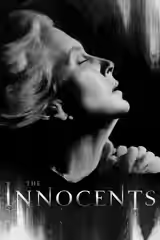
The Innocents poster

The Innocents

1961 · Children, a country house and adults who cannot be trusted to understand.

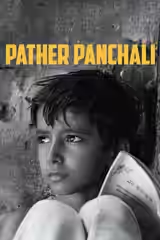
Pather Panchali poster

Pather Panchali

1955 · Another child’s view of adult hardship, with time to notice ordinary pleasures.

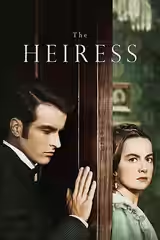
The Heiress poster

The Heiress

1949 · Family money and romantic hope meet in rooms that offer little comfort.

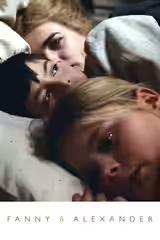
Fanny and Alexander poster

Fanny and Alexander

1982 · Childhood warmth and terror share a richly detailed, often forbidding adult world.

The Go-Between poster

The Go-Between

1971 · Class teaches another child lessons the adults ought to be ashamed of.