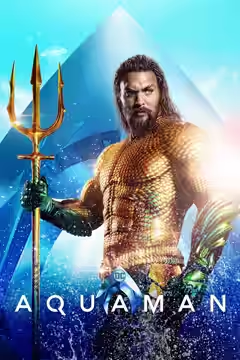
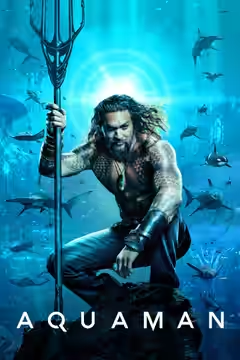
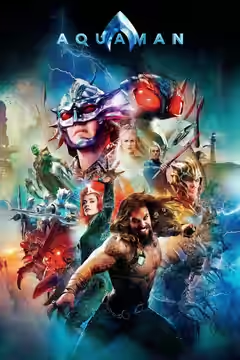
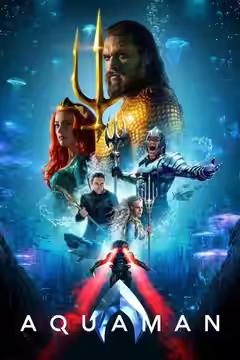
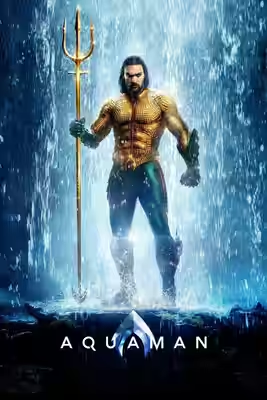
James Wan’s underwater adventure is good fun whenever Jason Momoa and the extravagant settings take charge. The political chatter and excessive length wear it down, but there is enough invention to justify the trip.
James Wan’s Aquaman works best when it lets its underwater fantasy take over and gives Jason Momoa room to enjoy himself. We recommend it as a colourful, cheerfully excessive adventure, provided there is patience for a script that explains more than it needs to. The director understands that an underwater kingdom is already a fairly extravagant proposition and need not be made respectable. The trouble is that the film keeps interrupting its pleasures to conduct another round of royal business.
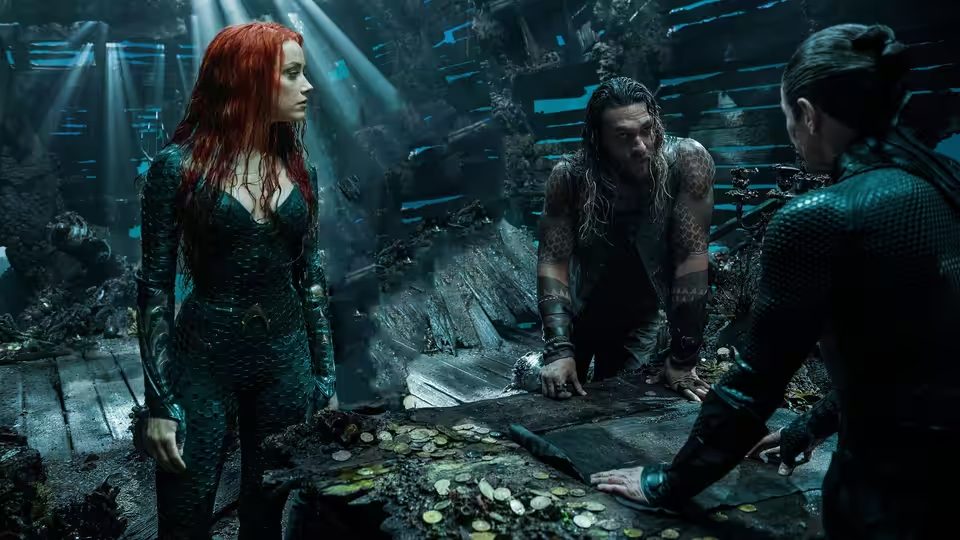
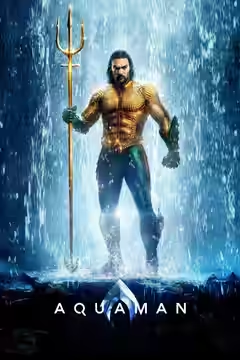
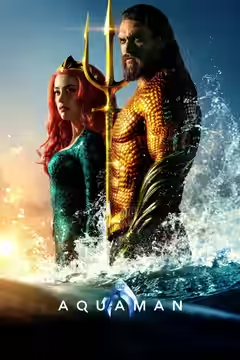
Jason Momoa makes Arthur Curry an agreeable guide through all this, with a relaxed manner that gives the solemn dialogue some welcome human scale. He can carry the film without making every exchange sound like a declaration of importance. Amber Heard’s Mera is less rewarding company, largely because the romance gives the pair so little convincing attraction to play. Nicole Kidman, as Atlanna, brings a composure that survives the surrounding fuss, though the film gives us too little of her.
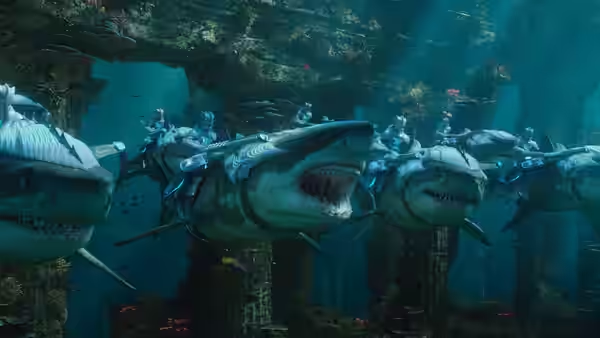
Bill Brzeski’s production design makes Atlantis worth the visit, filling the film with undersea settings that do not all look interchangeable. Don Burgess’s cinematography helps the underwater action remain readable even when the colour threatens to crowd everything else out. We were delighted by Atlantis: its bright, elaborate undersea spaces made us want to look around rather than hurry to the next fight. That pleasure matters in a film which spends so much time explaining its world.
The screenplay by David Leslie Johnson-McGoldrick and Will Beall is much less inviting. Its political intrigue requires attention without offering enough interesting choices or relationships to repay it, and Arthur’s personal development feels thin beside all the activity around him. We can follow the broad shape of this origin story without needing quite so much information about the society beneath the water. Too many conversations seem to exist because somebody has decided that the next action sequence requires a briefing.
Kirk M. Morri’s editing is more persuasive within the action than between it, and the Sicily chase has the energy the talkier stretches lack. James Wan handles movement with enough invention to make the change of setting worthwhile, rather than merely another stop on a long itinerary. But the full 143 minutes feel stretched, with too many competing demands on our attention. The film needed fewer things to explain and more time spent making Arthur’s decisions matter.
The music, credited to Rupert Gregson-Williams and Joseph Bishara, adds to the sense of a film reluctant to let the excitement subside. We could have used a little less encouragement. Some of the effects also make the fighting feel weightless, which limits how much danger can register amid the elaborate action. The director’s gift for arranging an image often compensates, but there are passages where the combat becomes difficult to care about.
It is refreshing to have a superhero adventure that takes such pleasure in looking ridiculous. Aquaman is at its most enjoyable when it allows colour, movement and Jason Momoa’s easy charm to do the work; the attempts at political drama rarely improve it. That leaves a good evening for anyone with an appetite for expansive fantasy and a tolerance for clumsy dialogue. Choose it for the underwater adventure, and allow for more speeches than the occasion requires.