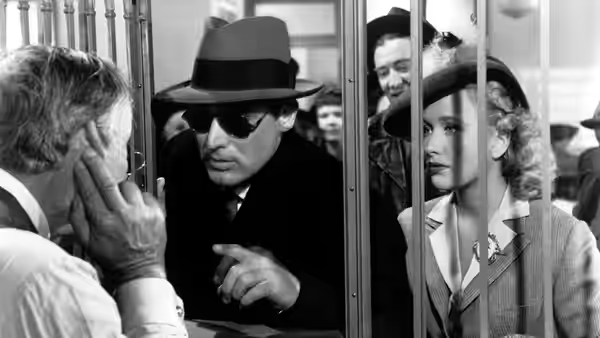
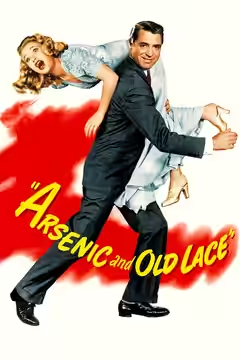
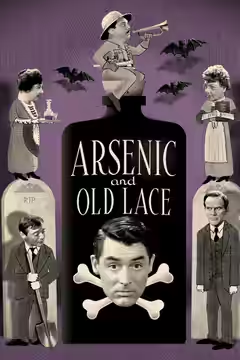
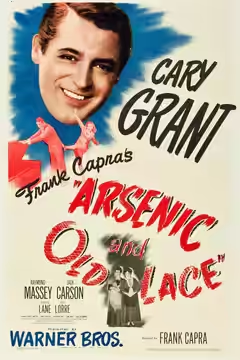
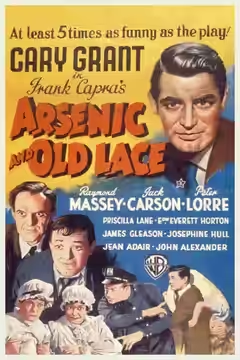
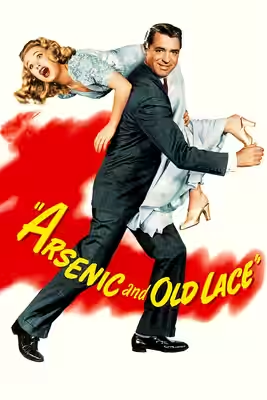
Frank Capra’s film of the Broadway hit is noisy, broad and often funny, and Josephine Hull and Jean Adair are the reason it works. Cary Grant works far too hard, and at 118 minutes the farce goes round the same loop once too often.
Frank Capra is the director of the decent man and the speech that saves the town, and here he has made a film in which two sweet old women poison lonely bachelors and bury them in the cellar. It is a stage hit, Joseph Kesselring’s, carried to the screen by Julius J. Epstein and Philip G. Epstein with the furniture intact, and Capra’s job is mostly to keep the actors moving between the window seat, the cellar door and the stairs. He does it loudly. The film is funny, often, and it is also broad, stagebound and about twenty minutes longer than the joke can carry. We would send you to it, with that said.
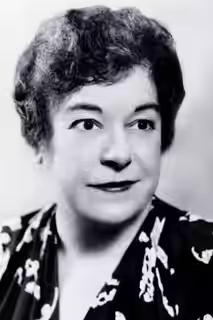
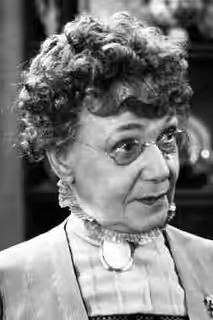
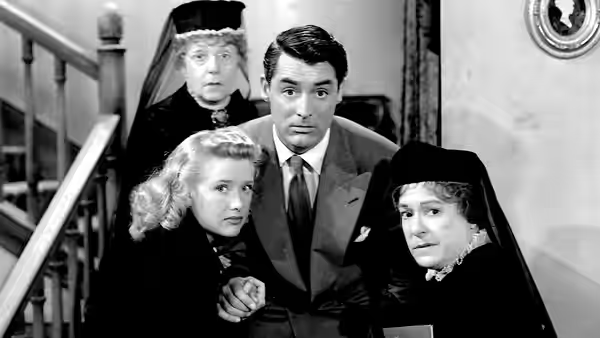
The joke belongs to Josephine Hull and Jean Adair, who play Abby and Martha Brewster as though they had never heard the word murder. When Mortimer finds a body in the window seat, Abby does not deny it; she explains it, with the patience of a woman describing a jumble sale, and when he asks what they used she gives him the recipe. We laughed out loud, and then caught ourselves, because the two of them never once wink. Hull and Adair came to the film from the stage production, where they had done this every night for years, and it shows: nothing is pushed. Every time the film threatens to tip into pantomime, one of them pours a glass of wine and it steadies.
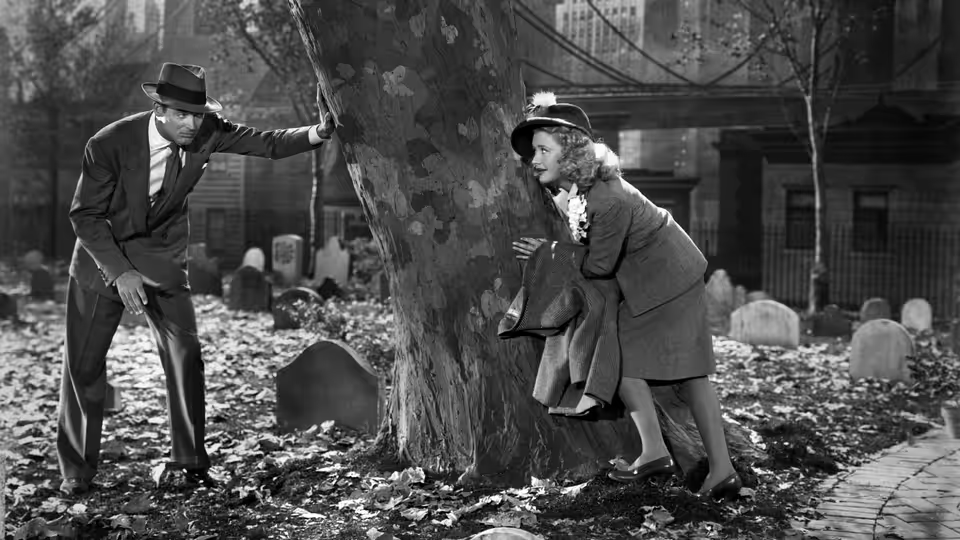
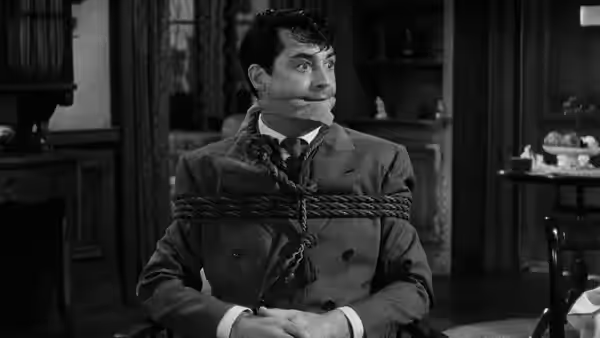
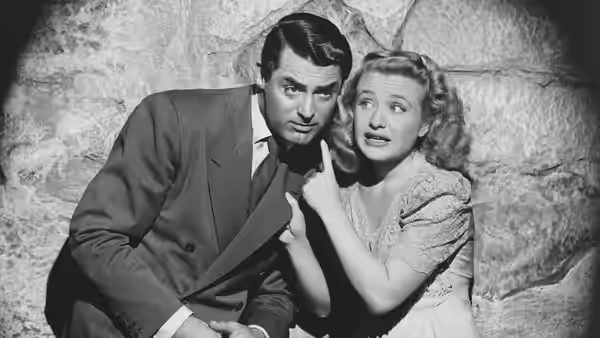
Cary Grant is another matter. The Epsteins have written Mortimer as the one sane person in the house, and Grant plays sanity as a series of double takes, yelps and sprints to the telephone. For the first half hour this is a pleasure. By the hour mark we wanted him to sit down. There is a scene where he tells a policeman the plot of a bad play, acting out every move without noticing the man creeping up behind him, and it is a clever idea that goes on too long. Priscilla Lane, as the new wife, is given almost nothing except the doorstep and the instruction to go home; most critics have marked her down for it, and we think the script deserves the blame.
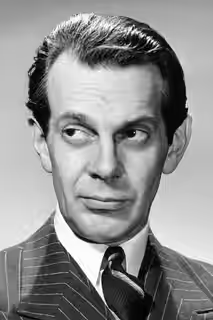
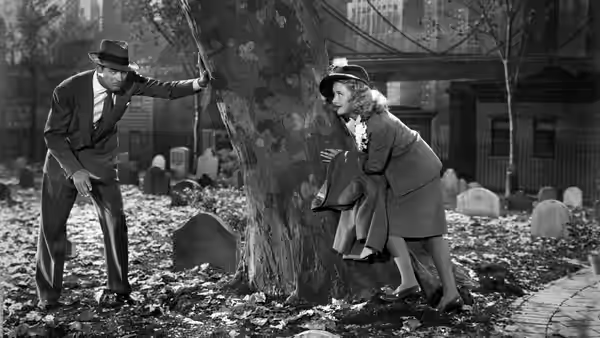
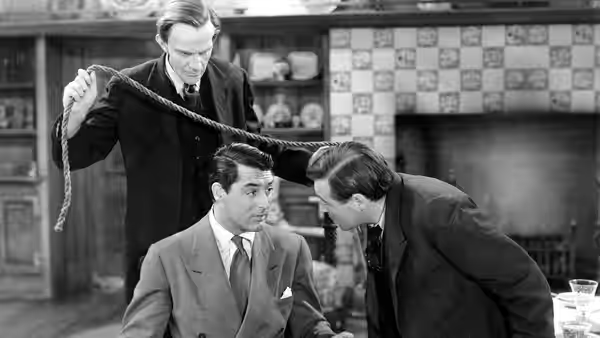
The film improves when it darkens. Raymond Massey arrives as Jonathan, the other brother, with a surgically ruined face that everyone in the film says makes him look like Boris Karloff, which is the picture’s best running gag and one it can afford, since Karloff had played the part on Broadway. Massey does not play Jonathan for laughs. He is big, slow and quietly furious, and Peter Lorre, as his drunk surgeon Dr Einstein, twitches around him like a frightened pet. Sol Polito lights these scenes as if for a horror picture: the lamps go off, the staircase throws bars of shadow across the hall, and the graveyard next door sits in the window. Max Steiner’s score goes along with it, swelling at the cellar door as if something were down there, which of course it is. For twenty minutes the film is a thriller with jokes in it, and that is its best stretch.
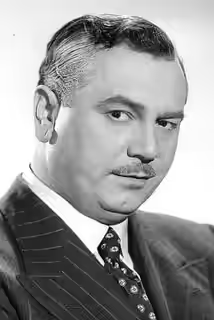
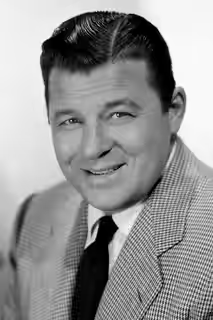
It is a play, and it never stops being one. Almost everything happens in the Brewsters’ living room, which Capra shoots from roughly the position of the stalls, and the second half is a traffic jam of people coming through the front door: Jack Carson’s Officer O’Hara, who wants to tell Mortimer about his play; James Gleason’s Lieutenant Rooney; Edward Everett Horton’s Mr Witherspoon from the asylum, arriving late to collect whoever is left. Daniel Mandell keeps the doors swinging, but at 118 minutes the farce has to repeat itself, and we noticed. Orry-Kelly dresses the aunts in black lace and high collars, which is right, and Lane in a trim going-away suit she never gets to go away in.
Against Capra’s own work this is the odd one out, and we rather like it for that. There is no speech about the common man, no small-town saviour, no tear, and the only kind people in it are the two who are killing their guests. It was shot in 1941 and kept on a shelf until the play had finished its run, and it feels like a holiday a serious director took and then slightly overstayed.
Watch it on a dark evening with the lights down and something to drink that is not elderberry wine. If Grant’s face-pulling gets too much, look past him at the aunts; they are doing the real work, and doing it sitting down.