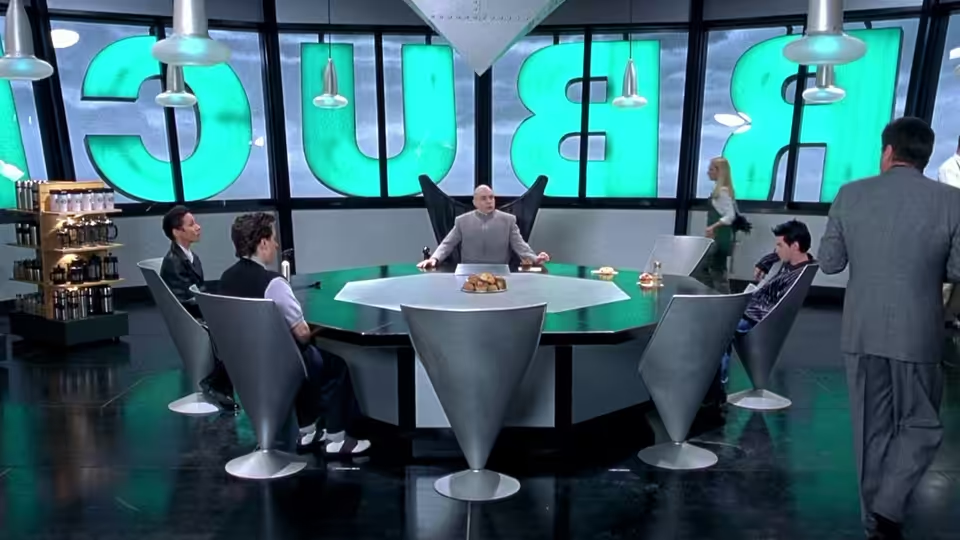
Mike Myers keeps this scrappy spy comedy funny through his affection for its ridiculous characters. The recycled jokes and thin writing matter, but Dr. Evil and Mini-Me still earn their laughs.
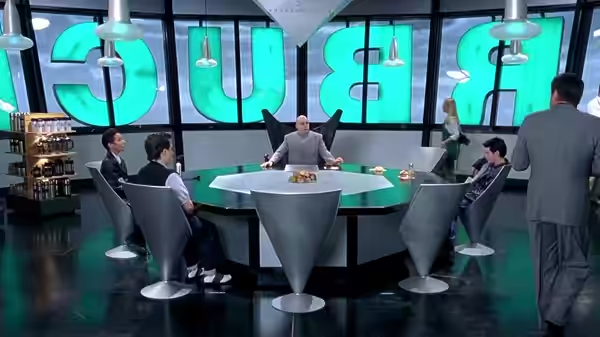
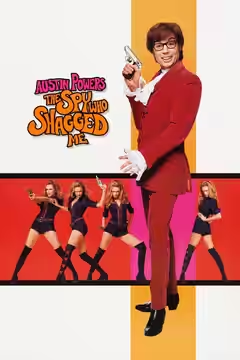
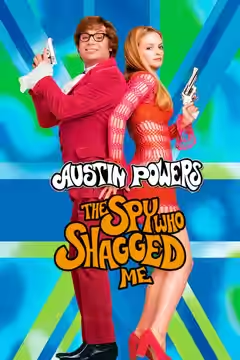
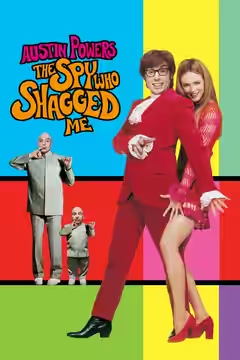
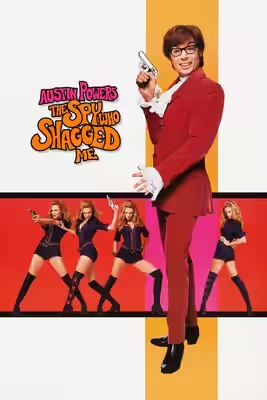
Jay Roach’s Austin Powers: The Spy Who Shagged Me is a funny, untidy sequel with enough good jokes to excuse several tired ones. Mike Myers and Michael McCullers write as though the next routine matters more than the story connecting it to the last, and often they are right. The pleasure lies in watching a performer find another use for a familiar character. Several jokes, however, recur without enough change to justify another outing.
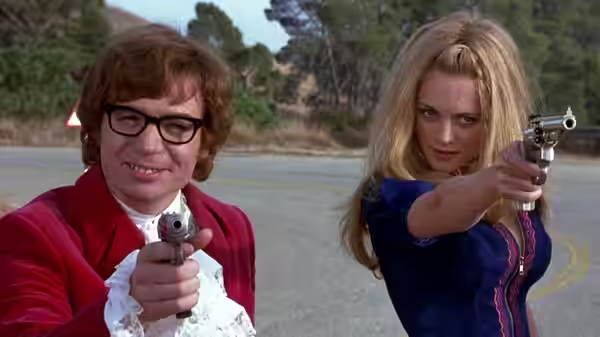
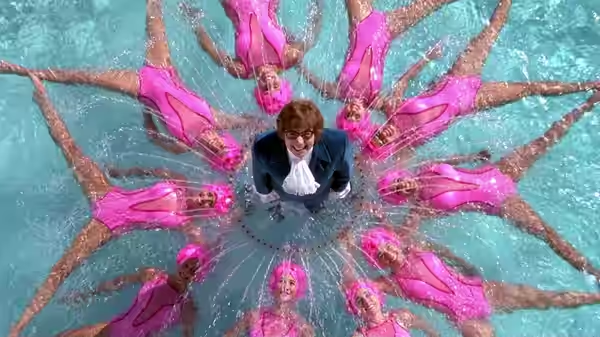
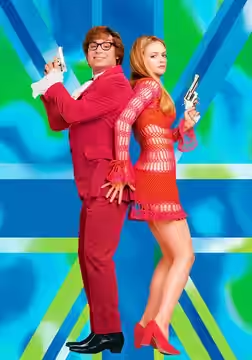
Mike Myers gives Austin Powers enough friendliness to keep the sexual boasting from becoming oppressive. There is vanity here, but little of the spite that can make this sort of comedy exhausting. Dr. Evil is the more rewarding role, with comic mannerisms that remain funny even when the writing contributes little. Mike Myers lets us enjoy the foolishness without asking us to despise the fool. That warmth does more for the film than the busy plotting.
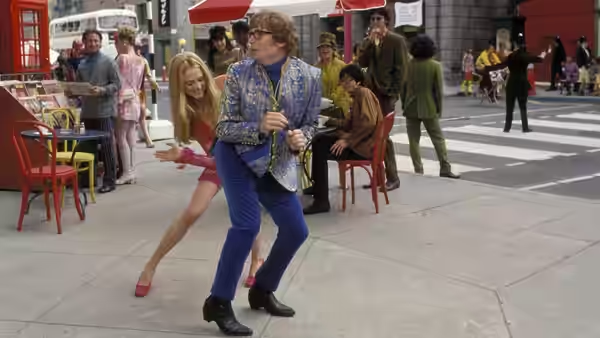
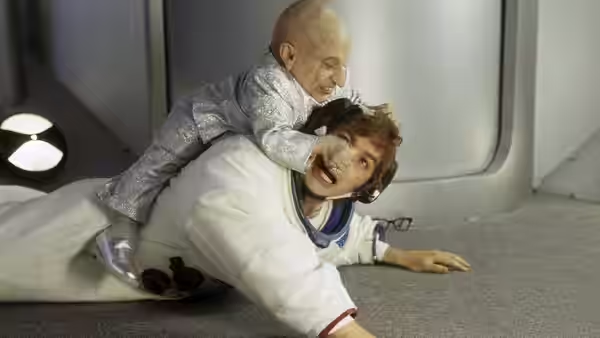
We laughed at Mini-Me long after we expected the joke to wear out. Verne Troyer’s timing gives the repeated appearances enough variation to make us welcome another, and gives Mike Myers something useful to work against. The performance is precise enough to prevent the character becoming merely a novelty. Heather Graham, as Felicity Shagwell, is agreeable company too, though the writing leaves her less room to be funny than her co-star.
Fat Bastard is the conspicuous mistake. Mike Myers’s third role has less of that generosity, and the insistence on finding the character disgusting becomes tedious well before the film has finished enjoying it. Crudeness is welcome when it produces a joke; here it too often replaces one. A promising routine elsewhere can also be weakened by the determination to keep it going after its funniest moment has passed.
The retro styling helps. Ueli Steiger’s cinematography keeps the performers easy to read, while Rusty Smith’s production design makes the artificiality cheerful rather than distracting. The look suits a comedy that has little interest in persuading us any of this could happen, and it remains pleasant company during the weaker routines. George S. Clinton’s music supports that cheerful tone, although it cannot disguise every pause between worthwhile jokes.
Editors Debra Neil-Fisher and Jon Poll are more successful with the pace inside individual routines than with the movement between them. The film can feel like a string of sketches whose order would make little difference, a weakness that belongs chiefly to the screenplay by Mike Myers and Michael McCullers. Some repetition is part of the fun, especially when anticipation becomes its own joke. Too often, though, we have time to recognise the setup and then wait for the expected answer.
By the standards of a spy spoof, coherence need not be the first concern, but surprise ought to count for more than it does here. The better performances keep the film from feeling like a dutiful repeat, even when the material is familiar. At 95 minutes, it asks for a modest commitment, though the weaker stretches are noticeable. Choose it for an evening of amiable silliness, with some patience reserved for jokes that have already had their turn.