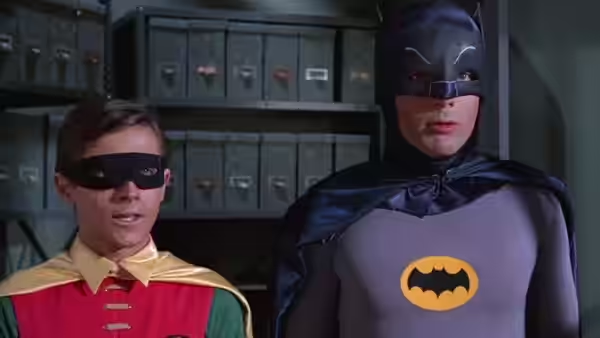
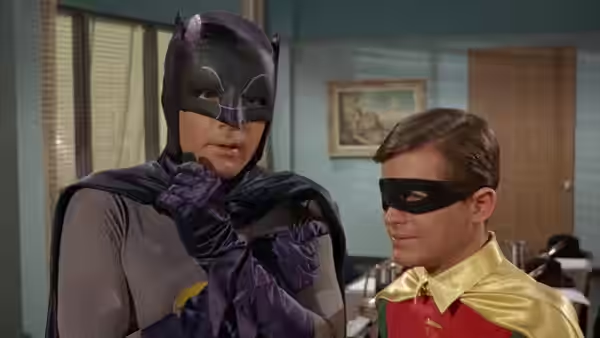
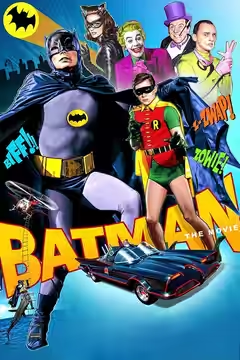
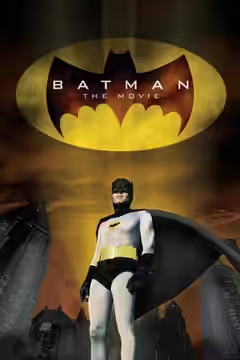
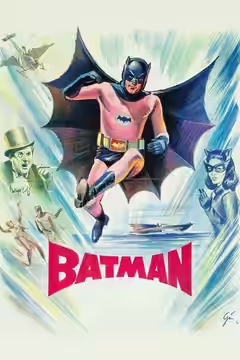
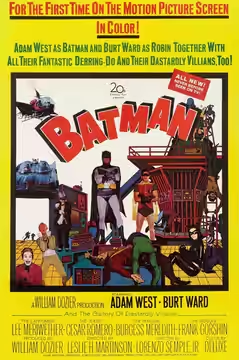
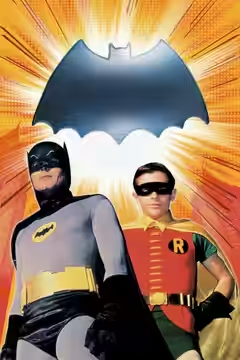
Adam West takes the television Batman to the cinema and plays him with a straight face for 105 minutes while four villains, a rubber shark and a bomb do their worst. It is funny for an hour, and then it is the same hour again.
The television Batman was still on air when its producer, William Dozier, got a film out of it, and it knows exactly what it is: a long episode with a bigger boat. Lorenzo Semple Jr.’s script gives Gotham all four of the series’ main villains, a submarine shaped like a penguin, a shark, a bomb and a machine that turns people into dust, and asks Adam West to treat every one of them as a matter of civic duty. It is funny for about an hour. It then runs on for the rest of its 105 minutes on the same joke, and we felt the strain. Worth your evening if camp is yours.
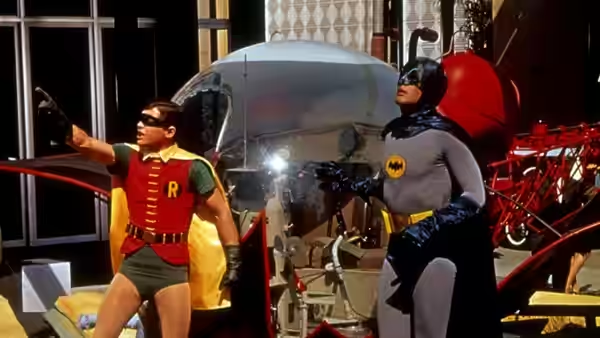
The joke is West. He plays Batman as a decent, slightly pompous public servant who has never once suspected he looks ridiculous, and he never winks. When he cannot find anywhere to put down a bomb, because every corner of the pier holds nuns, a marching band, a mother with a pram or a family of ducks, he keeps his dignity as though dignity were the point. Semple gives him the line ‘some days you just can’t get rid of a bomb’, and West delivers it like a weather report. We laughed out loud, and it was the running that did it: a grown man in a grey leotard jogging politely away from ducks. It is the best scene in the film.
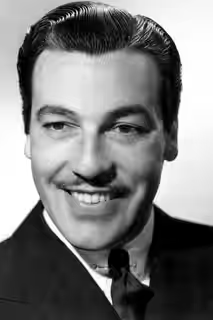
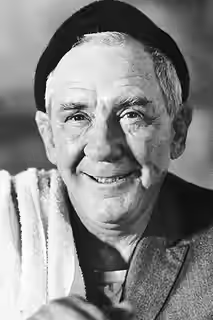
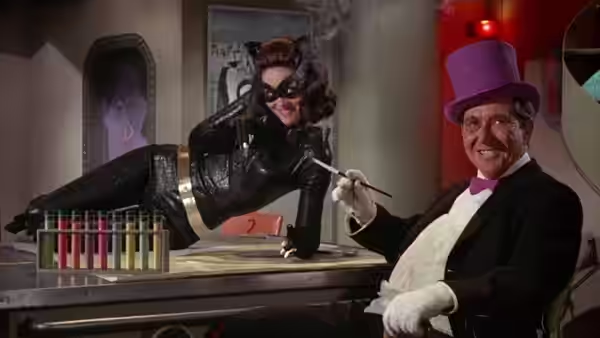
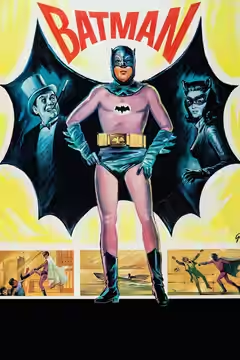
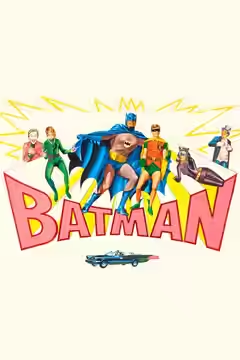
The villains are a mixed bag. Frank Gorshin’s Riddler is the best of them, a wiry man whose giggle climbs into a shriek before the sentence is over, and Burgess Meredith’s Penguin quacks and waddles and plainly enjoys himself. Cesar Romero plays the Joker with his moustache visible under the white greasepaint; nobody has painted over it, and we found this funnier than most of the written jokes. Lee Meriwether, doubling as the Catwoman and as the Soviet reporter Kitka, plays the seduction of Bruce Wayne straighter than the film around her, which helps. Put all four in one room, though, and they bicker, and the bickering is where the film sags.
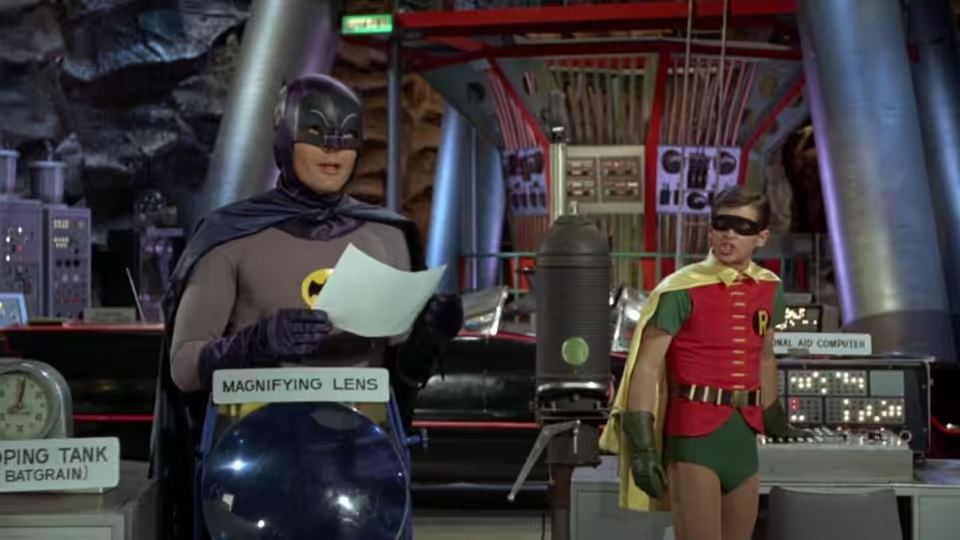
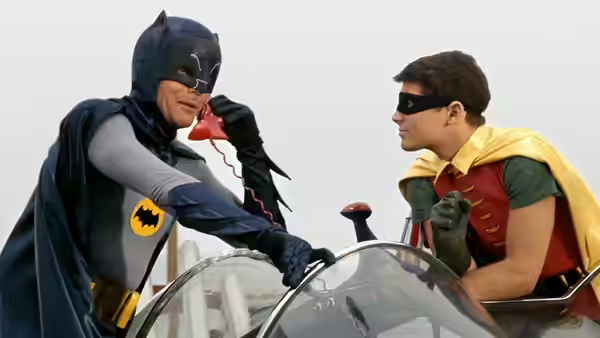
Howard Schwartz shoots it in the flat, bright colours of a comic page. The Batmobile is a black slab with red piping, the villains wear their own colours as uniforms, purple for the Joker and green for the Riddler, and the sea off Gotham is the blue of a swimming pool. Nelson Riddle’s score is brass stabs over a walking bass, and treats each fight as a dance number. The fights themselves are pratfalls: men swing, miss and fall over one another, and Schwartz frames them wide so you can see nobody is hurt. The shark is rubber and behaves like it, and the film does not care whether you notice.
The trouble is that camp is a one-note instrument. The Riddler’s riddles are solved by leaps the film mocks, which is funny twice and then simply how the plot moves. Every gadget is labelled, from the shark repellent to the Bat-ladder, and once the shark has been dealt with the labelling is the whole gag. In the last half hour, aboard the submarine, we caught ourselves checking how much was left, and then felt a little mean about it, because the film had never promised to be anything else. Most critics have been kinder to the second hour than we are.
This is the Batman film all the others were made to disown. Tim Burton’s Batman (1989) put the character in the dark, and everything since has taken him as seriously as a war. The 1966 film does not look like a mistake. It looks like a choice: a Batman who is a good citizen, a Robin who says ‘holy’ things, a Gotham whose police are pleased rather than resentful when the vigilantes turn up. It reached British cinemas on 16 December 1966 with a U certificate, and children will follow every second of it.
Watch it with someone under ten, or with a drink, or both, and feel free to watch it in two halves: it was built out of episodes and it breaks back into them without complaint. Stay for the bomb.