Wellman’s Battle of the Bulge stays with one squad and one foxhole, and is the better for it. The snow is studio snow and the men complain more than they fight; this is as plain as Hollywood got about the war.
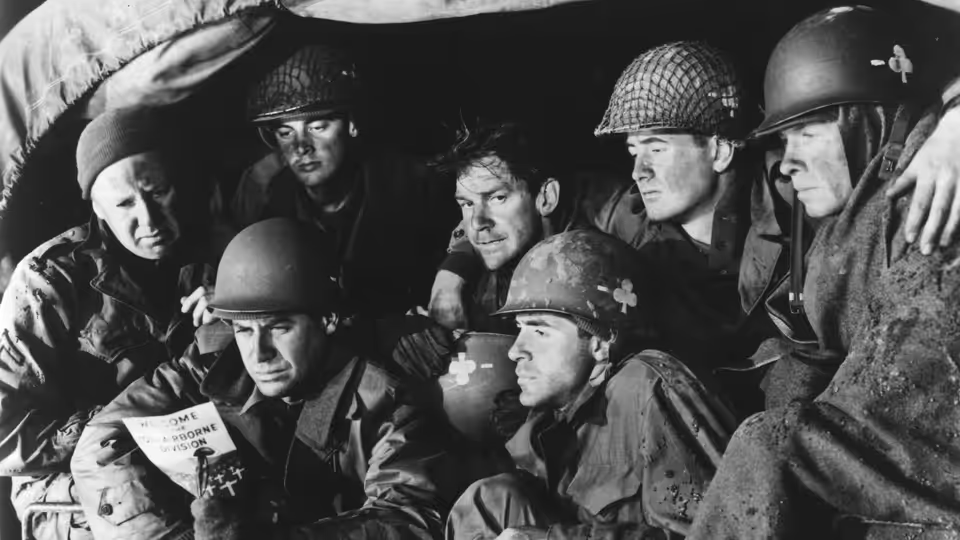
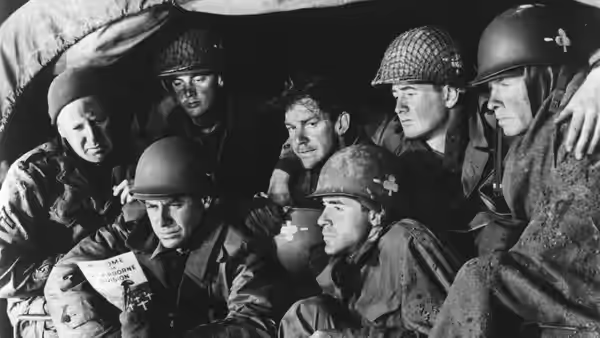
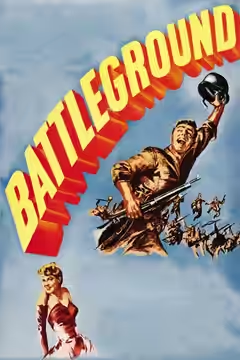
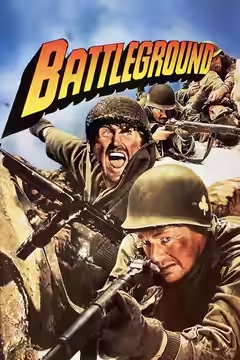
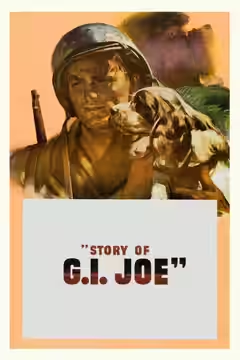
William A. Wellman had already made Wings (1927) and The Story of G.I. Joe (1945), so by 1949 he knew both ways of doing a war film: the big one, with the sky full of aeroplanes, and the small one, with the mud. Battleground is the small one. It takes the German breakthrough in the Ardennes in December 1944 and spends 118 minutes with a dozen men from the 101st Airborne who see almost none of it. They dig, they eat, they move a few hundred yards, they dig again. Robert Pirosh’s script does not give them a hill to take or a bridge to hold. It gives them a fog and tells them to stand in it.
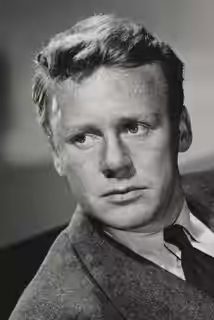
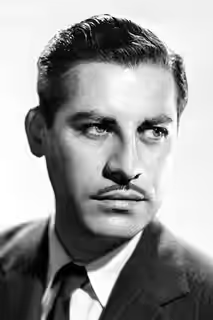
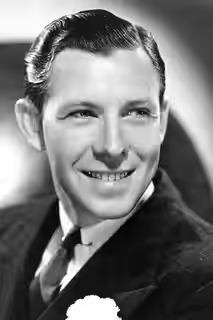
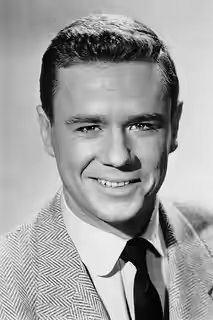
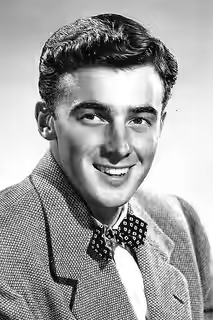
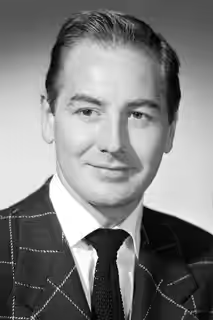
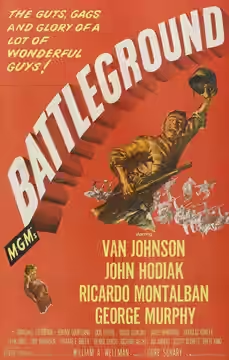
The men are drawn quickly and worn in slowly. Van Johnson’s Holley talks too much and carries a helmet full of eggs he is forever about to fry. Ricardo Montalban’s Roderigues catches a snowflake on his tongue and laughs like a boy. George Murphy’s ‘Pop’ Stazak has his discharge on the way and cannot quite bring himself to talk about it. James Whitmore, as the sergeant Kinnie, chews tobacco, spits, and runs the squad on about forty words a day. Douglas Fowley’s ‘Kipp’ Kippton has false teeth that click. Nobody is a hero. Nobody makes a speech about why they are there, except the chaplain, and we will come to him.
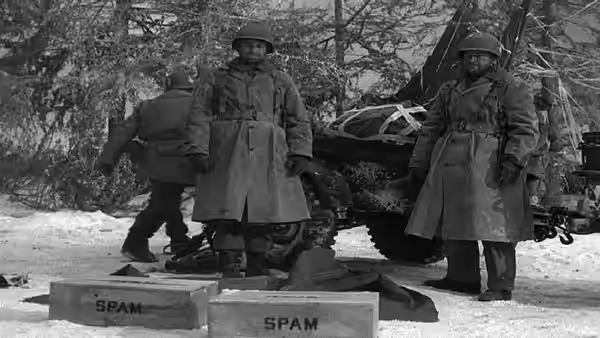
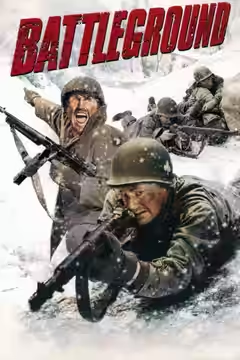
Most of it was shot indoors, on a stage, and you can tell, and it does not matter. Paul Vogel lights the snow flat and grey, with no sun and no shadows, so there is no horizon and no way of knowing where the German line is. The fog is the film’s real antagonist, and it is doing what a studio fog always does, which is to hide the back wall; here the back wall is the enemy. When a voice calls for help out of the white, the squad cannot tell whether it is American, and neither could we. That sequence frightened us more than any charge in a bigger film has, and nothing in it moves.
John Dunning cuts to the rhythm of a shift rather than a story. A day is a hole, a meal, a rumour, a patrol; then the same again, colder. There is little of Lennie Hayton’s music and most of what there is arrives late; for long stretches the only sound is boots in snow and men complaining. One of the three reviews we have read finds this shapeless, a report rather than a drama. We would say it is the shape the material has.
One thing dates it. The night in the house, where Holley makes eyes at a young Belgian woman over a stove, is the one scene that could have come from any MGM picture of the decade, and the film seems to know it and hurries on.
Then there is Leon Ames as the chaplain, who gets one scene, a sermon delivered in the snow to men who would rather be sleeping, on the question of whether this trip was necessary. It is plainly written and plainly played, and it moved us more than we expected a sermon in a 1949 war film to move anyone. We felt caught out by it. That is the film’s method: it spends so long on cold feet and clicking teeth that when it finally says something, we are listening.
The reviews we have read are split, a rave at one end and a shrug at the other, and their average sits well below our score. The complaint is that nothing much happens and no one is exciting. We think that is the achievement. Against Wellman’s own record it stands beside The Story of G.I. Joe as the honest one, and against most of the war films that followed it over the next twenty years, which are louder and know less, it holds up.
Watch it at home, on a cold night, with the lights off; the fog will look like fog. The studio snow will look like studio snow whatever you do, and you will stop minding about ten minutes in.