Film review

Wings

1927 · Directed by William A. Wellman · 2h 24m · MPA PG-13

In a sentenceThe planes are real, the sky is real, the love story is from a lending library

DramaActionWarRomance

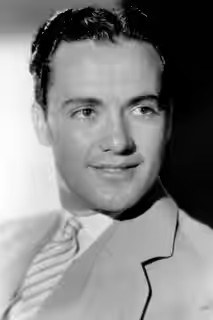
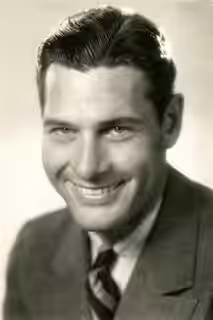
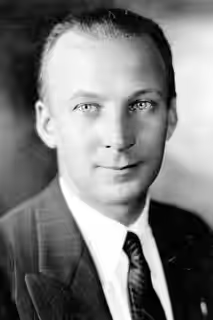
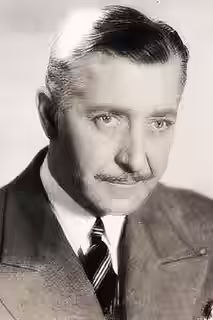
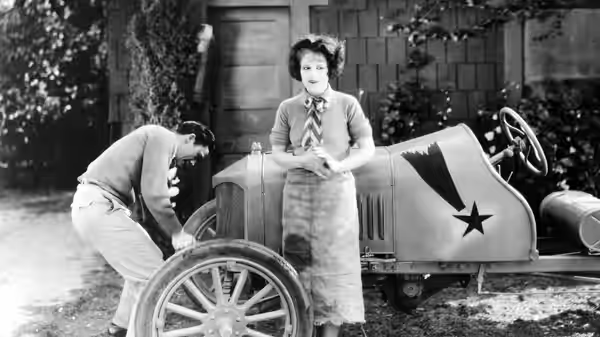
Small-town America, 1917. Jack Powell (Charles Rogers) is building a racing car at home, and Mary Preston (Clara Bow), the girl next door, is helping him and hoping he will notice her. He has eyes only for Sylvia Lewis (Jobyna Ralston), who is quietly in love with David Armstrong (Richard Arlen), the rich boy in town. When the United States enters the war, Jack and David both enlist as fliers and end up at the same training camp, sharing a tent with a lanky Cadet White (Gary Cooper), who passes through for a single scene. The two rivals settle their differences in a boxing match and come out of it friends. Then they are posted to France, and Mary finds her own way to follow them.

Plays from YouTube when you press play; nothing loads from them until then.

Fi1m review

Wellman flew in the war and it shows: his dogfights are real aircraft in a real sky, filmed from inside them, and they still hold. The love story on the ground is thin and the film is long. Worth your evening for the air.

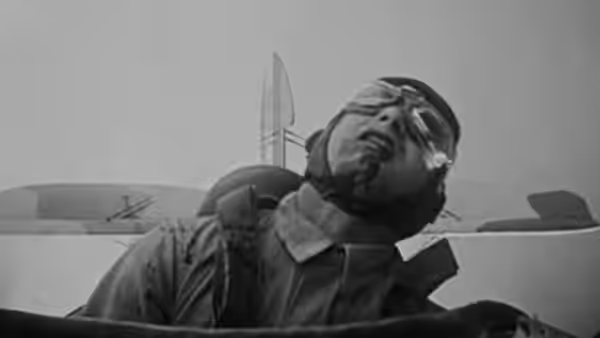
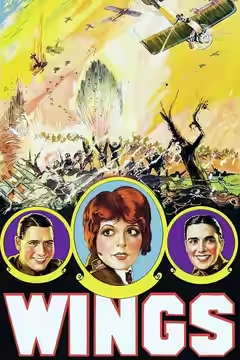
Wings is a silent film about two American boys who learn to fly, go to France and fight in the air, directed by a man who had done roughly that himself. William A. Wellman flew for the French in the First World War before he made films, and that explains the one thing about Wings nobody argues with. He did not fake the flying. The aircraft go up, the cameras go up with them, and the faces in the cockpits belong to the actors, with the wind flattening their cheeks. Nearly a century on, the air sequences still hold, and the ground story between them is what you sit through to get to the next one.

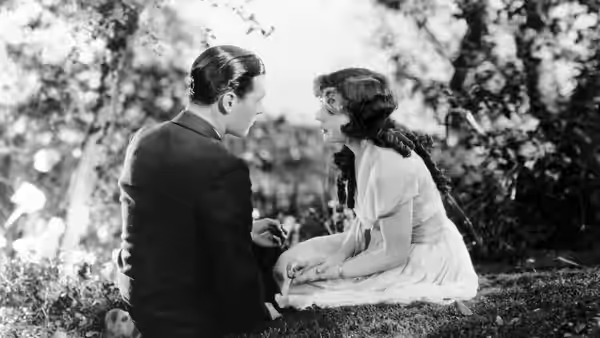
The ground story is this. Jack Powell (Charles Rogers) is building a racing car at home and is too busy to notice that Mary Preston (Clara Bow), the girl next door, is in love with him. He wants Sylvia Lewis (Jobyna Ralston), who wants David Armstrong (Richard Arlen), the rich boy in town. War comes, both boys enlist as fliers, and they end up in the same training camp and the same tent. Louis D. Lighton and Hope Loring wrote it from a story by John Monk Saunders, and it is the plot of a thousand magazine serials. The film knows this and does not mind.

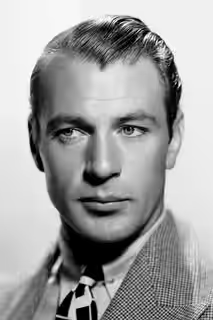
What lifts the first act is a walk-on. Gary Cooper comes into the tent as Cadet White, takes a bite of a chocolate bar, shrugs off a question about luck and goes out to his aeroplane. He is on screen for perhaps two minutes and the whole camp goes quiet around him. We felt it go cold, we knew what was coming, and Wellman was right not to show it.

Then France, and the reason to watch. Harry Perry’s cameras are mounted on the aircraft, so when a plane rolls the horizon rolls with it, and when a pilot is hit he slumps in front of us rather than in a cutaway. E. Lloyd Sheldon cuts the dogfights so that we always know who is above whom, which is harder than it sounds when everything in the frame is grey sky and the same shape of biplane. One machine going down trailing smoke, the camera holding on it all the way to the ground, made us flinch, because it is quite plainly a real aeroplane falling out of a real sky. A late battle, with infantry and tanks under a ceiling of aircraft, is staged on a scale the film never draws attention to.

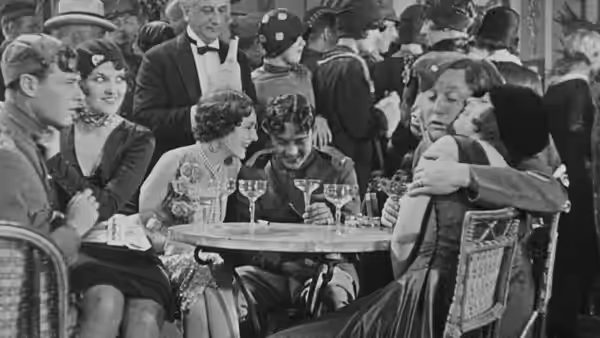
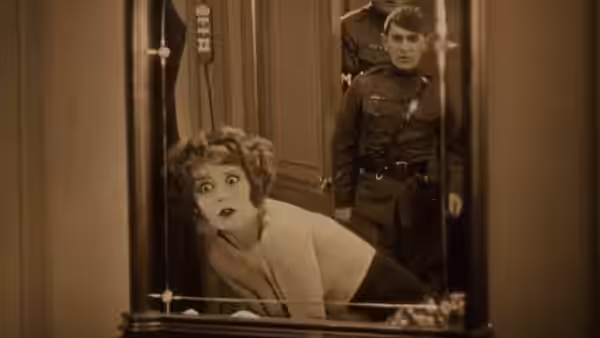
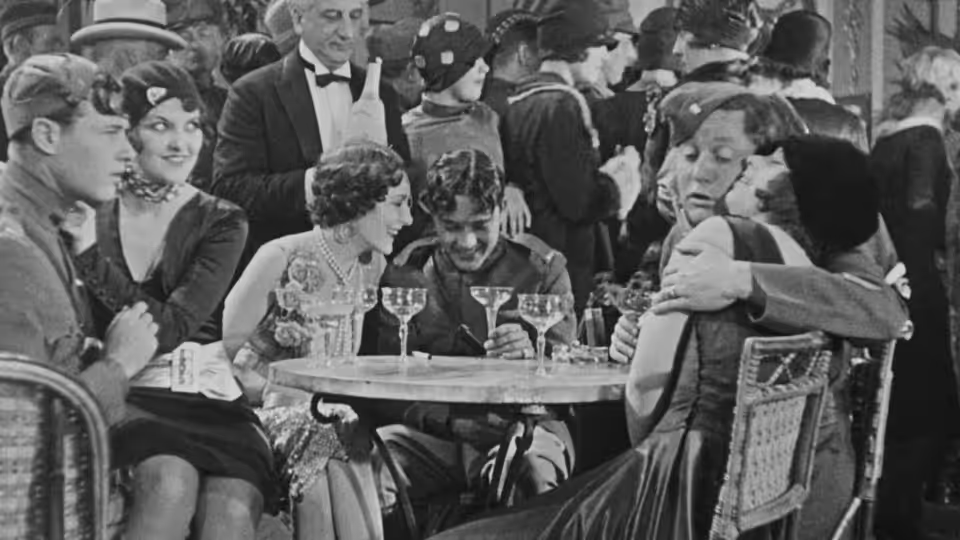
Wellman gets restless when he comes down to earth, and it produces the film’s best-known shot. In a Paris nightclub the camera glides forward across the tables, over couples and bottles and glasses, as though it had been drinking too. Edith Head and Travis Banton put Bow into a glittering borrowed dress for this interlude and the point is made without a title card: this is what Jack has failed to see. It is the only stretch of the ground story with the energy of the air.

Bow is the reason the rest of it is bearable. She moves. She sulks, drives, climbs, changes her mind, while the men stand still and emote in the direction of the lens. Rogers is eager and not much else. Arlen is quieter and the better of the two, and Henry B. Walthall and Julia Swayne Gordon, as David’s parents seeing him off with a small keepsake, moved us more than the whole triangle put together. El Brendel’s Herman Schwimpf is the comic recruit, and his comedy has not made the crossing into this century.

The film is 144 minutes and feels it. The second half returns to the triangle more often than the triangle can stand, and the title cards get longer as the plot gets more like a serial. The film also cannot decide whether flying is glorious or terrible, and says both, loudly, sometimes in the same reel. Wellman made harder and quicker films afterwards, The Public Enemy among them. He never made one that looked like this.

Watch it on the largest screen you have. The score depends on the print you find; the aeroplanes do not need any help.

Critical consensus AI synthesised

74
Positive
8
Mixed
2
Negative
0

Most critics agree that Wings still earns its reputation, and nearly all the praise lands in the air. The stunt flying, the dogfights and the photography from the cockpit are called matchless for their period, and several reviews add that the ground battles are staged on a scale that still impresses. Wellman’s handling of the spectacle is admired across the board, and the reviews written around the restoration find the condition of the print part of the pleasure.

The reservations are all on the ground. The story of two rival pilots and the woman between them is described as familiar, novelettish or faintly corny, and the acting as uneven. The Skinny finds the leads unengaging and Clara Bow the lively exception, and thinks the later stretches drag. The spread is narrow, eight positive to two mixed, with Empire the clear outlier, weighing the melodrama heavily enough to arrive at a shrug. The most recent notice, from /Film, goes the other way and finds the wartime story satisfying and the climax moving.

Time Out
10 September 2012 · PT
90*

The review calls Wings a classic that lives up to its reputation, singling out its matchless aerial photography, detailed battle scenes and dogfights, and solid performances in a straightforward plot of love, duty and camaraderie.

Read the full review →
The AV Club
15 February 2012 · Noel Murray
80*

The critic calls Wings more than a historical footnote, praising it as one of the most exciting and innovative Hollywood movies of its era with impressive aerial stunts and visual storytelling. They note its grand spectacle in the restored Blu-ray edition while acknowledging its mixed messages about war.

Read the full review →
The Guardian
2 February 2014 · Philip French
80*

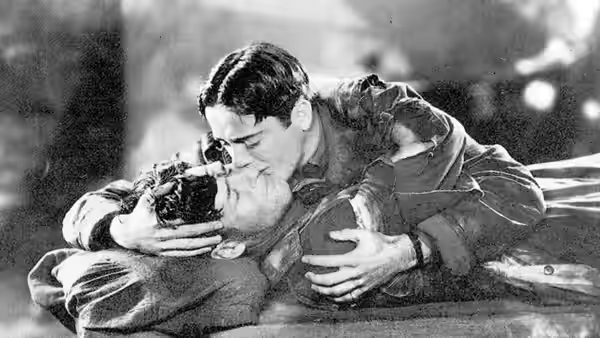
The critic praises the film's superbly choreographed stunt flying and aerial combat sequences, highlighting the beautifully restored print as first rate. The homoerotic relationship between the leads and Gary Cooper's cameo are also noted as enduring elements.

Read the full review →
Variety
17 August 1927 · Sid Silverman
80*

The critic praises the film's unmatched graphic power in its aerial flying and combat sequences. The ground-level story follows familiar war film conventions without particular distinction.

Read the full review →
Sight and Sound
10 October 2012 · festival review
70*

The review highlights Wings as a festival gem in the Treasures strand of the 2012 London Film Festival, praising its still-impressive aerial combat scenes and noting its place in history as the first film to win the Best Picture Oscar.

Read the full review →
Slant Magazine
25 January 2012 · Jaime N. Christley
70*

The review highlights the film's enormous scale and technical achievements in special effects and set pieces as a producer's triumph that secured the first Best Picture Oscar. It notes that the characters and screenplay are less memorable but praises Wellman's handling of the spectacle and its timely restoration.

Read the full review →

Cast

Awards

Academy Awards, 1929

Won
Best Engineering Effects
Won
Best Picture

If you liked this, try…

The Big Parade poster

The Big Parade

1925 · The other great silent American war film, and the one with more feeling on the ground

Westfront 1918 poster

Westfront 1918

1930 · Pabst’s German view of the same war, in the mud rather than the air

It poster

It

1927 · Clara Bow given a whole film to move about in, and she uses all of it

Only Angels Have Wings poster

Only Angels Have Wings

1939 · Hawks on fliers and the people who wait for them, with talk this time

The Blue Max poster

The Blue Max

1966 · Real biplanes in real sky again, forty years on and in colour