Mel Smith’s film takes Rowan Atkinson’s silent clown, puts him on a plane to Los Angeles and asks him to carry a plot. The set pieces are as funny as they ever were; everything around them is padding, and some of the padding talks.
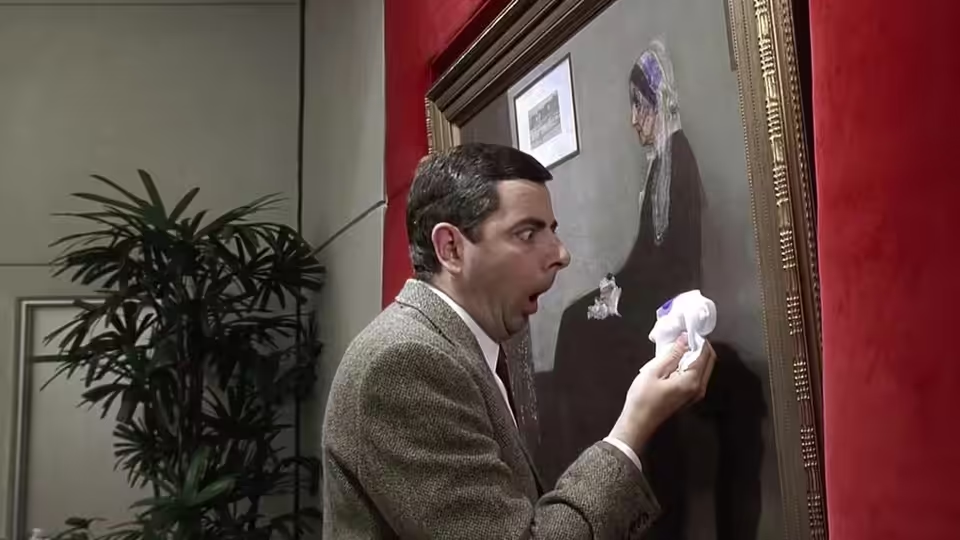
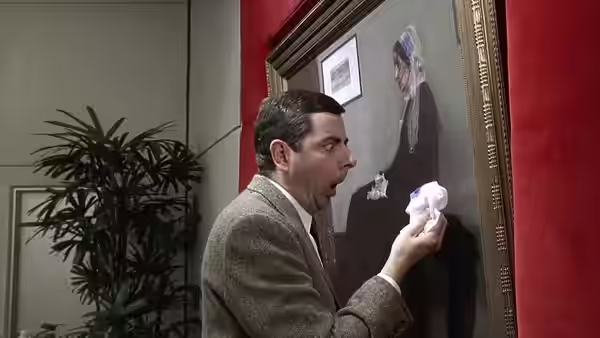
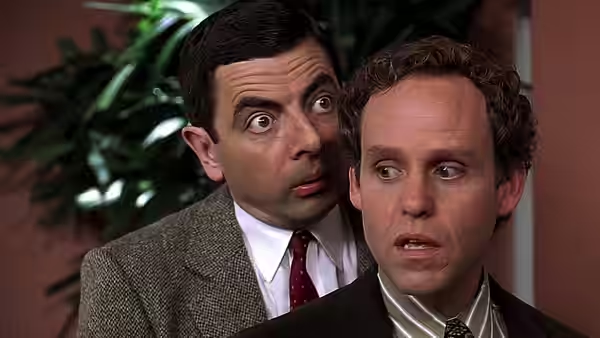
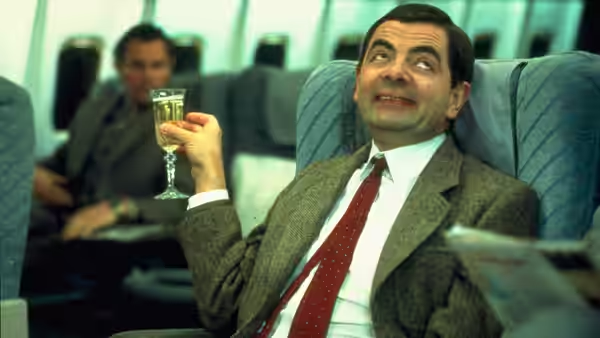
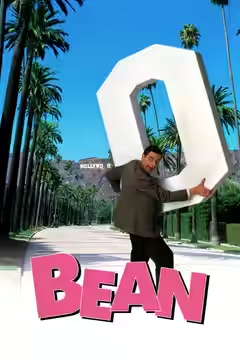
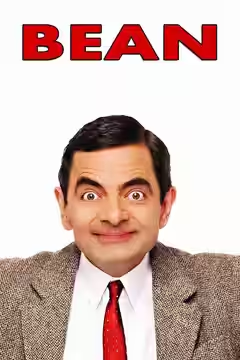
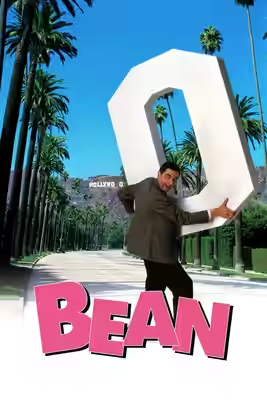
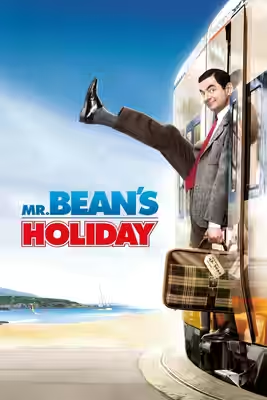
Mr Bean began on television as a man who could not be left alone with a sandwich, and Mel Smith’s film takes him out of the half-hour and sends him to America. The National Gallery in London has an attendant it cannot sack, Bean (Rowan Atkinson), and when a Los Angeles gallery buys Whistler’s Mother and asks for an English scholar to speak at the unveiling, the board sees its chance. Bean flies out as Dr Bean, and David Langley (Peter MacNicol), the curator who has volunteered to put him up, slowly understands what he has let into his house. It is a thin premise and the film knows it, which is why it runs 89 minutes. In fits it is as funny as anything Atkinson has done; in longer stretches it is a different and duller film about a put-upon American family.
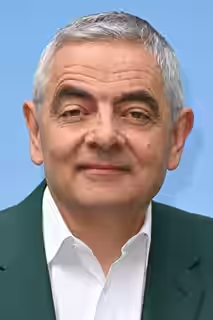
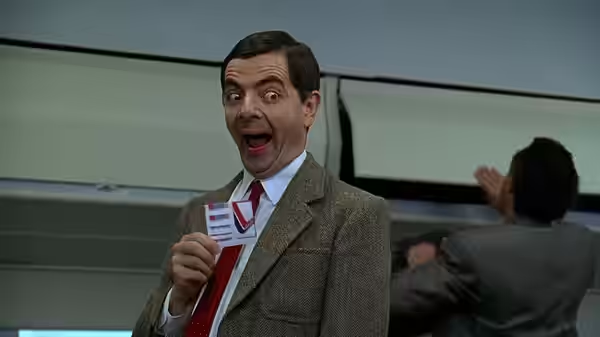
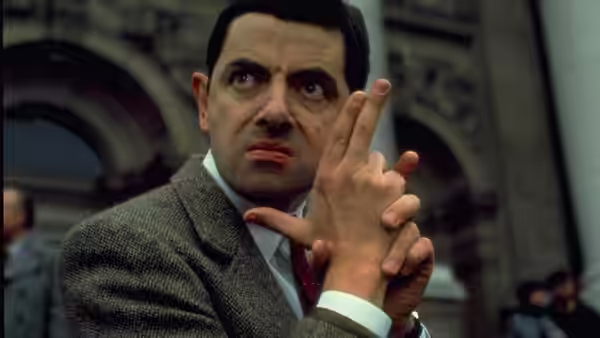
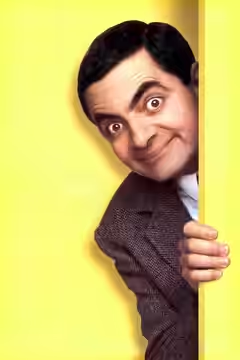
The fits are the reason to watch. In an airport queue Bean mimes a pistol at a child, and we laughed out loud, then watched the armed response arrive and laughed again, because Atkinson plays the whole thing with the puzzled dignity of a man who cannot see what the fuss is about. He shaves his tongue at a basin. He does the coffee business. Both are lifted from the television sketches, as Time Out noted at the time, and we did not mind, because they are performed by the only man who can perform them. Atkinson’s face is the special effect: the eyebrows arrive at a thought a full second before the rest of him does.
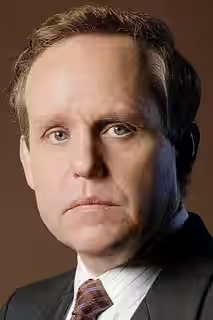
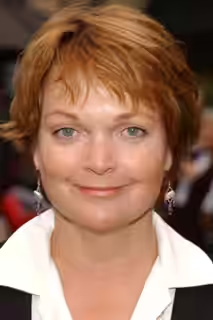
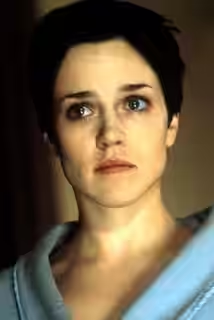
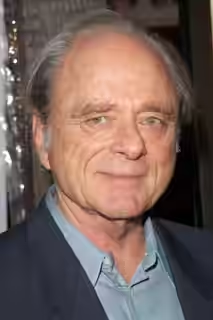
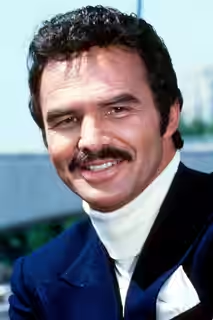
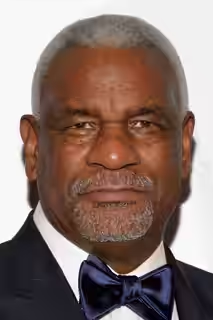
The trouble is that Richard Curtis and Robin Driscoll have given him lines. Bean on television spoke in grunts and the odd strangled word, and the silence was the joke; here he explains himself, and every sentence costs the character a little. The Langley household is where the talking happens. MacNicol is good, a man undergoing a slow collapse who keeps hoping it is a misunderstanding, and his reactions are the one thing in the film as funny as what he is reacting to. Pamela Reed, as Alison, is given a great deal of exasperation and nothing else. Tricia Vessey and Andrew Lawrence, as the children, are present. Harris Yulin’s gallery owner and Burt Reynolds’s barking General Newton turn up to be impressed or appalled on cue, and Richard Gant’s Lieutenant Brutus, the security man who distrusts Bean from the first handshake, is the only American who behaves sensibly. Sandra Oh and Tom McGowan have a line or two each and deserved more.
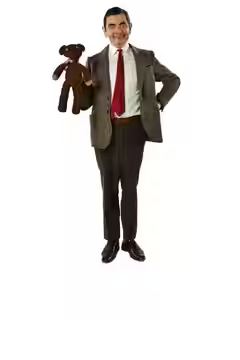
The craft is tidy and knows its place. Francis Kenny shoots the National Gallery dim and wood-panelled and Los Angeles flat and bright, so Bean’s brown tweed and thin red tie, Hope Hanafin’s one costume, look wrong in every frame he enters, which is the idea. Peter S. Larkin builds the Grierson as a white, spotless room with a single painting on a single wall, a space designed to make one small man look like a threat. Chris Blunden cuts the set pieces with patience, holding on Atkinson until the face has finished, and cuts the family scenes briskly, as if he too would rather be elsewhere. Howard Goodall’s score mostly stays out of the way, and in a film that lives on silence that is the right call.
What Bean eventually does in front of the painting we will not describe, except to say that it is the sequence the whole film exists to deliver and that it earns its place. After it, the gears change. The film decides it wants us to feel something about the Langleys and asks Bean to be wise, and we felt the shift as a jolt, like a clown stopping mid-routine to give a toast. There is also a late detour into a hospital that we found more alarming than funny, a man doing things to a patient that the film treats as a lark.
The television sketches were built to stop before the idea wore out. Here the idea has to last 89 minutes, and when the writers run short of Bean they reach for plot, and plot is the one thing he has never needed. The film carries a PG and is pitched at families, and children will not mind the joins. Watch it with them, laugh at the airport and the painting, and go and put the kettle on when the grown-ups start explaining themselves.