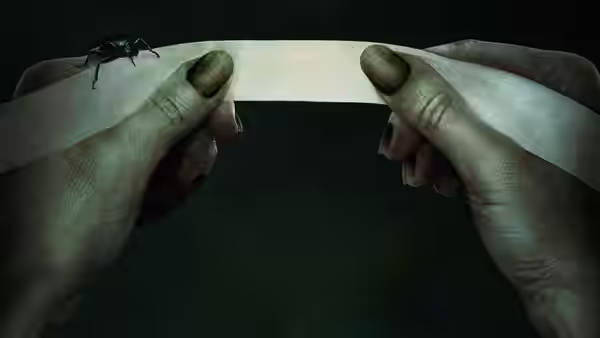
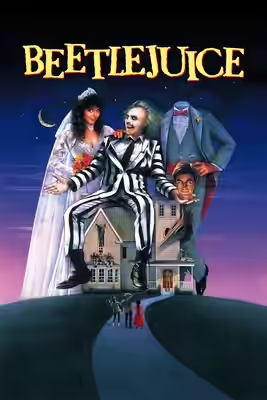
Tim Burton goes back to the house and the haunt he made his name with and has a plainly good time. So do Keaton and O’Hara. The script hands them five plots when two would do, and the fun comes in bursts rather than a stream.
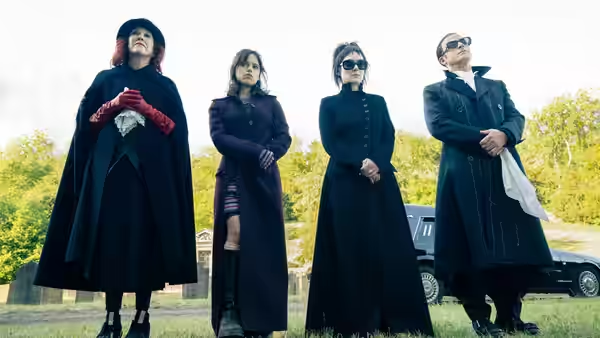
Thirty-six years after Beetlejuice, Tim Burton goes back to the Deetz family and finds them much as he left them. Lydia (Winona Ryder) is grown up and has a teenage daughter, Astrid (Jenna Ortega); Delia (Catherine O’Hara), Lydia’s stepmother, is still in the picture. The film that follows runs 105 minutes, is built mostly out of rubber and latex, and is often funny. It also carries two more plots than it can hold.
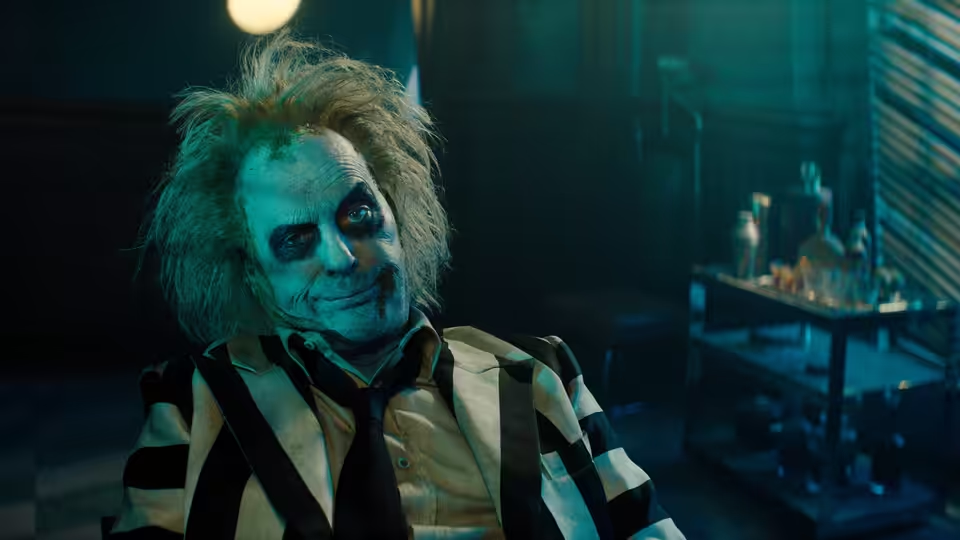
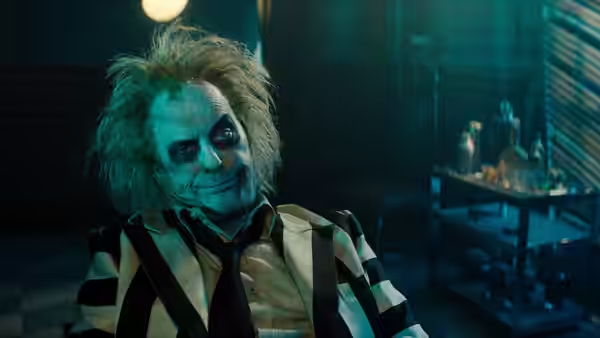
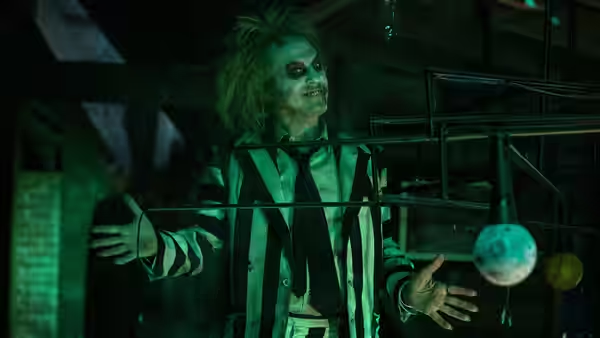
O’Hara is the reason to go. Delia treats everything that happens to her as material and speaks to everyone as though they had wandered into her gallery by mistake. The script by Alfred Gough and Miles Millar gives her the sharpest lines and the only running joke that pays off every time. Keaton, when he arrives, is exactly as we left him: the mould, the striped suit, the patter delivered too fast to be argued with. He is billed first and on screen for perhaps a third of the film. Burton is careful with him, and a little stingy.
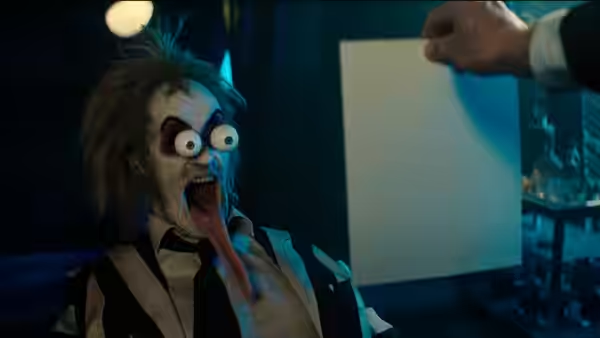
The team has built rather than rendered. Mark Scruton’s afterlife is a civil service of green corridors, numbered tickets and waiting rooms where the dead sit holding whatever came off them. Haris Zambarloukos lights the living world in orange autumn and the afterlife under flat fluorescent tubes, so the dead look faintly seasick. Colleen Atwood puts Delia in black cut like sculpture and Monica Bellucci’s Delores in a scarlet body-stocking held together with staples. Bob (Nick Kellington), credited as a Shrinker, is a man in a suit with a very small head, and every time he walked into frame we laughed. Danny Elfman brings back the old theme and the plucked strings and does not pretend to have anything new to say with them.
Delores’s entrance is the film’s best sequence and it comes early. She is in a storeroom in pieces; she drags a staple gun across the floor and puts herself back together limb by limb, and Burton shoots it slowly, with a pleasure in the mechanics that we had not felt from him in years. We laughed and were slightly appalled at ourselves. Then the script sends her down corridors sucking the souls out of clerks for the rest of the film and never gives her another scene as good.
The story, credited to Gough, Millar and Seth Grahame-Smith, runs at least five plots. Justin Theroux plays Rory, a man the film dislikes as much as we did. There is a boy called Jeremy (Arthur Conti), and what comes of him we will not describe. Willem Dafoe turns up as Jackson and is a joy, and his whole thread could be lifted out without leaving a mark. Jay Prychidny cuts between these quickly, and no thread gets long enough to matter. A scene ends when its joke does. The mother-and-daughter story the film wants for a heart gets a few quiet minutes, and Ortega, handed the one part written without jokes, plays it straight and is rather wasted.
The first film had one haunted house and one problem. This has the same family and a dozen, and it does not feel long so much as crowded. Around the hour mark we noticed we had stopped following who wanted what and were waiting for the next thing made of latex. We were never bored. We were never quite carried away either, and given how much of this is Burton doing what he does best, that is a pity.
It carries a 12A and is gentler than the suit suggests: the horrors are rubber, the blood is green, and the nastiest object in it is a staple gun. Take someone who saw the first film at the right age and does not mind being pandered to; there is a musical number late on that pandered to us, and we did not mind. The latex looks better on a big screen.