Adam Sandler brings enough warmth to keep this comedy watchable, but the writing presses too hard for affection. There are some laughs; we would hesitate to give it the whole evening.
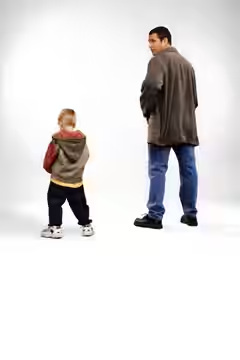
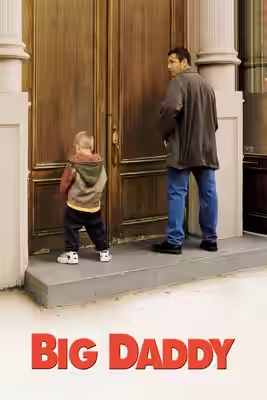
Dennis Dugan’s Big Daddy is a mixed comedy that gets more from Adam Sandler’s awkward sweetness than it does from its script. There are laughs here, and a warmth that survives some determined efforts to force it. But the film becomes less persuasive as it asks us to take its feelings more seriously. At 93 minutes it is a modest commitment, though we would reserve it for those already receptive to its leading man.
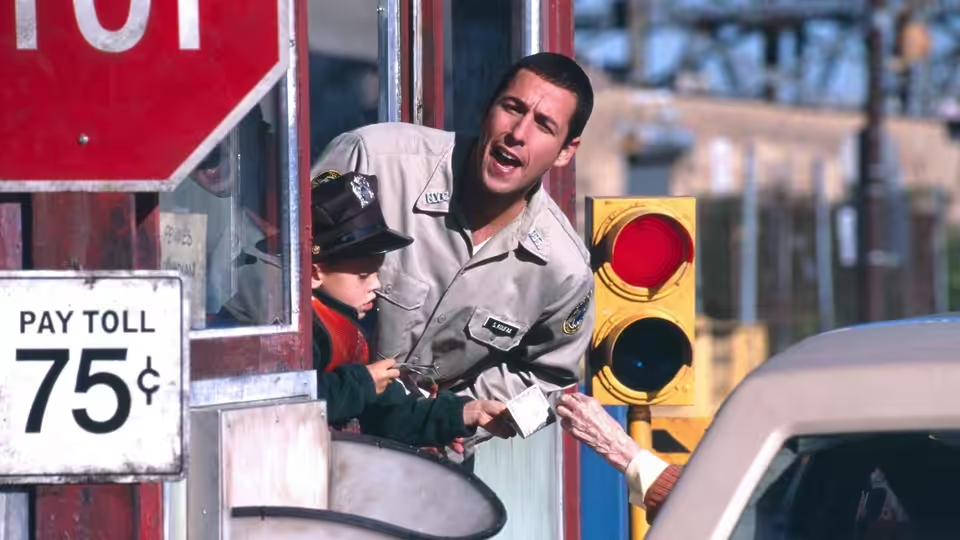
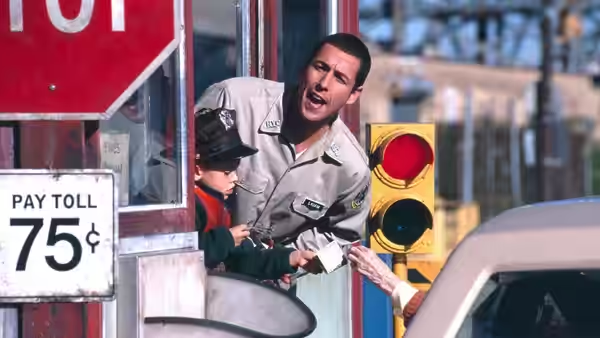
As Sonny, Adam Sandler works most effectively when his bluster gives way to embarrassment. The noisy loutishness can grow wearing, but the humility matters: Sonny briefly seems aware that he is not particularly admirable. We warmed to him more than we expected when that sheepishness interrupted the swagger. Dennis Dugan gets more from these small changes in the performance than from the broader appeals for affection. The difficulty is that Sonny’s sweetness and his insensitivity do not always feel like parts of the same person.
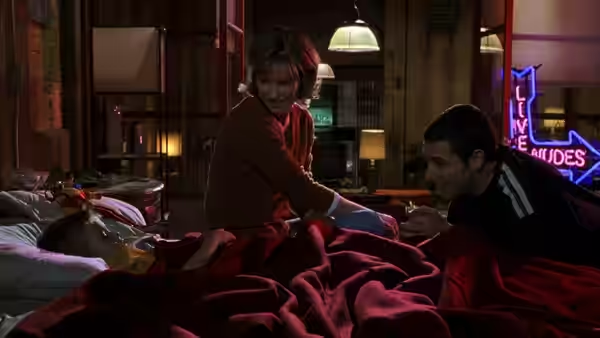
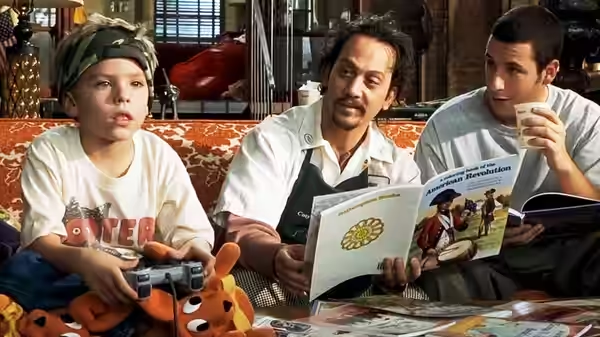
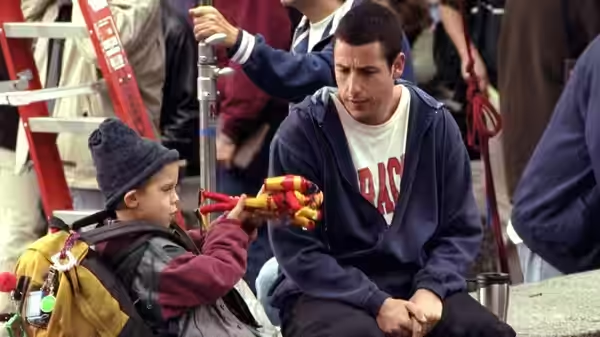
Cole Sprouse and Dylan Sprouse share the role of Julian, and their performances bring a welcome ease to the more insistent comedy around them. The bedtime-story scene involving Julian and Layla, played by Joey Lauren Adams, gives the film the gentleness it elsewhere tries too hard to secure. For once, the affection does not feel like an instruction to the audience. The scene works because the film settles down long enough to let these characters be pleasant company.
The screenplay, credited to Adam Sandler, Tim Herlihy and Steve Franks, is much less comfortable with Sonny’s unpleasantness. It wants licence for mean jokes and then expects an easy return to sympathy. We do not need a comic lead to be a good person, but we do need the film to notice when his conduct stops being funny. Here, the earnest passages too often ask us to forget the nastier ones rather than helping us understand them.
The supporting craft is competent, though it does little to make the comic writing feel less routine. Theo van de Sande’s cinematography and Perry Andelin Blake’s production design contribute little to the humour; we rarely find an extra joke in the image. Jeff Gourson’s editing does not make the move towards sentiment feel natural, even within a compact running time. Teddy Castellucci’s music leaves us no more persuaded by the emotional pleading. The result is watchable, but too much depends on the performers making an ordinary passage worth sitting through.
Comedies about bad parenting need some convincing connection between the irresponsible behaviour and the eventual demand for sympathy. Dennis Dugan never quite establishes that connection here. As the seriousness increases, the writing becomes less relaxed, and Adam Sandler’s capacity for modest embarrassment is crowded out by the demand that we care. The second half is weaker because it keeps pressing for a response that the quieter scenes have already earned without much fuss.
Those already fond of Adam Sandler’s comic manner will get more out of Big Daddy than anyone hoping to be converted. Accepting the sweetness means putting up with some lazy jokes and a fair amount of emotional pressure. We would choose it for the cast, if at all. If broad comedy turning solemn usually makes you reach for the remote, keep it close.