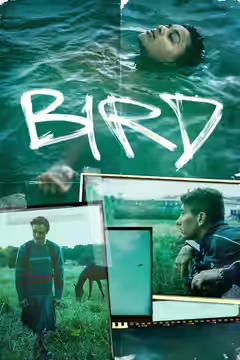
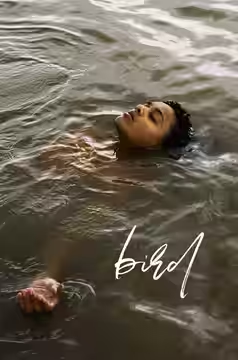
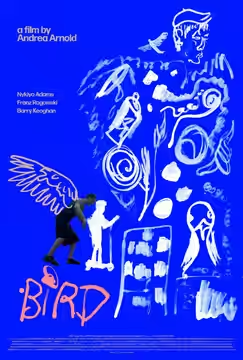
Andrea Arnold’s Kent drama has a remarkable first performance from Nykiya Adams and a Barry Keoghan on fine, feckless form. The fairy tale Arnold wraps round them is less sure of itself, and the last act reaches for more than it has earned. Worth your evening.
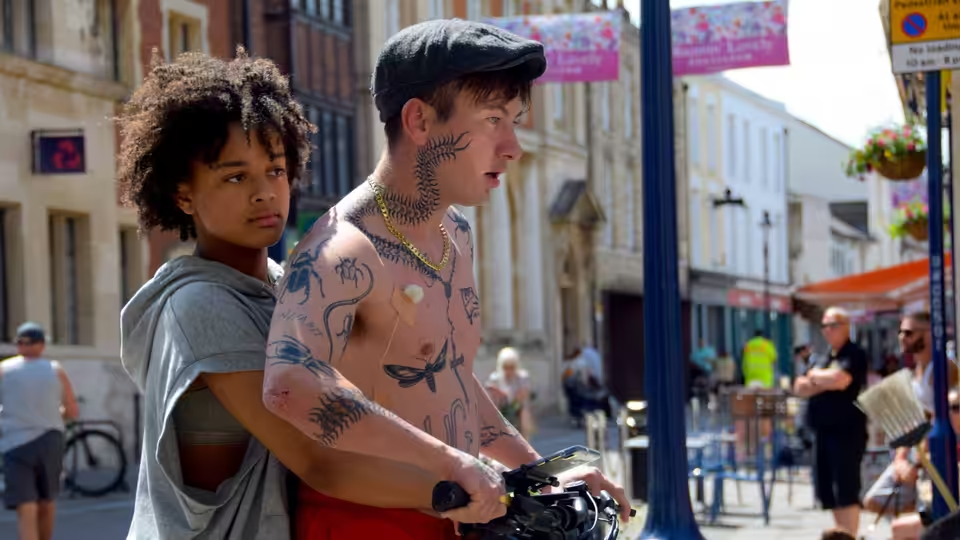
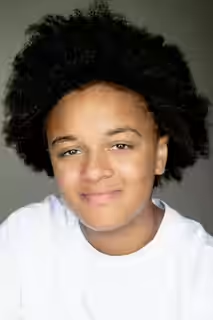
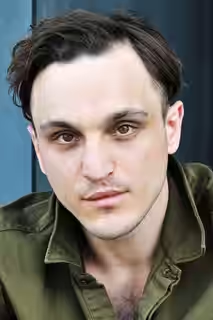
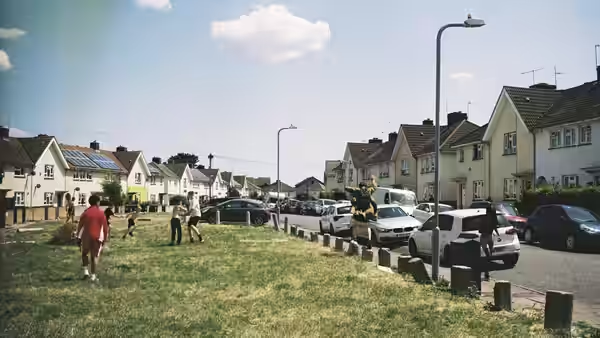
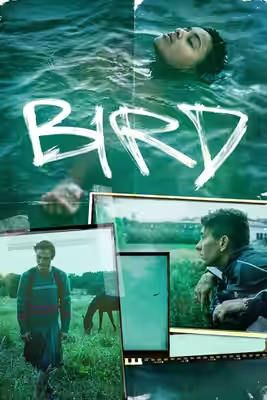
Bailey (Nykiya Adams) is twelve and lives in a squat in Kent, by the Thames estuary, with her father Bug (Barry Keoghan) and her brother Hunter (Jason Buda). Bug has a new girlfriend, Kayleigh (Frankie Box), and a plan to raise money that involves a toad. Bailey wants nothing to do with any of it. She cuts her hair off in the bathroom, takes her phone out to the marshes and films birds. There she meets a man called Bird (Franz Rogowski), in a skirt and a cardigan, who says he is looking for the parents he last saw here as a child. Andrea Arnold, who wrote and directed, has made a film about a girl who wants to get away and a stranger who might know how. It is good in the way most of her films are good, and uneven in a way most of them are not.
This is Adams’s first film, and Arnold has built it round the fact. Bailey does not explain herself; she watches, jaw set, and decides whether to bolt. Robbie Ryan keeps the camera handheld and at her shoulder, so that adults arrive as torsos and shouting, and he cuts in the shaky phone video she shoots of gulls, horses and insects on stalks. We were more moved than we expected by a small thing early on: Bailey alone on the squat roof, headphones in, filming a gull against a white sky, and Ryan holding the shot long enough for us to understand that the phone is the only way she has of being somewhere else. Nobody tells us this. Adams’s stillness does.
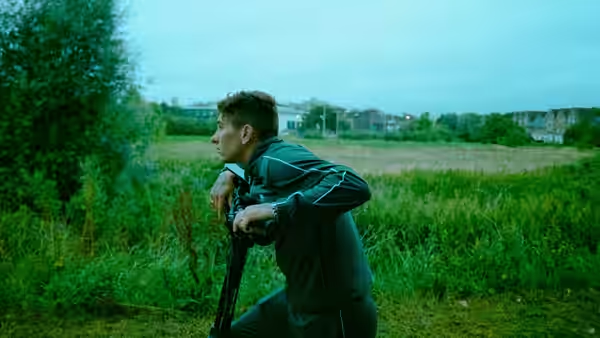
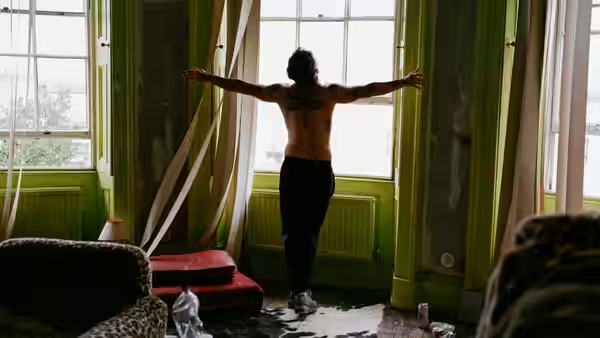
Keoghan is the noise. Bug is a father in his twenties who has never stopped being fourteen: tattoos up both arms, an electric scooter, a plan to get rich from the slime of a toad he keeps in a tank, to which he plays music so it will produce. We laughed a good deal at him, and then felt the cost of laughing when he turns on his daughter for spoiling the mood. Keoghan gets both halves of that into single scenes, sometimes into single lines. Maxine Carlier’s production design makes the squat look like a child’s bedroom scaled up and never tidied. Alex Bovaird’s costumes do the rest: Bird’s skirt and cardigan look wrong in every room he enters, which is the point.
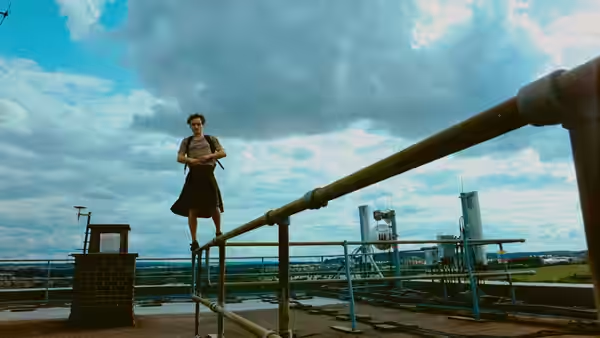
Rogowski is a fine actor, and Arnold does not quite decide what he is for. Bird speaks softly, hops rather than walks, stands on roofs with his arms out in the wind, and asks polite questions of people who want to hit him. In the first hour this is charming and a little unsettling, which is the right mix. Later, when he follows Bailey into the household of her mother Peyton (Jasmine Jobson) and Peyton’s boyfriend Skate (James Nelson-Joyce), who is the film’s real danger, his gentleness starts to play as a device. We are waiting for him to do something, and the film knows we are waiting.
Joe Bini cuts at a run. Scenes end before they settle; the film jumps from the squat to the marsh to the scooter to a shot of a beetle in seconds. Burial’s score stays low and suits the estuary. But the pace has a price. Hunter’s own story is set up and then dropped for long stretches, and the adults’ plans keep slipping out of view just as they start to matter.
Then, in the last half hour, the film does something we will not describe. Arnold has prepared for it, but the tone she lands on is sweeter than anything before it has paid for. It is the moment most critics divide on, and we came down on the doubtful side. Set beside Fish Tank (2009), her earlier film about a Kent girl and an unreliable adult man, this one is warmer, funnier and less disciplined. That film stayed on the ground and was the better for it.
See it for Adams. If the man in the skirt starts to lose you, look at the girl filming him, and stay for her. It is 119 minutes and a 15.