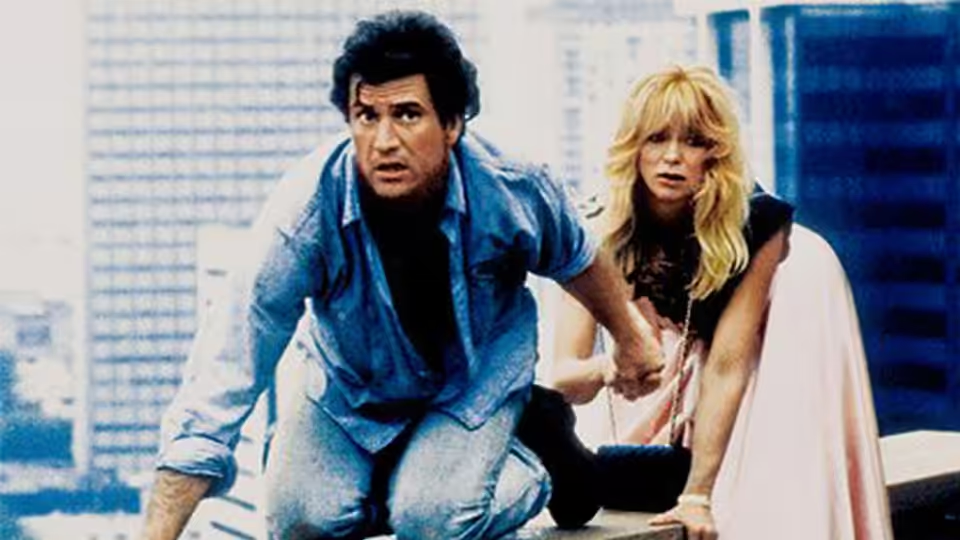
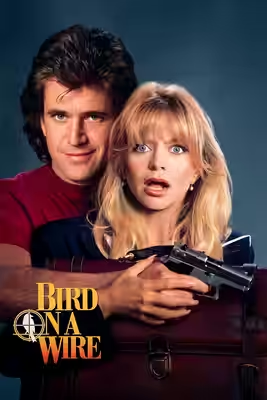
Mel Gibson and Goldie Hawn supply some warmth, but John Badham’s romantic adventure keeps burying it beneath strained plotting and busy action. There are pleasures here, though not enough to justify 110 minutes.
Bird on a Wire has the ingredients for an agreeable evening and makes surprisingly little of them. John Badham directs a romantic adventure whose action keeps crowding out the two people we might have enjoyed spending time with. It is poor, with enough charm from Mel Gibson and Goldie Hawn to make the waste irritating. We can accept a ridiculous plot in this sort of film, provided the jokes arrive or the romance gives us a reason to care.
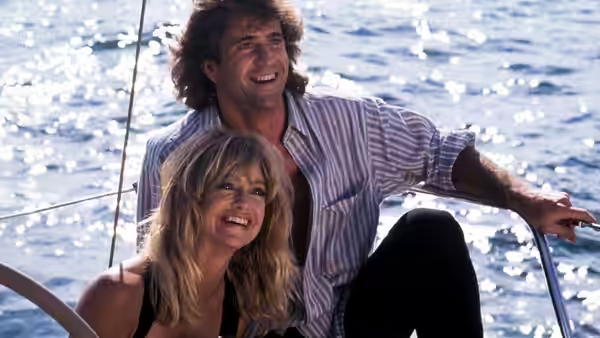
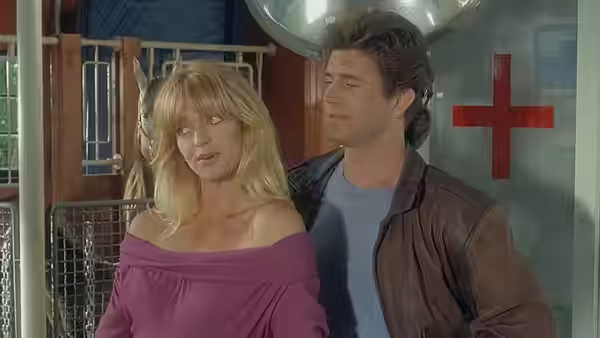
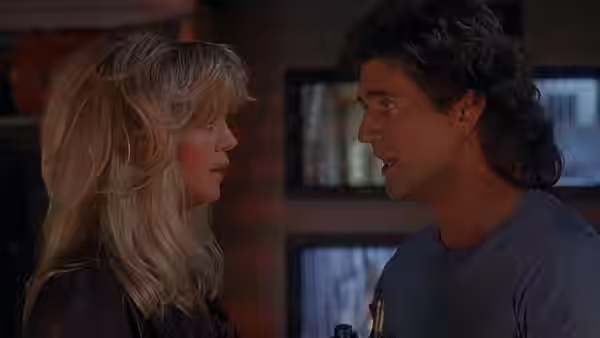
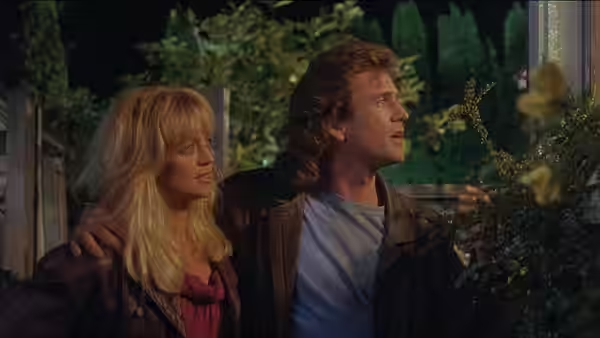
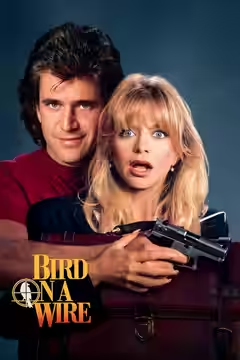
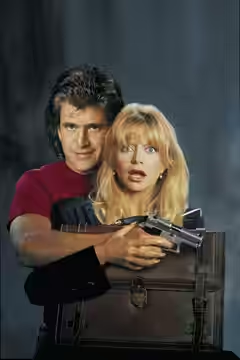
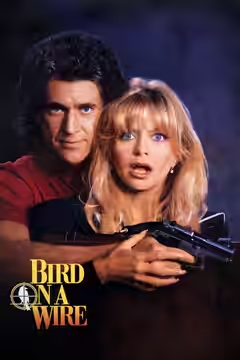
Mel Gibson plays Richard ‘Rick’ Jarmin, with Goldie Hawn as Marianne Graves, and their ease together is the strongest reason to stay. There are stretches when their company is enough, and the film becomes the undemanding entertainment it plainly wants to be. Yet the chemistry is intermittent, particularly when another burst of action interrupts the comedy. Both performers remain likeable, but they are asked to sustain our interest in characters the writing has scarcely developed.
The screenplay is credited to Eric Lerner, Louis Venosta and David Seltzer, and its awkwardness is harder to overlook than its implausibility. An adventure comedy can ask us to accept a great deal if each predicament develops from the people involved. Here the contrivances make the characters seem available for whatever the next action scene requires, with little else to sustain them. John Badham pushes ahead briskly, leaving the performances to supply most of the warmth and humour.
Robert Primes’s cinematography and Philip Harrison’s production design contribute to a professional finish, and that is worth acknowledging. The film has been packaged with care, even when the material scarcely deserves the attention. Neither contribution, however, makes the adventure feel particularly distinctive. The competent presentation helps individual stretches pass pleasantly enough, but cannot hold our interest through another situation that feels arranged simply to keep everybody occupied.
Frank Morriss and Dallas Puett’s editing keeps the action moving, though the pace becomes tiring when the underlying situations are so thin. We were worn out by the commotion because it kept demanding excitement that the shallow characters had not earned. Hans Zimmer’s score has the same difficulty: the musical push for excitement cannot give the danger much weight. At 110 minutes, the film has more time than it knows how to use.
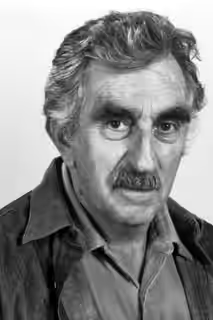
Jeff Corey, as Lou Baird, supplies a brief, quieter pleasure. He brings some dignity to a film that seldom pauses long enough for it. That contribution is small, but it gives us something to enjoy beyond the efficiency of the action.
Light entertainment still needs wit, a convincing attraction or action worth following, and this film supplies each too irregularly to make a satisfying evening. Its failure is particularly frustrating because the leads seem capable of carrying a simpler, funnier adventure. Admirers of Mel Gibson and Goldie Hawn may find their occasional ease sufficient compensation for the strained business around them. We would save it for an evening when their names matter more than what they have been given to do.