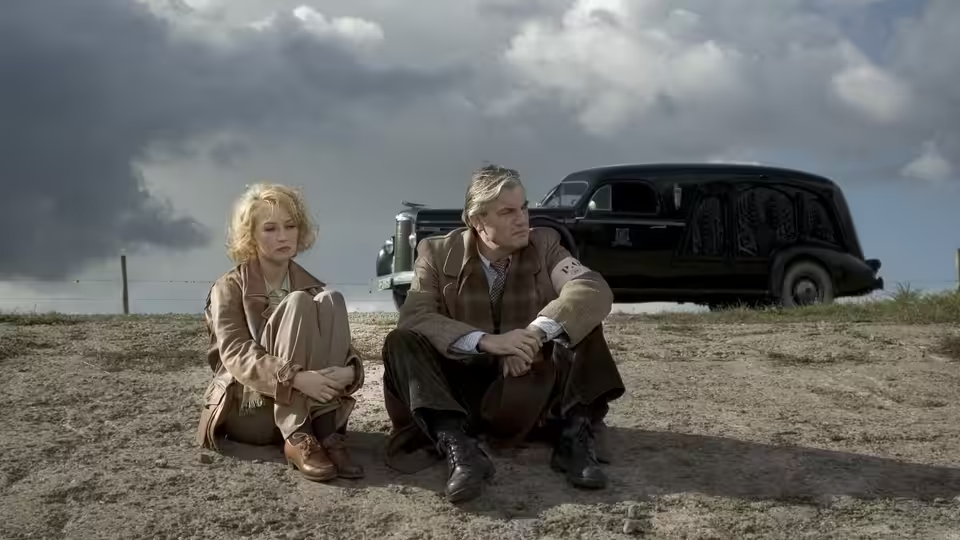
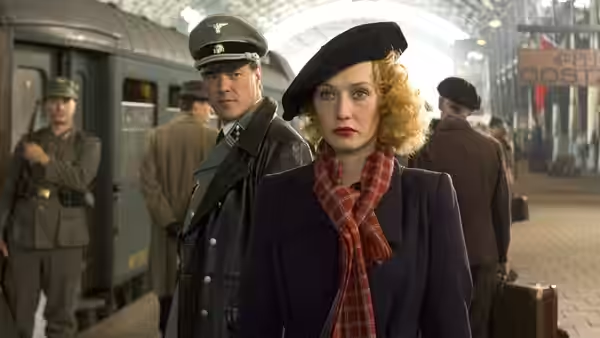
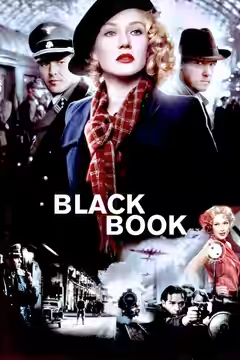
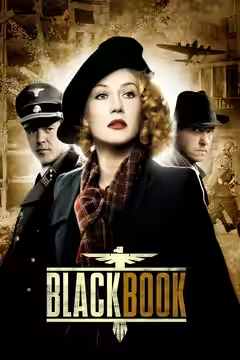
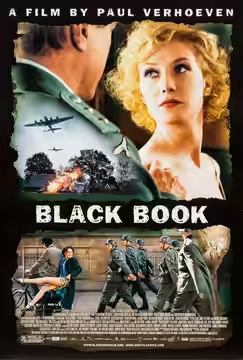
Paul Verhoeven goes home to the occupied Netherlands and makes a bright, fast, pulpy resistance thriller with Carice van Houten in nearly every frame. The last hour turns into a traitor hunt that explains more than it needs to, but it kept us gripped.
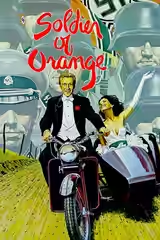
Paul Verhoeven spent two decades in Hollywood making films about robots, giant insects and women with ice picks, and then he went home. Black Book is his first Dutch film since The Fourth Man (1983), written once more with Gerard Soeteman, who wrote Soldier of Orange (1977) with him. It is a resistance thriller about a singer who spies for the underground from inside the German security police in The Hague, and it is fast, bright, lurid and unashamed. We enjoyed it more than we have any right to enjoy a film about the occupation.
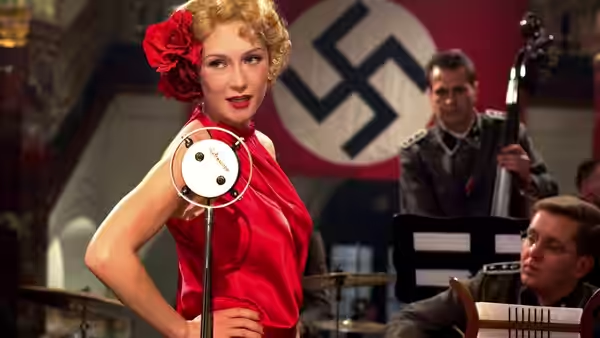
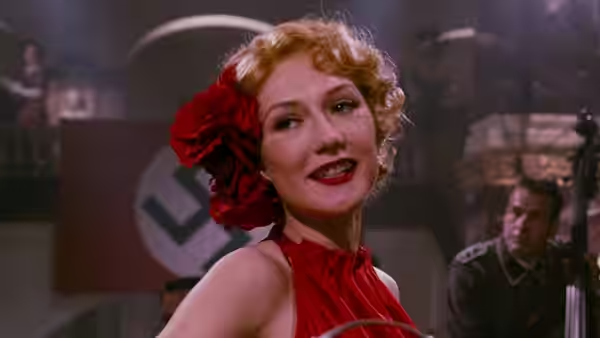
Carice van Houten is in nearly every scene and carries all of them. Her Rachel decides early that she is going to live, and the film is a record of what that takes: lying to a man’s face, singing for people who would shoot her, bleaching her hair at a basin to become Ellis de Vries, and not only the hair on her head. Survival, the film says, is thorough and undignified, and Verhoeven shows that last detail without a flicker.
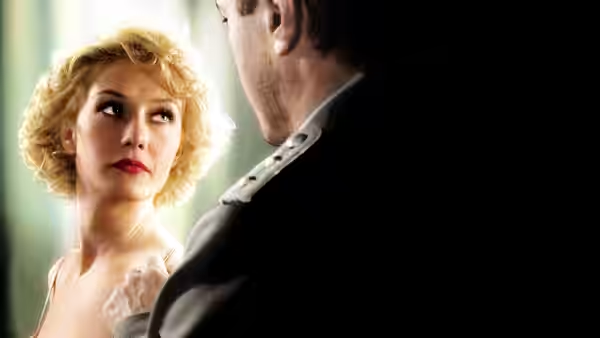
Sebastian Koch’s Müntze is the film’s second surprise. He is a tired, courteous man who collects stamps and would rather talk about perforations than arrests; the two of them meet on a train over his album. Koch plays him without asking for our sympathy, and the film does not pretend he is innocent. It asks whether a decent man in that uniform is any use to anyone, and it declines to give an easy answer.
Karl Walter Lindenlaub shoots the occupation in sunshine. The canals glitter, the reception rooms gleam, and the one grey thing in the film is the uniforms. Wilbert Van Dorp’s headquarters is a grand townhouse with chandeliers upstairs and cells below. Yan Tax dresses Ellis in frocks cut to be looked at, which is the cover. Anne Dudley’s score is lush and old-fashioned, strings and brass from a 1940s studio picture, and it suits a film that knows it is a melodrama. Job ter Burg and James Herbert cut at a sprint, and 145 minutes do not feel long until the last forty.
The night boat is where the film told us what it was. A searchlight comes on, a machine gun opens up, and the people who have paid everything they had to escape are dead in the water within a minute, their bodies gone through for jewellery before the smoke has cleared. We were horrified, and what horrified us was the speed and the moonlight: Verhoeven does not cut away, does not slow down and does not dirty the image to make it respectable. Then he moves on, because Rachel has to.
The supporting cast is drawn in thick strokes and all the better for it. Waldemar Kobus plays Franken, the brute of the building, as a sweating man who sings at parties and keeps a cash box. Halina Reijn’s Ronnie sleeps with Germans because the food is better, says so, and is the most honest person in the film. Thom Hoffman’s doctor Akkermans and Derek de Lint’s Kuipers run the resistance as a gentlemen’s committee; Matthias Schoenaerts’s Joop wants to shoot people and usually gets to. Christian Berkel turns up as General Käutner to remind everybody who is in charge.
The second half takes turns we will not describe. What we can say is that the plot becomes a hunt for whoever betrayed the boat, and that Verhoeven and Soeteman have so many suspects and reversals in hand that for the final forty minutes people mostly stand in rooms explaining the last reversal to each other. Nobody in it is hungry, either; the winter of 1944 in the western Netherlands was one in which people ate tulip bulbs, and some will find the film’s prettiness indecent.
Beside Soldier of Orange this is the brasher, faster sibling, closer in spirit to his Hollywood films. It carries a 15 and earns it. Watch it with someone who does not mind a war film that enjoys itself, and do not try to keep a list of who has betrayed whom. The film is keeping one for you, and it will read it out.